What Causes the Rare Cases of iPhone Battery Explosions?
What Causes the Rare Cases of iPhone Battery Explosions? What Causes the Rare Cases of iPhone Battery Explosions? What key measures Apple has adopted to prevent charging-related fires?
- Why Enterprise RAID Rebuilding Succeeds Where Consumer Arrays Fail?
- Linus Torvalds Rejects MMC Subsystem Updates for Linux 7.0: “Complete Garbage”
- The Man Who Maintained Sudo for 30 Years Now Struggles to Fund the Work That Powers Millions of Servers
- How Close Are Quantum Computers to Breaking RSA-2048?
- Why Windows 10 Users Are Flocking to Zorin OS 18 Instead of Linux Mint?
- How to Prevent Ransomware Infection Risks?
- What is the best alternative to Microsoft Office?
What Causes the Rare Cases of iPhone Battery Explosions?
Reports of Apple iPhone fires are extremely rare when considering the hundreds of millions of devices in use globally.
However, incidents of spontaneous combustion do occasionally occur, primarily linked to issues with the lithium-ion battery—a component common to nearly all modern smartphones.
These isolated cases usually attract significant media attention, prompting investigations into the precise causes, which often boil down to physical damage, manufacturing defects, or improper charging practices.
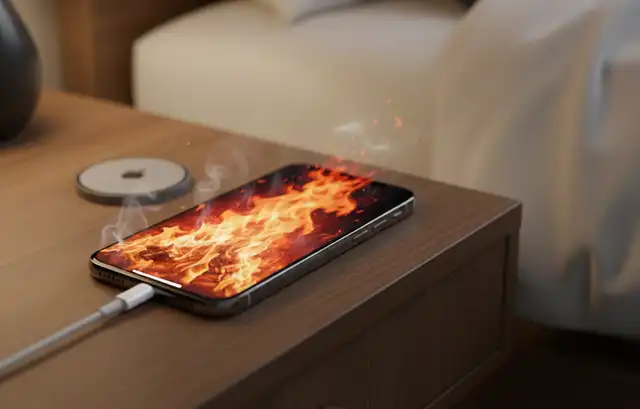
Documented Cases of iPhone Fires
Several incidents over the years have been reported publicly:
-
iPhone 6 Plus Charging Incident (2017): In Florida, a user’s iPhone 6 Plus reportedly caught fire while charging beside her bed, causing damage to the bedding and nearby curtains. Apple confirmed at the time that it was investigating the cause.
-
iPhone 6 Plus Classroom Fire (2016): An incident was reported in New Jersey where an iPhone 6 Plus began to smoke and ignited in a classroom, leading to an evacuation.
-
Older Model iPhone 4 Fire (Reported 2023): An Ohio family captured a security video showing their decade-old iPhone 4 bursting into flames while charging overnight on a kitchen counter. The fire eventually extinguished itself, but the incident highlighted the potential risks associated with aging batteries.
-
iPhone 11 Pro Pocket Incident (Around 2020): A user shared a troubling account of their daughter’s iPhone 11 Pro spontaneously igniting and catching fire while it was in her back pocket.
Analyzing the Causes: The Lithium-Ion Risk
While Apple products are designed with numerous safety features, the underlying technology—the lithium-ion battery—carries an inherent risk when compromised. The primary causes identified in these types of incidents are:
-
Physical Damage and Puncture: The most common cause is physical trauma (such as dropping, bending, or puncturing the phone). This can compress the battery’s internal layers, leading to an internal short circuit, rapid overheating, and a thermal runaway reaction that results in fire.
-
Overheating and Thermal Runaway: Exposing the iPhone to extreme heat (like direct sunlight or a hot car interior) or charging it in poor ventilation (such as under a pillow or blanket) can cause the battery to reach unsafe temperatures and fail.
-
Manufacturing Defects: Although Apple maintains stringent quality control, a small number of defective batteries can slip through the manufacturing process, potentially having internal flaws that lead to a short circuit over time.
-
Use of Uncertified Accessories: Using cheap, non-certified charging cables or power adapters—those without MFi certification (“Made for iPhone”)—can contribute to the risk. These accessories may not regulate voltage and current properly, leading to overcharging or electrical instability that damages the battery.
Mitigating the Risk
To minimize the chance of an incident, experts and Apple recommend several safety precautions:
-
Use Certified Chargers: Only use Apple original or MFi-certified charging accessories.
-
Avoid Physical Stress: Never bend, puncture, or apply excessive pressure to your device. If the phone is visibly damaged or the back is bulging (a sign of a swollen battery), stop using it immediately.
-
Ensure Ventilation: Charge your iPhone on a hard, flat surface where heat can dissipate, not under bedding or furniture.
-
Replace Swollen Batteries: If you notice your battery is swelling or the screen is lifting, get the battery replaced by an authorized service provider as soon as possible. A swollen battery is a significant fire risk.
What key measures Apple has adopted to prevent charging-related fires?
Apple implements a combination of hardware design, software controls, and accessory certification to prevent charging-related fires and ensure user safety.
Here are the key measures Apple has adopted:
1. Internal Safety Features (Hardware and Software)
iPhones are equipped with sophisticated internal mechanisms designed to manage the battery charging process safely:
-
Intelligent Power Management: iPhones contain internal circuitry and chips that precisely regulate the power flow to the lithium-ion battery. This system constantly monitors the current, voltage, and temperature during charging.
-
Automatic Overcharge Prevention: Modern iPhones are designed to automatically stop drawing power from the charger once the battery reaches 100%. When the charge level drops slightly (typically below 95%), charging may resume. This prevents the sustained overvoltage that could lead to overheating and battery damage.
-
Optimized Battery Charging (Software): This iOS feature uses on-device machine learning to understand a user’s daily charging routine. It delays charging past 80% until the iPhone predicts it needs to be fully charged, reducing the time the battery spends at a high state of charge, which is chemically stressful and generates heat.
-
Thermal Regulation/Shutdown: If the iPhone detects that its internal temperature exceeds a safe threshold (due to charging, use, or environmental heat), the operating system will issue a temperature warning and may suspend charging or throttle performance until the device cools down. This is a critical safety measure against thermal runaway.
2. Accessory Standards and Certification
Apple rigorously manages the quality and safety of accessories to prevent electrical hazards caused by non-compliant parts:
-
MFi Certification Program: The “Made for iPhone/iPad/iPod” (MFi) program is a licensing standard for third-party accessory manufacturers. MFi-certified cables and chargers must pass Apple’s comprehensive safety and performance tests.
-
MFi accessories include a small, Apple-manufactured authentication chip that ensures the accessory is communicating correctly and delivering safe power levels to the device, mitigating risks from substandard components.
-
-
Original/Certified Power Adapters: Apple designs its own USB power adapters (and now USB-C adapters) to comply with the required surface temperature limits and safety standards defined by international and regional regulations. The company strongly advises using only Apple genuine or MFi-certified products.
3. User Education and Guidelines
Apple frequently communicates safety best practices to users through its product safety manuals and support pages, emphasizing proper charging environments:
-
Ventilation Warnings: Apple explicitly advises users to charge their devices, power adapters, and wireless chargers in a well-ventilated area.
-
Avoiding Soft Surfaces: Users are warned not to charge devices under blankets, pillows, or their bodies, as soft materials trap heat, which is a major contributing factor to battery failure and potential fire.
-
Damaged Accessories: The company warns against using damaged cables or chargers (e.g., frayed cables, cracked adapters), as these can create a risk of fire or electric shock.