What is a Plug-in Hybrid Vehicle (PHV)?
What is a Plug-in Hybrid Vehicle (PHV)?
- Why Enterprise RAID Rebuilding Succeeds Where Consumer Arrays Fail?
- Linus Torvalds Rejects MMC Subsystem Updates for Linux 7.0: “Complete Garbage”
- The Man Who Maintained Sudo for 30 Years Now Struggles to Fund the Work That Powers Millions of Servers
- How Close Are Quantum Computers to Breaking RSA-2048?
- Why Windows 10 Users Are Flocking to Zorin OS 18 Instead of Linux Mint?
- How to Prevent Ransomware Infection Risks?
- What is the best alternative to Microsoft Office?
What is a Plug-in Hybrid Vehicle (PHV)?
A Plug-in Hybrid Vehicle (PHV), also called a PHEV (Plug-in Hybrid Electric Vehicle), is a type of automobile that combines a traditional internal combustion engine (gasoline or diesel) with an electric motor and a rechargeable battery pack.
What distinguishes it from regular hybrids is that the battery can be charged by plugging into an external power source, such as a wall outlet or charging station.
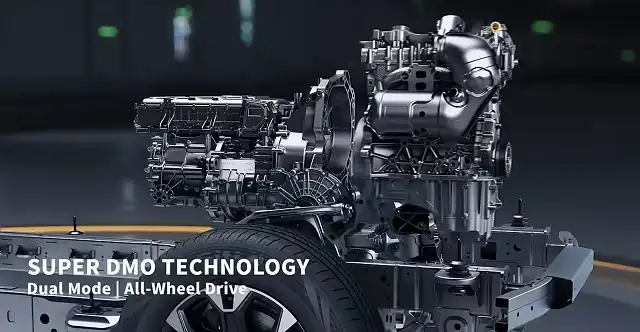
How PHVs Work
PHVs operate using three main components working together:
- Internal Combustion Engine: A conventional gasoline or diesel engine that can power the vehicle and charge the battery
- Electric Motor(s): Provides electric propulsion and can work independently or alongside the engine
- Rechargeable Battery Pack: Larger than standard hybrid batteries, storing enough electricity to power the vehicle for meaningful distances (typically 20-100+ kilometers)
Driving Modes
Most PHVs offer multiple operating modes:
- Electric-Only Mode (EV Mode): The vehicle runs purely on battery power with zero emissions, ideal for short commutes and city driving
- Hybrid Mode: Both the engine and electric motor work together, optimizing efficiency and performance
- Engine Mode: The combustion engine takes over, similar to a conventional vehicle, when the battery is depleted or maximum power is needed
Key Advantages
Dual Power Sources: You get the best of both worlds—electric driving for daily use and gasoline/diesel range for long trips, eliminating range anxiety.
Flexibility: If you forget to charge or can’t access a charging station, the vehicle functions like a regular car using its combustion engine.
Reduced Emissions: For drivers with short daily commutes, a PHV can operate mostly on electricity, significantly reducing fuel consumption and emissions.
No Infrastructure Dependency: Unlike pure electric vehicles, PHVs don’t require extensive charging networks to be practical.
PHVs vs. Regular Hybrids vs. Pure EVs
- Regular Hybrids (like the Toyota Prius): Cannot plug in; the battery is charged only through regenerative braking and the engine. Smaller battery with limited electric-only range (usually just 1-2 kilometers).
- PHVs: Can plug in for charging; larger battery allowing 20-100+ km of electric-only driving; retains full combustion engine capability.
- Pure Electric Vehicles (EVs): No combustion engine; runs entirely on battery power; requires charging infrastructure; limited by battery range and charging time.
Real-World Example
The BYD Shark 6 mentioned in the article exemplifies PHV technology: it can travel 100 kilometers on battery power alone for daily driving with zero emissions, but its combined system provides 840 kilometers of total range, ensuring you’re never stranded without fuel or charge. This makes it practical for both urban commuting and remote work or recreational activities.
PHVs represent a practical middle ground, offering electric driving benefits while maintaining the convenience and range of conventional vehicles.
Plug-in Hybrid Vehicles (PHV) Available in 2025 Market
COMPACT & MIDSIZE SEDANS
- Toyota Prius Prime
- BMW 3 Series Plug-in Hybrid
- BMW 7 Series Plug-in Hybrid
- Mercedes-Benz S-Class Plug-in Hybrid
- Bentley Flying Spur PHEV
- Porsche Panamera E-Hybrid (including Turbo S E-Hybrid)
COMPACT & MIDSIZE SUVs
- Toyota RAV4 Plug-in Hybrid
- Ford Escape Plug-in Hybrid
- Kia Sorento Plug-in Hybrid
- Kia Niro Plug-in Hybrid
- Mitsubishi Outlander PHEV
- Mazda CX-70 PHEV
- Lexus NX Plug-in Hybrid
- Lexus RX Plug-in Hybrid
- Audi Q5 PHEV
- BMW X5 Plug-in Hybrid
- Mercedes-Benz GLC 300e
- Volvo XC60 Plug-in Hybrid
LARGE/THREE-ROW SUVs
- Mazda CX-90 PHEV
- Volvo XC90 Plug-in Hybrid
- Range Rover Sport P550e
- Jeep Grand Cherokee 4xe
- Jeep Wrangler 4xe
TRUCKS/UTILITY VEHICLES
- BYD Shark 6
- Ford Ranger PHEV
Chinese Plug-in Hybrid Vehicles (PHV) in 2025 Market
BYD (Build Your Dreams)
- BYD Shark 6 (pickup truck)
- BYD Sealion 6 DM-i
- BYD Seal 06 DM-i
- BYD SEAL U DM-i
- BYD Qin Plus DM-i
- BYD Song Plus DM-i
- BYD Tang DM-i
- BYD Han DM-i
- BYD Denza D9 DM-i
- BYD Leopard 8 (luxury SUV)
Geely Group Brands
Geely
- Geely Galaxy Starship 7
- Geely Galaxy L7 PHEV
- Geely Galaxy Starshine 6 PHEV
- Geely Starray EM-i
- Geely EX5
Lynk & Co (Geely subsidiary)
- Lynk & Co 01 PHEV
- Lynk & Co 08 PHEV
- Lynk & Co 900 PHEV
Zeekr (Geely subsidiary)
- Zeekr 001 PHEV
- Zeekr 009 PHEV
Li Auto (Extended-Range Electric Vehicles/EREV – a type of PHEV)
- Li L6
- Li L7
- Li L8
- Li L9
Chery Group Brands
Chery
- Chery Tiggo 7 PHEV
- Chery Tiggo 8 Pro PHEV
- Chery Tiggo 9 PHEV
Exeed (Chery luxury brand)
- Exeed VX PHEV
Jaecoo (Chery off-road brand)
- Jaecoo J7 PHEV
Great Wall Motor (GWM)
- Haval H6 PHEV
- Haval Xiaolong PHEV
- Tank 500 PHEV
- Wey Gaoshanhu PHEV
SAIC Motor Brands
- MG HS PHEV
- Roewe RX5 PHEV
Leapmotor
- Leapmotor C10 REEV (Range Extended Electric Vehicle)
- Leapmotor C11 REEV
Hongqi (FAW Group – luxury brand)
- Hongqi HS3 PHEV
- Hongqi H5 HEV/PHEV
- Hongqi H9 PHEV
Note: Chinese automakers are rapidly expanding their PHEV offerings, with BYD and Geely leading the market. Many brands use terms like “DM-i” (BYD’s Dual Mode intelligent hybrid), “EM-i” (Geely’s system), or “REEV” (Range Extended Electric Vehicle) to describe their plug-in hybrid technologies.
Why Plug-in Hybrid Vehicles Are the Future of Automobiles?