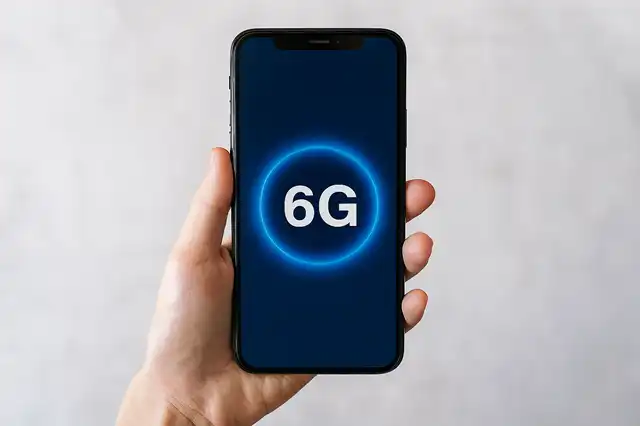
Why 6G Networks Will Use the 7GHz Frequency Band: Advantages and Challenges
Why 6G Networks Will Use the 7GHz Frequency Band: Advantages and Challenges
- Why Enterprise RAID Rebuilding Succeeds Where Consumer Arrays Fail?
- Linus Torvalds Rejects MMC Subsystem Updates for Linux 7.0: “Complete Garbage”
- The Man Who Maintained Sudo for 30 Years Now Struggles to Fund the Work That Powers Millions of Servers
- How Close Are Quantum Computers to Breaking RSA-2048?
- Why Windows 10 Users Are Flocking to Zorin OS 18 Instead of Linux Mint?
- How to Prevent Ransomware Infection Risks?
- What is the best alternative to Microsoft Office?
Why 6G Networks Will Use the 7GHz Frequency Band: Advantages and Challenges
Introduction
As the telecommunications industry continues to push the boundaries of wireless connectivity, the next generation of mobile networks is already taking shape.
While 5G networks are still being deployed globally, leading technology companies like Nokia are actively testing the 7GHz frequency band with telecom operators worldwide in preparation for 6G.
This frequency range, specifically 7.125-8.400 GHz, represents a strategic middle ground that could define the next era of wireless communications.
Recent trials by Nokia with major carriers including SoftBank in Tokyo, T-Mobile in the United States, and stc in Saudi Arabia demonstrate the global momentum behind this frequency band.
The International Telecommunication Union (ITU) has scheduled discussions on the 7GHz band at the World Radiocommunication Conference 2027 (WRC-27), positioning it as a prime candidate for 6G deployment by 2030.
How to Prevent Ransomware Infection Risks
Why the 7GHz Band for 6G?
The Strategic Middle Ground
The selection of the 7GHz frequency band for 6G is not arbitrary but rather a carefully considered strategic decision based on lessons learned from 5G deployment. This band, often referred to as the “golden band” or centimeter-wave frequency (with wavelengths between 1-10 cm), strikes an optimal balance between capacity and coverage that neither lower nor higher frequencies can achieve alone.
Current 5G networks operate primarily in two ranges: sub-6 GHz bands for broad coverage and millimeter-wave (mmWave) bands above 24 GHz for ultra-high speeds. However, mmWave deployment has faced significant challenges, including limited range, poor building penetration, and high infrastructure costs. The 7GHz band aims to avoid these pitfalls while delivering substantially better performance than sub-6 GHz frequencies.
Massive Bandwidth Availability
One of the most compelling reasons for adopting the 7GHz band is the sheer amount of available spectrum. When combined with the adjacent 5G band (6.425-7.125 GHz), this frequency range can provide nearly 2 GHz of contiguous spectrum. This expansive bandwidth is critical for supporting the data-intensive applications envisioned for 6G, potentially delivering 10-20 times more capacity than current 5G networks while reusing existing base station sites.
Similar Propagation Characteristics to Sub-6 GHz
Unlike the problematic mmWave frequencies used in 5G, the 7GHz band exhibits propagation characteristics similar to sub-6 GHz frequencies. This means signals can penetrate buildings more effectively and travel longer distances without requiring an exponentially greater number of base stations. Field trials have demonstrated that 7GHz performance is comparable to 5G networks operating at 3.9 GHz in terms of coverage, making it economically viable for widespread deployment.
Meeting the Demands of an AI-Driven Future
As artificial intelligence applications proliferate and mobile data traffic continues its exponential growth, dense urban environments face increasing challenges with signal penetration and network congestion. The 7GHz band addresses these challenges by providing the bandwidth necessary to support AI-enhanced services, real-time holographic communication, digital twins, and other advanced applications that will define the 6G era.
Understanding Zero-Day Vulnerabilities: How Hackers Exploit Windows Kernel Flaws
Advantages of the 7GHz Frequency Band
1. Enhanced Data Rates and Capacity
The 7GHz band offers significantly broader bandwidth than 5G’s sub-6 GHz spectrum, enabling peak data rates that could reach 1 terabyte per second in optimal conditions. While real-world speeds will be lower, users can expect dramatically faster downloads, seamless streaming of ultra-high-definition content, and support for data-intensive applications that are currently impractical.
2. Improved Spectral Efficiency
By utilizing advanced technologies such as Massive MIMO (Multiple-Input Multiple-Output) and sophisticated beamforming techniques, the 7GHz band can serve multiple users simultaneously with minimal interference. This spectral efficiency means more devices can connect to the network without degrading performance—critical for the Internet of Things (IoT) ecosystems that will expand dramatically in the 6G era.
3. Balance Between Coverage and Performance
The 7GHz band provides what engineers call the “sweet spot” for next-generation networks. It offers substantially higher data rates than sub-6 GHz frequencies while maintaining far superior coverage compared to mmWave bands. This balance means fewer base stations are needed compared to mmWave deployment, significantly reducing infrastructure costs and deployment timelines.
4. Lower Latency
While 5G networks achieve latencies around 1-5 milliseconds, 6G networks operating in the 7GHz band are expected to reduce latency to the range of 1 millisecond to 1 microsecond. This ultra-low latency is essential for applications requiring instantaneous response times, such as remote surgery, autonomous vehicle coordination, advanced robotics, and immersive extended reality experiences.
5. Compatibility with Existing Infrastructure
The propagation characteristics of the 7GHz band allow operators to leverage existing cell site locations used for 5G sub-6 GHz deployments. This reusability represents significant cost savings and faster deployment compared to building entirely new infrastructure, as was necessary for mmWave 5G.
6. Global Standardization Potential
The ITU’s consideration of the 7GHz band for 6G at WRC-27 suggests strong potential for global standardization. A unified frequency band across different countries would enable economies of scale in device manufacturing, reduce roaming complications, and facilitate international cooperation in 6G development.
How Did Tesla and Major Companies Fall Victim to Cryptojacking?
Disadvantages and Challenges
1. Spectrum Allocation and Regulatory Hurdles
Perhaps the most significant challenge facing 7GHz adoption is spectrum allocation. In many regions, portions of this frequency range are currently used for satellite communications, fixed microwave links, and other services. Coordinating spectrum sharing or reallocation will require complex negotiations among regulators, incumbent users, and mobile operators. The outcome of WRC-27 discussions will be crucial in determining how much of this spectrum becomes available for 6G globally.
2. Increased Infrastructure Complexity
While the 7GHz band requires fewer base stations than mmWave, it still demands more infrastructure than lower frequency bands to maintain adequate coverage. The higher frequency means shorter wavelengths and greater susceptibility to atmospheric absorption and obstruction by physical objects, particularly in dense urban environments with tall buildings and complex terrain.
3. Device and Equipment Development Costs
Developing devices and network equipment capable of operating efficiently at 7GHz frequencies presents technical challenges. Manufacturers must create new radio frequency components, antennas, and chipsets that can handle these frequencies while maintaining power efficiency—critical for battery-operated mobile devices. The research, development, and initial manufacturing costs will be substantial, potentially affecting device pricing when 6G launches.
4. Higher Signal Attenuation
Compared to lower frequency bands, 7GHz signals experience greater attenuation—the reduction in signal strength as it travels through air and materials. Rain, fog, foliage, and building materials all absorb higher frequency signals more readily. This means that while coverage is better than mmWave, it still requires more careful network planning and potentially more base stations than sub-6 GHz 5G networks in challenging environments.
5. Power Consumption Concerns
Operating at higher frequencies typically requires more transmit power to achieve comparable coverage to lower frequency bands. This increased power consumption has implications for both network infrastructure (higher operating costs and energy consumption) and mobile devices (reduced battery life). Engineers must develop more efficient amplifiers and power management systems to mitigate these concerns.
6. Interference and Coexistence Issues
The 7GHz band must coexist with other services that currently use or are allocated to nearby frequencies. Ensuring that 6G networks do not cause harmful interference to satellite communications, fixed wireless links, and other services requires sophisticated interference mitigation techniques, dynamic spectrum sharing mechanisms, and careful frequency coordination. Field trials have begun exploring these coexistence scenarios, but significant technical and regulatory work remains.
7. Limited Indoor Penetration in Some Scenarios
While better than mmWave, the 7GHz band still faces challenges penetrating modern building materials, particularly energy-efficient windows with metallic coatings and thick concrete walls common in urban construction. This may necessitate indoor small cells or distributed antenna systems in large buildings, adding to deployment complexity and costs.
8. Technology Maturity and Testing Requirements
As 6G technology is still in the research and development phase, the ecosystem of devices, infrastructure, and standards for the 7GHz band is immature. Extensive testing is required to validate performance claims, optimize network configurations, and ensure reliability across diverse environments. Current trials by Nokia and operators represent early steps in a multi-year development process.
How to Defend Against Large-Scale DDoS Attacks: A Comprehensive Strategy
Looking Ahead: The Path to 6G
The 7GHz frequency band represents a pragmatic and promising foundation for 6G networks. By learning from the challenges of 5G mmWave deployment and building upon the strengths of sub-6 GHz networks, this frequency range offers a viable path forward for next-generation wireless communications.
However, success will depend on overcoming significant technical, regulatory, and economic hurdles. The outcome of international spectrum allocation discussions at WRC-27 will be pivotal. Continued investment in research and development, field trials, and standardization efforts by companies like Nokia and operators worldwide will be essential to realizing the potential of the 7GHz band.
As we approach the anticipated 2030 commercial launch of 6G, the 7GHz band stands as a testament to the telecommunications industry’s evolution—choosing not the highest frequencies for maximum speed, nor the lowest for maximum coverage, but rather the optimal middle ground that balances performance, practicality, and economic viability. This strategic decision may well define the success of 6G and shape how billions of people connect, communicate, and collaborate in the next decade and beyond.
How Do Hackers Gain Administrator Access in Under an Hour?
Conclusion
The adoption of the 7GHz frequency band for 6G networks represents a carefully calculated strategy to deliver transformative wireless performance while avoiding the deployment challenges that have limited mmWave 5G adoption. With its combination of substantial bandwidth, reasonable propagation characteristics, and compatibility with existing infrastructure paradigms, the 7GHz band offers the best opportunity to realize the ambitious vision of 6G.
Nevertheless, the path forward requires addressing real challenges in spectrum allocation, infrastructure development, device manufacturing, and regulatory coordination. The ongoing trials and research by Nokia and global telecom operators are critical steps toward understanding and solving these challenges. As the industry moves toward WRC-27 and the eventual standardization of 6G, the 7GHz band will likely play a central role in connecting the world in ways we are only beginning to imagine.