Why BYD U8’s LiDAR System Outperforms Tesla Model Y’s Vision-Based Detection?
Why BYD U8’s LiDAR System Outperforms Tesla Model Y’s Vision-Based Detection
- Why Enterprise RAID Rebuilding Succeeds Where Consumer Arrays Fail?
- Linus Torvalds Rejects MMC Subsystem Updates for Linux 7.0: “Complete Garbage”
- The Man Who Maintained Sudo for 30 Years Now Struggles to Fund the Work That Powers Millions of Servers
- How Close Are Quantum Computers to Breaking RSA-2048?
- Why Windows 10 Users Are Flocking to Zorin OS 18 Instead of Linux Mint?
- How to Prevent Ransomware Infection Risks?
- What is the best alternative to Microsoft Office?
Why BYD U8’s LiDAR System Outperforms Tesla Model Y’s Vision-Based Detection?
Introduction
The autonomous driving sensor debate between LiDAR and camera-based vision systems has intensified as automakers pursue safer and more reliable self-driving technologies.
The BYD Yangwang U8, equipped with three LiDAR sensors alongside 16 cameras and 38 total sensors, represents a fundamentally different approach compared to Tesla Model Y’s pure vision-based system.
While Tesla has championed its camera-only “Tesla Vision” approach, the BYD U8’s LiDAR integration offers critical advantages in challenging conditions where safety cannot be compromised.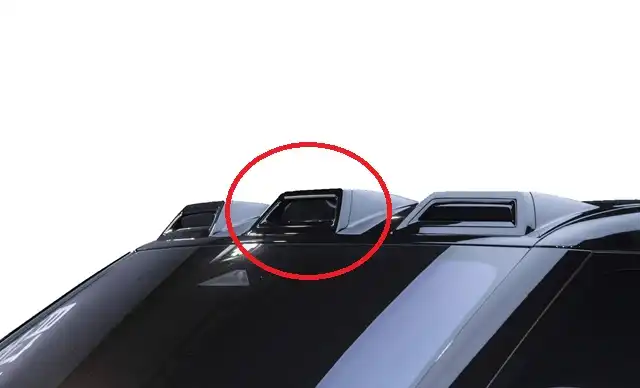
LiDAR on the top of BYD U8
Superior Performance in Adverse Weather Conditions
The Limitations of Camera Systems in Rain and Snow
Camera-based systems face inherent challenges in adverse weather conditions. Heavy rain, snow, and fog significantly degrade camera performance due to reduced visibility, lens contamination, and light scattering effects.
When water droplets or snowflakes accumulate on camera lenses, image quality deteriorates rapidly, compromising the system’s ability to accurately detect and classify objects.
Furthermore, cameras rely heavily on ambient lighting conditions and visual contrast. In heavy rain or snow, these conditions are severely compromised, making it difficult for neural networks to reliably identify road boundaries, vehicles, and obstacles.
The Tesla Model Y owner’s manual explicitly acknowledges these limitations, noting that weather conditions such as “heavy rain, snow, or fog” can affect the system’s operating range and detection capabilities.
LiDAR’s Weather Resilience Advantage
While LiDAR systems also experience some performance degradation in adverse weather, they maintain functional capabilities that camera systems cannot match.
LiDAR operates by emitting laser pulses and measuring the time it takes for them to return, creating precise three-dimensional point clouds of the environment.
This active sensing technology does not depend on visual lighting conditions or surface reflectivity in the same way cameras do.
Research has demonstrated that LiDAR sensors maintain operational capability even under challenging conditions. Studies testing LiDAR performance at various precipitation levels (10, 20, 30, and 40 mm/h) and different fog visibilities show that while detection range may be reduced, LiDAR continues to provide usable depth information when cameras might fail entirely.
Unlike cameras, LiDAR works equally well during day and night operations and is not blinded by direct sunlight, horizon glare, or reflections from snow banks—common challenges for camera-based systems.
The BYD U8’s integration of three LiDAR sensors creates redundancy and comprehensive coverage, ensuring that even if one sensor’s performance is partially degraded by weather conditions, the overall system maintains situational awareness through sensor fusion with the remaining LiDAR units and camera data.
Enhanced Detection of Low-Profile Objects
The Blind Spot Challenge for Camera Systems
One of the most significant advantages of LiDAR technology is its superior ability to detect low-profile objects—a critical safety feature often overlooked in autonomous driving discussions.
Camera-based systems struggle with objects that fall below the typical camera mounting height or lie at steep angles relative to the camera’s field of view.
The Tesla Model Y owner’s manual acknowledges this fundamental limitation: “Shorter objects that are detected (such as curbs or low barriers) can move into a blind spot. Model Y cannot alert you about an object while it is in a blind spot.” This admission reveals a critical vulnerability in pure vision systems. Low obstacles such as parking curbs, road debris, tire remnants, fallen cargo, and low barriers can easily escape detection, particularly when approaching at certain angles or speeds.
Tesla owners have frequently reported difficulties with curb detection and wheel rash incidents, precisely because cameras mounted at typical vehicle heights cannot reliably detect objects that are both low to the ground and close to the vehicle. The geometry of camera placement creates inevitable blind spots where low objects become invisible to the system.
LiDAR’s Precision in Ground-Level Detection
LiDAR systems excel at detecting low-profile objects due to their fundamentally different sensing methodology. The laser-based scanning pattern creates a comprehensive three-dimensional point cloud that captures ground-level features with millimeter-level precision. LiDAR sensors can detect height variations, curbs, small obstacles, and ground irregularities that would be invisible or ambiguous to cameras.
The BYD U8’s three-LiDAR configuration provides multiple viewing angles and overlapping coverage zones, ensuring that low objects are detected from various perspectives. This multi-sensor approach eliminates the blind spots inherent in camera-only systems. Whether detecting parking curbs during low-speed maneuvers, identifying debris on highways, or recognizing small animals crossing the road, LiDAR’s ability to create precise depth maps at all heights provides a measurable safety advantage.
Research indicates that LiDAR performs substantially better at detecting small and irregular obstacles and handling complex scenarios compared to camera systems. This capability is particularly crucial in urban environments where unexpected low obstacles—such as parking bollards, wheel stops, or fallen objects—present constant hazards.
Accurate Distance Measurement and Spatial Understanding
The Depth Perception Challenge for Cameras
Camera-based systems must infer depth information through computational methods such as stereoscopic vision, motion parallax, or neural network estimation.
These techniques are inherently less accurate than direct distance measurement, particularly at varying ranges and for objects of unknown size.
Cameras provide high-resolution imagery but require complex algorithms to estimate how far away objects are located.
Tesla’s transition from ultrasonic sensors to pure vision has been controversial precisely because it removed direct distance measurement capability.
The system now relies entirely on neural networks trained to estimate distances from image data—a process that introduces uncertainty and potential errors, especially for unusual objects or in conditions where visual cues are ambiguous.
LiDAR’s Direct and Precise Ranging
LiDAR measures distance directly by calculating the time-of-flight for laser pulses, providing centimeter-level accuracy regardless of an object’s appearance, color, or texture.
This eliminates the guesswork inherent in vision-based depth estimation. The BYD U8’s LiDAR sensors deliver precise three-dimensional spatial data, enabling the vehicle to understand its environment with engineering-grade accuracy.
This precision is particularly valuable in tight maneuvering situations, such as parking in confined spaces, navigating narrow passages, or maintaining safe distances from adjacent vehicles.
The BYD system’s reported 1-centimeter accuracy for ultrasonic sensors and 2-centimeter parking accuracy demonstrates the level of precision achievable when combining LiDAR with complementary sensor technologies.
Redundancy and Sensor Fusion
The BYD Yangwang U8’s comprehensive sensor suite—combining three LiDAR units, 16 cameras, and additional radar and ultrasonic sensors—exemplifies the principle of sensor fusion and redundancy. When one sensor type encounters challenging conditions, others compensate. In heavy rain where LiDAR may experience some scatter interference, cameras and radar provide corroborating data. In low-light conditions where cameras struggle, LiDAR maintains full operational capability.
This redundant architecture contrasts sharply with Tesla’s minimalist approach. While Tesla argues that vision alone is sufficient because humans drive with vision, this comparison overlooks that human vision is vastly more sophisticated than current computer vision systems, and humans cannot see through fog or drive safely in conditions where visibility is severely compromised—which is precisely when sensor redundancy becomes critical.
Conclusion
The comparison between BYD U8’s LiDAR-equipped system and Tesla Model Y’s vision-only approach reveals fundamental differences in safety philosophy and technological capability.
While Tesla’s vision system represents impressive computational achievement, the BYD U8’s integration of LiDAR provides measurable advantages in adverse weather detection, low-profile object identification, distance measurement precision, and overall system redundancy.
In conditions where safety margins narrow—heavy rain, snowstorms, fog, or complex urban environments with low obstacles—the BYD U8’s sensor fusion approach offers greater reliability.
As autonomous driving technology evolves, the evidence increasingly suggests that comprehensive sensor suites combining LiDAR, cameras, and radar provide the most robust path toward truly safe autonomous operation.
The BYD U8‘s configuration represents this multi-sensor future, offering drivers enhanced protection precisely when conditions become most challenging.
What is LiDAR (Light Detection and Ranging)?
LiDAR (Light Detection and Ranging) is a crucial sensor technology used in autonomous and semi-autonomous vehicles for detecting and tracking other cars and objects. Here’s how it works for car detection:
How LiDAR Works
LiDAR uses laser pulses to measure distances. It emits rapid laser beams that bounce off surrounding objects and return to the sensor.
By measuring the time it takes for each pulse to return, the system calculates precise distances and creates a detailed 3D point cloud of the environment.
Key Applications for Car Detection
- Object Recognition: LiDAR can distinguish cars from other objects (pedestrians, cyclists, barriers) based on their size, shape, and movement patterns in the point cloud data.
- Distance Measurement: It provides highly accurate distance measurements to nearby vehicles, typically accurate to within a few centimeters, which is critical for safe following distances and collision avoidance.
- 360-Degree Awareness: Most automotive LiDAR systems rotate or use multiple sensors to provide complete surrounding coverage, detecting vehicles in all directions simultaneously.
- Speed and Trajectory Tracking: By tracking how a car’s position changes over multiple scans (often 10-20+ times per second), the system can determine other vehicles’ speed and predict their trajectory.
- All-Weather Operation: Unlike cameras, LiDAR works in darkness and low-light conditions, though it can be affected by heavy rain, fog, or snow.
Advantages Over Other Sensors
LiDAR complements cameras and radar in modern vehicles. While cameras provide rich visual detail and radar excels at velocity measurement, LiDAR offers superior spatial accuracy and 3D mapping, making it particularly valuable for creating detailed representations of nearby vehicles and safely navigating complex traffic scenarios.