Why FEMA Still Recommends Two-Way Radios in the Smartphone Era?
Why FEMA Still Recommends Two-Way Radios in the Smartphone Era?
- Why Enterprise RAID Rebuilding Succeeds Where Consumer Arrays Fail?
- Linus Torvalds Rejects MMC Subsystem Updates for Linux 7.0: “Complete Garbage”
- The Man Who Maintained Sudo for 30 Years Now Struggles to Fund the Work That Powers Millions of Servers
- How Close Are Quantum Computers to Breaking RSA-2048?
- Why Windows 10 Users Are Flocking to Zorin OS 18 Instead of Linux Mint?
- How to Prevent Ransomware Infection Risks?
- What is the best alternative to Microsoft Office?
Why FEMA Still Recommends Two-Way Radios in the Smartphone Era?
In an age where smartphones seem to solve every communication need, it might seem outdated that the Federal Emergency Management Agency (FEMA) continues to recommend two-way radios as essential components of emergency preparedness kits. However, this recommendation reflects hard-learned lessons from decades of disaster response and a deep understanding of how communication networks behave during crises.
The Achilles’ Heel of Modern Communication
While smartphones have revolutionized how we communicate, they depend entirely on complex infrastructure that becomes extremely vulnerable during emergencies. Cell towers require constant power, internet connectivity, and maintenance—all of which can be compromised when disaster strikes. Hurricane Katrina, the 2011 Japanese tsunami, and more recent events like Hurricane Ian have repeatedly demonstrated how quickly our interconnected communication systems can fail when we need them most.
FEMA’s Integrated Public Alert and Warning System (IPAWS) recognizes this vulnerability. The system provides authenticated emergency information through multiple channels including mobile phones using Wireless Emergency Alerts, radio and television via the Emergency Alert System, and NOAA Weather Radio. This multi-layered approach acknowledges that no single communication method is foolproof.
The Reliability Advantage of Two-Way Radios
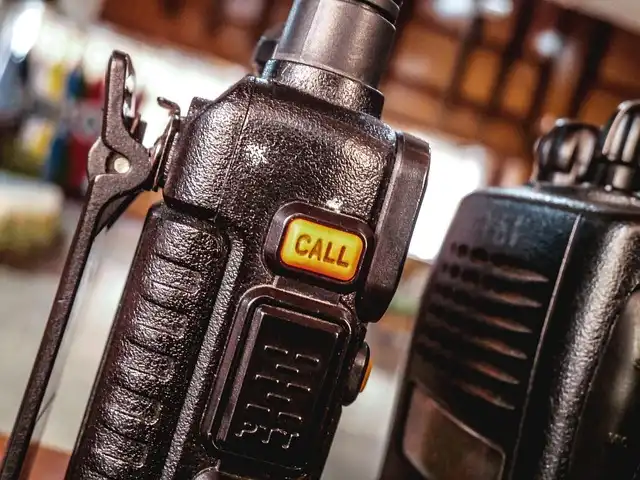
Two-way radios operate on fundamentally different principles than smartphones. They communicate directly from device to device without requiring intermediate infrastructure. When cell towers are down, internet connections are severed, and power grids have failed, two-way radios can still function as long as they have battery power.
Modern emergency-focused two-way radios often include features specifically designed for crisis situations. Many models combine GMRS (General Mobile Radio Service) capabilities with NOAA weather alert functions, AM/FM radio reception, and even hand-crank power generation. This integration provides multiple communication and information channels in a single, robust device.
Local Communication When Networks Fail
During emergencies, much of the most critical communication happens locally—between family members, neighbors, and immediate community responders. Two-way radios excel at this short-to-medium range communication. They allow families to stay in contact when separated, enable neighborhood watch coordination, and facilitate communication with local emergency services when traditional methods fail.
Local radio and television stations continue to operate when other means of alerting the public are unavailable, providing a layer of resiliency to emergency communications. Two-way radios can receive these broadcasts while also enabling two-way communication, making them invaluable tools for both receiving information and coordinating response efforts.
Power Independence and Durability
Smartphones require frequent charging and are vulnerable to water damage, drops, and extreme temperatures. Emergency-grade two-way radios are typically built to withstand harsh conditions and often feature extended battery life. Many include solar panels, hand cranks, or other alternative charging methods that work even when the electrical grid is compromised.
This durability factor becomes crucial during extended emergencies. While smartphone batteries typically last 8-12 hours under normal use, and much less during heavy emergency usage, quality two-way radios can operate for days or weeks with minimal power consumption.
Bandwidth and Network Congestion
Even when cellular networks remain operational during emergencies, they often become severely congested as everyone tries to communicate simultaneously. Text messages may take hours to send, calls fail to connect, and data services slow to a crawl. Two-way radio communications bypass these bottlenecks entirely, providing immediate, clear communication when speed matters most.
Emergency responders understand this principle well. While they may use smartphones for some coordination, their primary communication relies on dedicated radio systems that remain functional regardless of public network congestion.
The Psychological Factor
There’s also an important psychological component to emergency preparedness. Having multiple, independent communication methods reduces anxiety and provides confidence during crisis situations. When people know they have backup communication systems that don’t depend on fragile infrastructure, they’re better able to think clearly and respond effectively to emergency situations.
Integration, Not Replacement
FEMA‘s recommendation isn’t that two-way radios should replace smartphones, but rather that they should complement them. The most resilient emergency communication strategy uses multiple methods: smartphones when networks are available, two-way radios for local coordination and when infrastructure fails, and traditional broadcast radio for receiving official information and updates.
Modern emergency preparedness recognizes that redundancy saves lives. Just as we keep flashlights even though we have smartphone lights, and maintain paper maps even though we rely on GPS, two-way radios serve as a crucial backup communication system.
Looking Forward
As we advance further into the digital age, the fundamental physics of radio communication remain unchanged. While satellite communication systems and mesh networking technologies may eventually provide more resilient alternatives, traditional two-way radios currently offer the most reliable, accessible, and cost-effective backup communication solution for most families and communities.
FEMA’s continued recommendation reflects decades of experience in disaster response and a clear understanding that when lives are on the line, simplicity and reliability often matter more than sophistication. In the complex world of emergency preparedness, the humble two-way radio remains an essential tool—not because it’s the most advanced technology available, but because it works when everything else fails.
The question isn’t whether smartphones are better than two-way radios for daily communication—they obviously are. The question is what happens when the infrastructure supporting those smartphones disappears, and the answer continues to make two-way radios an essential part of any comprehensive emergency preparedness plan.