Why German State Governments Are Abandoning Microsoft Office for Open-Source Solutions
Why German State Governments Are Abandoning Microsoft Office for Open-Source Solutions
- Why Enterprise RAID Rebuilding Succeeds Where Consumer Arrays Fail?
- Linus Torvalds Rejects MMC Subsystem Updates for Linux 7.0: “Complete Garbage”
- The Man Who Maintained Sudo for 30 Years Now Struggles to Fund the Work That Powers Millions of Servers
- How Close Are Quantum Computers to Breaking RSA-2048?
- Why Windows 10 Users Are Flocking to Zorin OS 18 Instead of Linux Mint?
- How to Prevent Ransomware Infection Risks?
- What is the best alternative to Microsoft Office?
Why German State Governments Are Abandoning Microsoft Office for Open-Source Solutions
A Historic Digital Transition
In a groundbreaking move that signals a major shift in European digital policy, the German state of Schleswig-Holstein has completed a comprehensive six-month migration away from Microsoft’s email and calendar systems to open-source alternatives.
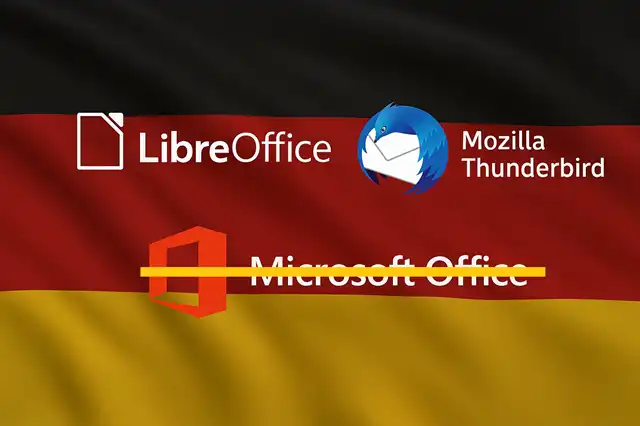
The transition affected over 40,000 mailboxes containing more than 100 million messages and calendar entries, replacing Microsoft Exchange and Outlook with Open-Xchange and Mozilla’s Thunderbird.
Digital Minister Dirk Schrödter declared the project a success: “Mission accomplished. Around 30,000 employees, from the state chancellery and ministries to judicial institutions, police, and other state agencies, have embarked on this new path together.
We want to break free from dependence on big tech companies and establish digital sovereignty.”
Why Are US Allies Also Abandoning American Software?
The Drive for Digital Sovereignty
The migration is part of a broader initiative to replace proprietary software with open-source alternatives. In 2024, Schleswig-Holstein began rolling out LibreOffice as the default office suite to replace Microsoft Office. The state government is also working with open-source vendors like Nextcloud to systematically transition away from all proprietary systems.
But what’s driving this dramatic shift? The answer lies in a concept that has become increasingly important in Europe: digital sovereignty.
What Is Digital Sovereignty?
While the term is relatively uncommon in the United States, digital sovereignty has emerged as a critical political issue across Europe and other regions. It’s not simply a matter of “proprietary software is bad and expensive, open-source is cheap and good.” Rather, it represents a fundamental concern about control, security, and independence in the digital age.
European governments, businesses, and citizens have grown increasingly anxious about their reliance on U.S.-based technology companies and cloud services. Questions about data security, service availability, and vulnerability to foreign policy decisions have created widespread unease. As German Digital Minister Karsten Wildberger emphasized, Germany and the EU need to participate in the technology sector “as players, not just as customers.”
Austria’s Military Ditches Microsoft Office: A Neutral Nation’s Quest for Digital Sovereignty
A Growing European Movement
Schleswig-Holstein is far from alone in this transition. Across the European Union, numerous government agencies have already ended their use of Microsoft software:
- Austrian Armed Forces have moved away from Microsoft products
- Danish government agencies have implemented similar transitions
- The city of Lyon, France has adopted open-source alternatives
In a 2020 speech, French President Emmanuel Macron articulated the broader vision: “What we need now are European solutions and European sovereignty in all areas and all innovations.” Macron has made digital sovereignty a central pillar of his policy agenda, and this sentiment has gained traction across the continent.
The Strategic Rationale
In their April 2025 policy statement, “Open Innovation and Open Source Strategy: Schleswig-Holstein,” the state government outlined their reasoning clearly: “To ensure that the state controls the IT systems it uses and continues to independently manage the data of citizens and businesses, it is more important than ever to avoid economic and technical dependence on a single monopolistic organization. Therefore, it is essential to reduce current dependencies and pursue the path toward digital sovereignty.”
The government views open-source software (OSS) as the solution because it offers “not only an alternative to existing systems but also the ability to adapt to many future changes. Therefore, OSS is one of the most important tools for achieving sovereignty.”
Challenges and Achievements
Minister Schrödter acknowledged that the transition wasn’t easy, praising the staff who made it possible: “In recent weeks and months, we’ve learned that such transitions are never simple. We are true pioneers. Looking around the world, there are very few projects of this scale. I sincerely thank all employees. Without their cooperation, this migration would not have been possible.”
The state hopes its experience will serve as a model for other administrative bodies. “We can leverage our knowledge in areas such as data analysis and data center monitoring to support other agencies following the same path,” Schrödter noted.
The Future of European Technology
This shift represents more than just a preference for one type of software over another—it reflects a fundamental transformation in how European institutions view and use office software. The movement toward open-source solutions is expected to accelerate, with more governments, businesses, and individuals across Europe transitioning from Windows to Linux and open-source software.
This isn’t merely wishful thinking from open-source advocates. It’s a strategic response to geopolitical realities and a determination to establish technological independence. As concerns about data privacy, service reliability, and economic dependencies continue to grow, digital sovereignty has evolved from an abstract concept into concrete policy action.
For Schleswig-Holstein and the growing number of European jurisdictions following similar paths, the message is clear: true digital independence requires control over the fundamental tools of modern governance and communication—and open-source software provides the key to achieving that goal.
What is the best alternative to Microsoft Office?
India Calls for Replacing Microsoft Office with Indian Zoho Office
Does China Have Domestic Software Substitutes Amid US Export Ban Risks?