Why My iPhone battery is draining faster after updating to iOS 26?
Why My iPhone battery is draining faster after updating to iOS 26?
- Why Enterprise RAID Rebuilding Succeeds Where Consumer Arrays Fail?
- Linus Torvalds Rejects MMC Subsystem Updates for Linux 7.0: “Complete Garbage”
- The Man Who Maintained Sudo for 30 Years Now Struggles to Fund the Work That Powers Millions of Servers
- How Close Are Quantum Computers to Breaking RSA-2048?
- Why Windows 10 Users Are Flocking to Zorin OS 18 Instead of Linux Mint?
- How to Prevent Ransomware Infection Risks?
- What is the best alternative to Microsoft Office?
Why My iPhone battery is draining faster after updating to iOS 26?
Technical Analysis of Post-Update Battery Drain in iOS 26: Understanding Normal System Behavior.
Introduction
The release of iOS 26 has once again brought attention to a well-documented phenomenon in mobile operating systems: temporary battery performance degradation following major software updates.
Apple has not explained possible battery drain after updates so explicitly until recently, when the company published comprehensive documentation addressing user concerns about increased power consumption after OS updates.
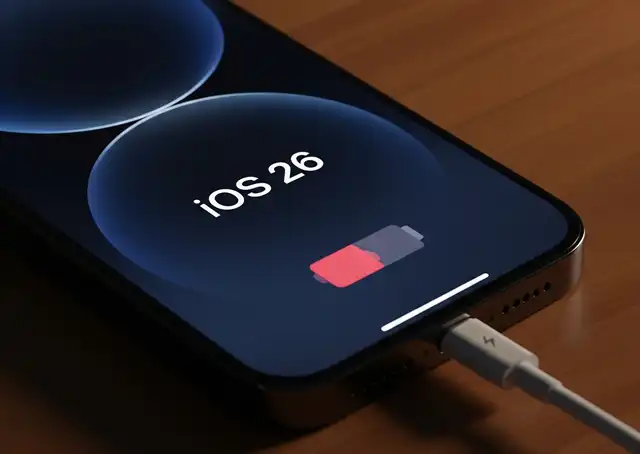
Post-Update System Behavior: Technical Background
Following an iOS update, devices undergo several resource-intensive background processes that significantly impact power consumption. Certain tasks related to the update continue in the background and might affect battery life and thermal performance, creating what Apple now acknowledges as normal post-update behavior.
The primary technical factors contributing to increased power consumption include:
Search Index Reconstruction: After major updates, the operating system rebuilds its internal search indexes to accommodate new data structures and improved search algorithms. This process requires intensive CPU utilization and storage I/O operations.
Asset Download and Processing: New system assets, including fonts, graphics resources, and machine learning models, are downloaded and processed in the background. These operations often continue for hours or days after the initial update installation.
System Optimization: The OS performs extensive optimization routines to adapt existing applications and data to new frameworks and APIs, a process that can significantly stress system resources.
Research-Based Understanding of Mobile Power Consumption
Academic research has extensively documented the complexity of power management in mobile devices. A fair understanding of a smartphone’s energy consumption factors is necessary for both users and device manufacturers, along with other stakeholders in the smartphone ecosystem, as highlighted in IEEE research on smartphone battery management.
Studies published in IEEE journals emphasize that the power consumption of an application depends on its device and software dependencies, making post-update power consumption patterns particularly complex. The interaction between new OS features and existing applications creates unpredictable power draw scenarios.
Software inefficiencies can rapidly drain battery life and reduce device longevity, according to recent IEEE research on mobile device power consumption. This finding is particularly relevant to post-update scenarios where system processes operate outside normal efficiency parameters.
Thermal Management and Performance Impact
Updating your operating system will cause short-term battery drain and heat excursions, with Apple confirming that thermal performance changes are expected during the post-update period. The relationship between thermal management and battery performance becomes critical when background processes generate sustained CPU loads.
Research indicates that mobile device thermal management systems often throttle performance to prevent overheating, which can paradoxically lead to increased battery consumption as tasks take longer to complete and maintain higher baseline power draws.
User-Reported Impact Analysis
Real-world data from iOS 26 users demonstrates the tangible impact of these technical phenomena. Some comments on X (formerly Twitter) and Reddit report an overnight iPhone battery drain of 20-30% in standby mode, with users noting that basic operations now consume power at abnormal rates.
These reports align with Apple’s technical explanation that a dip in battery performance or a bit of extra heat right after updating is expected and represents normal system behavior rather than device malfunction.
Long-Term Performance Implications
While immediate post-update battery drain is documented as normal, the long-term implications warrant consideration. IEEE research on power consumption estimation reveals that the increased and decreased power consumption by installing and uninstalling a certain application depend on the other applications installed in the device.
This dependency relationship suggests that major OS updates can have cascading effects on overall system efficiency, potentially explaining why some users report persistent battery issues even after initial background processes complete.
Technical Mitigation Strategies
Based on the understanding of underlying technical causes, several evidence-based approaches can help manage post-update battery performance:
- Allowing Complete Background Processing: Permitting all post-update optimization routines to complete before assessing battery performance
- Thermal Management Awareness: Understanding that warm devices during the post-update period are operating normally
- Usage Pattern Adjustment: Recognizing that new features may alter baseline power consumption profiles
Conclusion
The battery drain experienced after iOS 26 updates represents a complex interaction of system optimization processes, thermal management requirements, and software dependencies. While user frustration is understandable, the technical evidence supports Apple’s position that these phenomena constitute normal post-update behavior rather than system defects.
Future iOS development may benefit from more granular user communication about background processes and estimated completion times, helping users better understand when their devices have fully adapted to new software versions. The challenge remains balancing system optimization benefits with user experience during transition periods.
Why My iPhone battery is draining faster after updating to iOS 26?
References:
- Pramanik et al. (2019) – The most comprehensive IEEE review of smartphone power consumption research, providing the theoretical framework
- Apple’s Official Support Documentation – The manufacturer’s authoritative explanation of post-update battery behavior
- Al-Hmouz et al. (2018) – Key experimental research that validates power consumption patterns with real-world data