Why Neural Processing Units (NPUs) Haven’t Gone Mainstream?
Why Neural Processing Units (NPUs) Haven’t Gone Mainstream?
- Why Enterprise RAID Rebuilding Succeeds Where Consumer Arrays Fail?
- Linus Torvalds Rejects MMC Subsystem Updates for Linux 7.0: “Complete Garbage”
- The Man Who Maintained Sudo for 30 Years Now Struggles to Fund the Work That Powers Millions of Servers
- How Close Are Quantum Computers to Breaking RSA-2048?
- Why Windows 10 Users Are Flocking to Zorin OS 18 Instead of Linux Mint?
- How to Prevent Ransomware Infection Risks?
- What is the best alternative to Microsoft Office?
Why Neural Processing Units (NPUs) Haven’t Gone Mainstream?
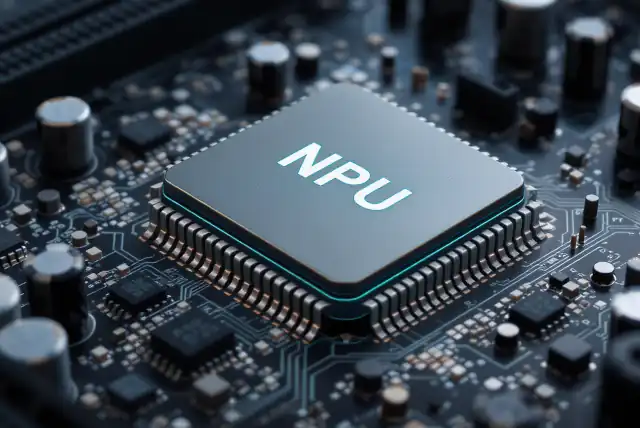
The rapid evolution of Neural Processing Units (NPUs) has become one of the most talked-about developments in modern computing.
Intel’s trajectory tells the story clearly: the company introduced a 48 TOPS “NPU4” with its Lunar Lake processors, plans to upgrade to a 50 TOPS “NPU5” in Panther Lake, and according to recent leaks, may deliver a 74 TOPS “NPU6” in the NovaLake processors as early as next year.
Despite this explosive growth in computational capability, a fundamental question remains: Have NPUs actually achieved mainstream adoption among everyday consumers?
The answer is decidedly no—and the reasons why reveal a fascinating divide in how the industry views the future of AI processing.
Space-Based Data Centers: The Next Frontier in Computing Infrastructure
The Reality Check: NPUs Are Still Niche
The evidence of NPU’s limited adoption is visible across two key areas.
First, look at the desktop PC market, where processors without NPUs still dominate. High-end chips like the AMD Ryzen 9 9950X3D, Ryzen Threadripper series, Intel Core Ultra 7 251E, and professional-grade Xeon W9 and Xeon 6 processors—whether targeting enthusiasts or workstation users—often ship without integrated NPUs at all.
Second, even on devices that do feature high-powered NPUs, the tangible benefits remain surprisingly limited for most users. Take the example of a Snapdragon-powered laptop: while the NPU can handle camera background blur, microphone noise cancellation, and power features like Windows Recall (which records user activity history), its utility largely ends there. For the vast majority of third-party applications that people use daily, the NPU provides no meaningful acceleration.
This raises the central question: Why has the NPU, despite being on the market for over two years, failed to become truly indispensable in most users’ day-to-day computing?
Google’s Aluminium OS: Will Android Finally Succeed on PC Where Others Failed?
Two Schools of Thought
The industry has coalesced around two distinct explanations for NPU’s struggle to gain traction, each pointing to a different fundamental issue.
The Energy Efficiency Argument
The first perspective holds that NPUs are fundamentally about power efficiency rather than raw performance. According to this view, NPUs simply cannot match the speed of high-performance graphics cards when processing AI workloads—their only real advantage is lower power consumption.
This theory suggests NPUs are best suited for laptops and other portable devices with constrained power budgets and limited cooling capabilities. Desktop systems, by contrast, already have powerful CPUs and dedicated GPUs that could handle AI tasks more effectively. The implication is that desktop AI ecosystems should be built around these existing components rather than adding NPUs to the mix.
The “Not Enough Power” Perspective
The second viewpoint takes the opposite stance: NPUs aren’t unpopular because they’re inherently limited to low-power scenarios—they’re unpopular because they’re not yet powerful enough. Proponents of this theory believe that after a few more generations of iteration and performance improvements, NPUs will naturally become the go-to solution for AI processing.
Will 5G Signals Interfere with Satellite TV and Starlink?
The Human Factor: Why Windows Recall Failed to Resonate
Beyond technical specifications, there’s a deeper issue at play. Features like Windows Recall, which leverages NPU capabilities to continuously record and search through user activity, have faced resistance that goes beyond performance concerns. The lukewarm reception reflects what might be called “a human nature problem”—users are uncomfortable with constant surveillance of their computing activities, regardless of how efficiently that surveillance is executed.
This suggests that NPU adoption faces not just technical hurdles but fundamental questions about what users actually want from AI-powered features.
Will HEVC/H.265 Be Replaced by AV1 and AVS3?
What Comes Next?
As Intel and other chipmakers continue pushing NPU performance higher, the coming years will test which theory holds true. Will desktop users embrace NPUs once they reach certain performance thresholds? Or will the technology remain primarily relevant for mobile devices where power efficiency matters most?
The answer may determine not just the fate of NPUs, but the broader trajectory of how AI capabilities are integrated into consumer computing. For now, despite impressive specification sheets, the NPU remains a solution still searching for its problem—or perhaps, still searching for users who recognize the problems it solves.