Why Plug-in Hybrid Vehicles Are the Future of Automobiles?
Why Plug-in Hybrid Vehicles Are the Future of Automobiles? Lessons from Australia’s Market Transformation
- Why Enterprise RAID Rebuilding Succeeds Where Consumer Arrays Fail?
- Linus Torvalds Rejects MMC Subsystem Updates for Linux 7.0: “Complete Garbage”
- The Man Who Maintained Sudo for 30 Years Now Struggles to Fund the Work That Powers Millions of Servers
- How Close Are Quantum Computers to Breaking RSA-2048?
- Why Windows 10 Users Are Flocking to Zorin OS 18 Instead of Linux Mint?
- How to Prevent Ransomware Infection Risks?
- What is the best alternative to Microsoft Office?
Why Plug-in Hybrid Vehicles Are the Future of Automobiles? Lessons from Australia’s Market Transformation
The automotive industry stands at a critical crossroads, with manufacturers and consumers debating the optimal path toward sustainable transportation.
While pure electric vehicles (EVs) dominate headlines, mounting evidence suggests that plug-in hybrid vehicles (PHVs) represent the most pragmatic and versatile solution for the transition away from conventional combustion engines—particularly in markets with diverse driving needs and developing charging infrastructure.
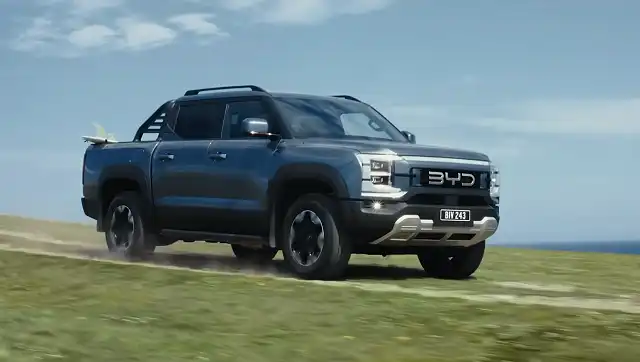
The Australian Case Study: BYD Shark 6’s Market Disruption
Australia’s automotive market provides compelling evidence for PHV viability. The country’s vast distances, varied terrain, and infrastructure challenges make it an ideal testing ground for alternative powertrains. The spectacular success of the BYD Shark 6, a plug-in hybrid utility truck launched in January 2025, demonstrates how PHVs can disrupt even the most entrenched market segments.
The Shark 6’s performance has been nothing short of remarkable. Pre-orders opened in October 2024, with initial deliveries of 5,500 units generating significant buzz.
By July 2025, cumulative sales reached 11,657 units, establishing it as Australia’s best-selling PHV utility truck. This achievement is particularly noteworthy given the vehicle’s entry into a market long dominated by established players like the Ford Ranger and Toyota Hilux—vehicles that have commanded customer loyalty for decades.
Technical Specifications That Matter
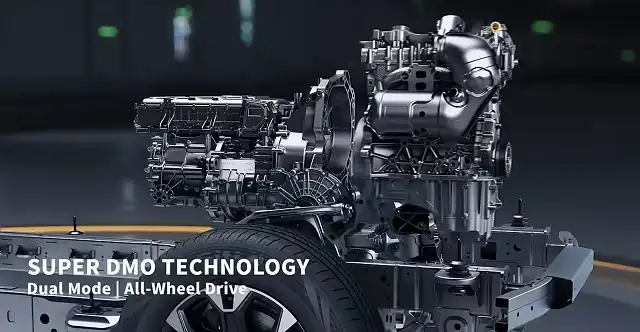
The Shark 6’s success stems from its thoughtful engineering approach. Combining a 1,500cc turbocharged engine with electric motors, the vehicle produces a combined 430 horsepower while maintaining a curb weight of 2,710 kilograms. This powertrain configuration delivers practical benefits that resonate with utility truck buyers: a claimed total range of 840 kilometers, with 100 kilometers available on battery power alone.
The vehicle offers three specialized driving modes—sand, mud, and snow—addressing the demanding conditions Australian drivers frequently encounter. This versatility represents a key advantage of PHV technology: the ability to optimize performance for specific situations while maintaining the range security of a combustion engine.
Why PHVs Outpace Pure EVs
The Shark 6’s continued success, even after the elimination of PHV tax incentives in April 2025, reveals fundamental advantages that transcend government subsidies. Several factors explain why PHVs may represent the optimal solution for the foreseeable future:
Range Flexibility: Unlike pure EVs, which require extensive charging infrastructure and careful trip planning, PHVs eliminate range anxiety entirely. The Shark 6’s 840-kilometer range means drivers can undertake long journeys without concern, while still enjoying emission-free driving for daily commutes within the 100-kilometer electric range.
Infrastructure Independence: Pure EV adoption depends heavily on charging network development, which remains incomplete in many regions, including rural Australia. PHVs allow consumers to embrace electrification immediately, without waiting for infrastructure buildout.
Use Case Versatility: Utility trucks serve multiple purposes—daily commuting, work site transportation, recreational towing, and off-road adventures. PHVs accommodate all these scenarios without compromise, whereas pure EVs face limitations in towing capacity, charging availability in remote areas, and extended-use situations.
Economic Practicality: The Shark 6’s sustained sales after tax incentive removal demonstrate that consumers recognize PHVs’ inherent value proposition. Buyers avoid the price premium and potential resale uncertainty associated with pure EVs, while still reducing fuel costs and emissions during routine driving.
Market Transformation and Competitive Impact
BYD’s growing market share in Australia signals a broader shift in consumer preferences. The company has surpassed established competitors like Kia and Mitsubishi in overall sales, indicating that PHV technology appeals beyond early adopters to mainstream buyers. This market transformation suggests that traditional manufacturers’ reluctance to embrace PHV technology may leave them vulnerable to disruption.
The Shark 6’s success also demonstrates that Chinese manufacturers, particularly BYD, have achieved technical parity—or superiority—in electrified powertrains. This competitive pressure will likely accelerate PHV development across the industry.
The Path Forward
The Australian market’s embrace of PHV technology, exemplified by the Shark 6’s performance, suggests that plug-in hybrids represent the most viable bridge to a sustainable automotive future. They offer immediate emissions reductions for daily driving, eliminate range anxiety, work within existing infrastructure, and provide the versatility consumers demand—particularly in utility vehicle segments.
While pure EVs may eventually dominate once battery technology, charging infrastructure, and grid capacity reach maturity, PHVs deliver tangible benefits today. The Shark 6’s trajectory indicates strong market demand will likely sustain PHV popularity well into the future, making them not merely a transitional technology, but a durable solution that balances environmental responsibility with practical transportation needs.
For manufacturers, policymakers, and consumers, the message is clear: plug-in hybrid vehicles deserve recognition not as a compromise, but as a sophisticated solution optimally suited to the complex realities of modern transportation demands.
What is a Plug-in Hybrid Vehicle (PHV)?