Why the White House is Reconsidering NVIDIA H200 Exports to China
Why the White House is Reconsidering NVIDIA H200 Exports to China: A Shifting Landscape in the AI Chip Race
- Why Enterprise RAID Rebuilding Succeeds Where Consumer Arrays Fail?
- Linus Torvalds Rejects MMC Subsystem Updates for Linux 7.0: “Complete Garbage”
- The Man Who Maintained Sudo for 30 Years Now Struggles to Fund the Work That Powers Millions of Servers
- How Close Are Quantum Computers to Breaking RSA-2048?
- Why Windows 10 Users Are Flocking to Zorin OS 18 Instead of Linux Mint?
- How to Prevent Ransomware Infection Risks?
- What is the best alternative to Microsoft Office?
Why the White House is Reconsidering NVIDIA H200 Exports to China: A Shifting Landscape in the AI Chip Race
Executive Summary
The Trump administration is considering approving sales of NVIDIA’s H200 artificial intelligence chips to China, marking a potential significant shift in U.S. export control policy.
This reconsideration comes amid a complex backdrop of diplomatic détente, strategic competition, and China’s remarkable progress in developing domestic AI chip alternatives.
The question many are asking is: why would the U.S. relax restrictions now, and has China already closed the technological gap?
China Telecom Achieves 100km Quantum Transmission Record
The Diplomatic Context: A Trade War Truce
The possibility signals a friendlier approach to China, after U.S. President Donald Trump and Chinese leader Xi Jinping brokered a trade and tech war truce in Busan last month. This diplomatic warming represents a departure from the increasingly stringent export controls that characterized the previous years of U.S.-China tech competition.
The consideration of H200 exports is not happening in isolation. Earlier this week, the Commerce Department announced it had approved shipments of the equivalent of up to 70,000 Nvidia Blackwell chips to Saudi Arabia’s Humain and G42 of the United Arab Emirates, suggesting a broader recalibration of U.S. technology export policies under the Trump administration.
However, this potential policy shift faces significant domestic opposition. US lawmakers expressed grave concerns for national security, with the US House Select Committee on China warning that the Chinese military seeks US AI technology for weapons of mass destruction and AI surveillance applications.
China’s Free Kimi K2 Thinking AI Rivals Top American Models?
Understanding the H200: What’s at Stake
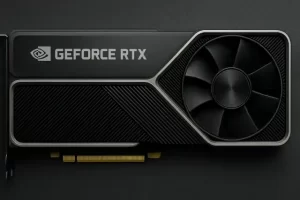
The H200 chip has more high-bandwidth memory than its predecessor the H100, allowing it to process data more quickly, and is estimated to be twice as powerful as Nvidia’s H20 chip, the most advanced AI semiconductor that can legally be exported to China. The H20 was itself a downgraded version specifically designed to comply with export restrictions.
For NVIDIA, access to the Chinese market is strategically critical. China represents roughly 13 percent of NVIDIA’s revenue and hosts about half of all global AI developers. The current restrictions have left the company unable to compete effectively in one of the world’s largest AI markets, with the company stating that current regulations prevent it from offering competitive AI data center chips in China.
Why China Is Phasing Out Foreign AI Chips Despite Their Higher Compute Power?
China’s Domestic AI Chip Capabilities: Closing the Gap?
The critical question is whether China’s domestic chip industry has already achieved performance parity with the H200, potentially making export restrictions obsolete. The answer is nuanced and reveals both impressive progress and remaining gaps.
Huawei’s Ascend 910C: The Leading Challenger
Huawei’s Ascend 910C represents China’s most advanced domestic AI chip effort. In a recently leaked Baidu internal benchmark, the 910B matched H100s on Llama-2-70B training, though it took 8% longer, and for inference, the 910B actually beat the H200 on tokens-per-watt once the sequence length exceeded 4k.
Even more remarkably, NVIDIA CEO Jensen Huang casually stated that Huawei’s newest chip is probably comparable to an H200, a striking acknowledgment from the industry leader.
The System-Level Strategy
While individual Ascend 910C chips lag behind NVIDIA’s offerings, Huawei has pursued a system-level approach to compensate. Huawei’s CloudMatrix 384 racks together 384 Ascend 910C chips, delivering up to 300 petaFLOPS BF16, surpassing NVIDIA’s GB200 NVL72 at approximately 180 petaFLOPS, with over 3 times the aggregate memory.
This approach represents a fundamentally different strategy: rather than matching NVIDIA chip-for-chip, China is achieving competitive performance through scale and system architecture. The CloudMatrix solution is uniquely suited to China’s strengths in domestic networking production and infrastructure software.
The Performance-Efficiency Trade-off
However, this system-level parity comes with significant costs. The CloudMatrix 384 takes 4.1 times the power of a GB200 NVL72, with 2.5 times worse power per FLOP and 1.9 times worse power per terabyte of memory bandwidth. For Chinese companies prioritizing technological independence, these efficiency compromises may be acceptable, but they reveal that China has not achieved true technological parity at the chip level.
The Dependency Problem
Perhaps most importantly, China’s chip industry remains heavily dependent on foreign supply chains. While the Ascend 910C is entirely designed in China, it still relies heavily on foreign production, including HBM from Samsung, wafers from TSMC, and equipment from America, Netherlands, and Japan.
TSMC was fined $1 billion for sanctions violations after Huawei purchased approximately $500 million of 7nm wafers through another company, Sophgo, to circumvent restrictions. These workarounds highlight both China’s resourcefulness and its continued reliance on the global semiconductor ecosystem.
How China’s Financial Controls Are Winning the Ransomware War
Why Allow H200 Exports Now?
Given this context, several factors likely inform the White House’s reconsideration:
1. Strategic Obsolescence
With Huawei already achieving H200-comparable performance through the 910C at scale, the strict prohibition on H200 exports may have lost much of its strategic rationale. China’s AI sector lags behind the United States by roughly three to six months, according to White House AI Czar David Sacks, but Chinese companies have demonstrated remarkable ability to optimize performance from available hardware.
If China can already access H200-level performance through domestic alternatives and supply chain workarounds, maintaining the export ban primarily harms U.S. companies without significantly slowing China’s AI development.
2. Commercial Pressure
NVIDIA faces intense pressure from Chinese competitors. Beijing reportedly warned Chinese companies to avoid NVIDIA’s H20 chips due to potential security issues that would provide the U.S. backdoor access to sensitive data, with the Chinese government urging companies to use domestically designed and manufactured chips instead.
The longer NVIDIA remains locked out of the Chinese market, the more deeply entrenched domestic alternatives become, potentially creating lasting ecosystem effects that persist even if restrictions are later lifted.
3. Diplomatic Leverage
Allowing H200 exports could serve as a goodwill gesture in the broader U.S.-China relationship, potentially yielding concessions in other areas of trade or security cooperation. The timing following the Trump-Xi meeting in Busan suggests these considerations are in play.
4. Economic Realism
The technology embargo’s effectiveness has been undermined by extensive circumvention. Maintaining restrictions that are widely evaded through third parties may be less effective than regulated direct sales, which at least provide visibility and potential leverage points.
China’s “Nvidia Rival” Cambricon Sees 1300% Revenue Surge Benefiting from US and China’s bans
Has China Achieved H200-Level Performance?
The answer is both yes and no:
At the chip level: No. Individual Ascend 910C chips deliver approximately 60% of H100 inference performance and lag significantly in power efficiency. They are not true peers to the H200 in direct comparison.
At the system level: Effectively, yes. Through clustering and system architecture, Huawei has demonstrated the ability to deliver H200-comparable or superior aggregate performance for specific workloads, particularly in training large language models.
In practical deployment: Partially. Chinese AI companies like DeepSeek, Baidu, and ByteDance have successfully deployed competitive AI models using domestic hardware, demonstrating that China can achieve strong AI capabilities despite chip-level disadvantages.
In supply chain independence: No. China remains dependent on foreign sources for critical components like HBM memory and advanced manufacturing equipment, creating vulnerabilities that export controls theoretically exploit.
Why China Is Confident in Banning Nvidia GPUs: Can Domestic Alternatives Really Replace Them?
Looking Forward: The Evolving AI Chip Landscape
The debate over H200 exports reveals deeper truths about technology competition in the AI era. Unlike previous generations of computing technology, AI development has proven remarkably resilient to hardware constraints. Chinese labs are stretching the hardware they already have through clever, open-source software techniques, demonstrating that innovation occurs across the entire stack, not just in silicon.
The White House’s reconsideration of H200 exports suggests a recognition that blanket technology bans may be less effective than more nuanced approaches. If finalized, this policy shift would acknowledge the reality that China has developed workarounds to access H200-level performance, while potentially allowing U.S. companies to compete on more equal terms in a critical market.
However, significant uncertainty remains. No final decision has been made, and it’s entirely possible that the idea remains an internal debate and never results in actual license approvals. The tension between commercial interests, national security concerns, and technological realities will continue to shape U.S. policy in this critical domain.
Does China Have Domestic Software Substitutes Amid US Export Ban Risks?
Conclusion
China has not achieved true chip-level parity with NVIDIA’s H200, but through system-level innovation, supply chain workarounds, and software optimization, Chinese companies have effectively accessed comparable performance for many AI workloads. This reality, combined with diplomatic warming and commercial pressures, appears to be driving the White House’s reconsideration of H200 export restrictions.
The question is no longer whether China can access advanced AI computing power—they demonstrably can—but whether U.S. export controls serve strategic interests or merely cede a massive market to domestic Chinese alternatives while marginally slowing China’s AI development. The answer to that question will shape not just chip exports, but the broader trajectory of U.S.-China technology competition for years to come.