Why US Export Restrictions Haven’t Slowed China’s AI Development?
Why US Export Restrictions Haven’t Slowed China’s AI Development?
- Why Enterprise RAID Rebuilding Succeeds Where Consumer Arrays Fail?
- Linus Torvalds Rejects MMC Subsystem Updates for Linux 7.0: “Complete Garbage”
- The Man Who Maintained Sudo for 30 Years Now Struggles to Fund the Work That Powers Millions of Servers
- How Close Are Quantum Computers to Breaking RSA-2048?
- Why Windows 10 Users Are Flocking to Zorin OS 18 Instead of Linux Mint?
- How to Prevent Ransomware Infection Risks?
- What is the best alternative to Microsoft Office?
Why US Export Restrictions Haven’t Slowed China’s AI Development?
Growing Domestic Alternatives Signal Resilience in Face of Technology Sanctions
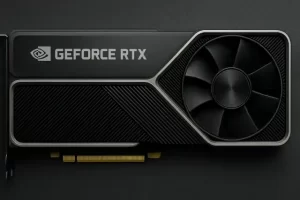
As the United States continues to tighten restrictions on advanced semiconductor exports to China, blocking access to cutting-edge chips like Nvidia’s A100 and H100 GPUs, a surprising narrative is emerging: China’s artificial intelligence development appears unfazed.
The recent performance of domestic chipmaker Cambricon Technologies offers compelling evidence of why Chinese tech companies remain confident about their AI future.

The Cambricon Surge: A 14-Fold Revenue Jump
Cambricon Technologies, often dubbed “China’s Nvidia” by retail investors, reported extraordinary third-quarter results that underscore the dramatic shift in China’s semiconductor landscape. According to filings with the Shanghai Stock Exchange, the company’s revenue surged fourteen-fold year-over-year for the July-September period, with net profits reaching 567 million yuan ($110 million)—a remarkable turnaround from a loss of 194 million yuan in the same quarter last year.
This explosive growth isn’t occurring in a vacuum. It represents a fundamental restructuring of China’s AI hardware ecosystem in response to American export controls.
Why China Isn’t Panicking: Three Key Factors
1. Accelerated Domestic Substitution
The U.S. restrictions on Nvidia’s A100 and H100 chips—and China’s own active blocking of the H20, a downgraded chip Nvidia designed specifically to comply with export rules—have paradoxically accelerated China’s self-sufficiency efforts. Major Chinese AI developers, including Alibaba Group and DeepSeek, are increasingly relying on domestically produced semiconductors rather than waiting for foreign alternatives.
This forced transition has created a captive market for companies like Cambricon, whose AI accelerators are becoming the go-to solution for Chinese tech giants. What might have taken decades under normal market conditions is happening in just a few years due to necessity.
2. Maturation of Indigenous Technology
Cambricon’s financial performance suggests that Chinese AI chips have reached a threshold of commercial viability. The company is among several Chinese technology firms that have benefited from U.S. sanctions on cutting-edge technology, transforming from niche players into critical infrastructure providers for China’s booming AI sector.
While these domestic chips may not match the absolute performance of Nvidia’s flagship products, they’re proving sufficient for many AI training and inference workloads—particularly when deployed at scale with optimized software.
3. Strategic Long-Term Thinking
China’s approach reflects a long-term strategic calculation rather than short-term panic. By accepting the H20 ban and doubling down on domestic alternatives, Chinese policymakers are betting that today’s performance gap will narrow over time, while simultaneously building an independent technology stack that cannot be disrupted by foreign policy changes.
This strategy trades immediate capability for long-term resilience—a calculation that China’s sustained AI development suggests may be paying off.
The Broader Implications
The rise of companies like Cambricon reveals a critical miscalculation in the export control strategy: restrictions intended to slow China’s AI development may instead be fostering a more independent and potentially more competitive Chinese semiconductor industry.
Without access to foreign chips, Chinese companies have no choice but to innovate domestically, potentially creating future competitors to established players like Nvidia.
Moreover, China’s vast domestic market provides domestic chipmakers with a substantial customer base for iteration and improvement. As these companies refine their products serving Chinese AI developers, they may eventually produce chips competitive in global markets—particularly for customers seeking alternatives to U.S.-controlled technology.
Conclusion
China’s confidence in its AI development trajectory, despite U.S. export restrictions, stems from tangible progress in domestic chip production. Cambricon’s fourteen-fold revenue increase isn’t just a financial milestone—it’s a signal that China’s forced march toward semiconductor independence is yielding results.
While the technology gap remains real, the momentum behind Chinese alternatives suggests that export controls, rather than creating permanent dependence, may be accelerating the emergence of a parallel AI hardware ecosystem.
For China, the question isn’t whether it can develop AI without American chips—Cambricon’s results suggest it already is—but how quickly the performance gap will close.
The semiconductor technology race is far from over, but China’s response to restrictions demonstrates that cutting off access to advanced chips doesn’t necessarily halt AI development—it may simply redirect it down a different path.