Wi-Fi 8 Could Arrive Next Year as Industry Shifts Focus from Speed to Reliability
Wi-Fi 8 Could Arrive Next Year as Industry Shifts Focus from Speed to Reliability
- Why Enterprise RAID Rebuilding Succeeds Where Consumer Arrays Fail?
- Linus Torvalds Rejects MMC Subsystem Updates for Linux 7.0: “Complete Garbage”
- The Man Who Maintained Sudo for 30 Years Now Struggles to Fund the Work That Powers Millions of Servers
- How Close Are Quantum Computers to Breaking RSA-2048?
- Why Windows 10 Users Are Flocking to Zorin OS 18 Instead of Linux Mint?
- How to Prevent Ransomware Infection Risks?
- What is the best alternative to Microsoft Office?
Wi-Fi 8 Could Arrive Next Year as Industry Shifts Focus from Speed to Reliability.
Wi-Fi 8 on the Horizon: Next-Gen Standard Expected as Early as Next Year, Focus Shifts from Speed to Reliability.
September 18 – While Wi-Fi 7 has yet to achieve widespread adoption, the next generation of wireless networking technology is already making its way to market, with Wi-Fi 8 potentially arriving as early as next year.
Currently, Wi-Fi 6 remains the mainstream standard across most devices, while Wi-Fi 7, which launched last year, has struggled to gain significant market penetration.
However, industry analysts predict that Wi-Fi 7 may see a breakthrough in the coming year, with adoption rates expected to reach 30-40%.
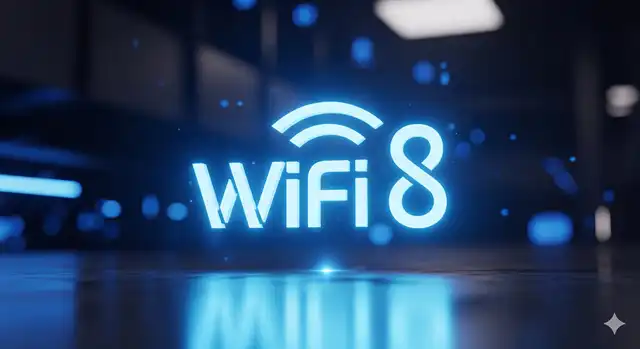
Despite this anticipated growth, Wi-Fi 7’s market lifespan may be shorter than previous generations due to the rapid development of Wi-Fi 8. MediaTek recently revealed that the company has been actively developing ecosystem support for Wi-Fi 8, having served as vice chairman of the Wi-Fi 8 working group since 2023. The semiconductor giant has been collaborating with global Wi-Fi companies to establish the next-generation standard.
According to previous reports, Wi-Fi 8 is scheduled to complete Wi-Fi Alliance certification by January 2028, followed by final working group approval in March of the same year before official release. However, industry sources suggest that Wi-Fi 8 devices could appear as early as 2027, with the certification and commercialization phase beginning by the end of next year.
This accelerated timeline means that next-generation mobile processors, including the Snapdragon 8 and Dimensity 9600 series, may incorporate Wi-Fi 8 support when they launch next year, following a similar pattern to Wi-Fi 7’s early adoption strategy.
The rapid arrival of Wi-Fi 8 reflects a fundamental shift in wireless technology priorities. Unlike previous generations that focused primarily on speed increases, Wi-Fi 8 maintains the same maximum throughput as Wi-Fi 7 at 23 Gbps and continues to support the same three frequency bands: 2.4GHz, 5GHz, and 6GHz. Instead, the new standard emphasizes improved user experience and reliability.
Wi-Fi 8’s key innovation lies in its ability to deliver consistent performance in challenging environments. The standard is specifically designed to provide reliable connectivity in high-congestion areas, interference-prone locations, and environments with high mobility. Users can expect stable, low-latency connections with minimal packet loss, even under demanding conditions.
This shift toward reliability over raw speed suggests that the wireless industry is maturing, focusing on practical improvements that address real-world connectivity challenges rather than pursuing theoretical maximum speeds that may not translate to better user experiences in everyday scenarios.
Wi-Fi 8 vs Wi-Fi 7: Key Differences
Speed & Throughput
Wi-Fi 7:
- Maximum theoretical throughput of 23 Gbit/s in a single band
- Up to 2.4x faster than Wi-Fi 6, with mobile phones reaching up to 5Gbps
- Increases spatial streams from 8 to 16, doubling theoretical transmission rates compared to Wi-Fi 6
- Uses 4096-QAM modulation, enabling 20% higher transmission rates than Wi-Fi 6’s 1024-QAM
Wi-Fi 8:
- Maintains the same maximum speed as Wi-Fi 7 (23 Gbps)
- Focus shifts away from pure speed increases to other improvements
Primary Focus & Philosophy
Wi-Fi 7:
- Focuses on addressing current demand for faster speeds and better capacity
- Emphasizes raw performance improvements and throughput increases
Wi-Fi 8:
- Focuses on reliability instead of speed, with “Ultra High Reliability” initiative that boosts performance and lowers latency and packet loss in challenging conditions
- Reliability improvements are particularly targeted at applications requiring consistent low-latency connectivity, including Extended Reality (XR) applications like VR, AR, and mixed reality
Key Technical Innovations
Wi-Fi 7:
- Multi-Link Operation (MLO)
- 320 MHz channel bandwidth
- Enhanced MU-MIMO capabilities
- 4096-QAM modulation
Wi-Fi 8:
- Coordinated Spatial Reuse (Co-SR): Enables simultaneous transmissions and allows access points to coordinate their power output, boosting spectral efficiency in dense environments
- Targets lower latency than Wi-Fi 7, catering to responsive, real-time applications beneficial for AR, VR and edge computing scenarios
Target Applications
Wi-Fi 7:
- General high-bandwidth applications
- Gaming and streaming
- Multiple device environments
Wi-Fi 8:
- Cloud gaming, eXtended Reality (XR), and video streaming services requiring high throughput, low latency, and high reliability
- Real-time applications like augmented reality, robotics and AI applications
- Futuristic needs like real-time automation and holographic communication
Timeline
Wi-Fi 7:
- Currently the best specification available as of 2025
- Already commercially available but not yet widespread
Wi-Fi 8:
- Expected to launch officially in 2028, but improvements will only be fully standardized in 2028
- Early devices possible by 2027
Summary
Wi-Fi 7 represents the peak of speed-focused wireless technology, while Wi-Fi 8 marks a strategic shift toward reliability, consistency, and ultra-low latency for next-generation applications.
Wi-Fi 8 doesn’t pursue higher speeds but instead focuses on delivering more predictable performance in challenging environments, making it ideal for emerging technologies that require real-time responsiveness.