Will 256GB Memory Sticks Make RAM Disk Operating Systems a Reality?
Will 256GB Memory Sticks Make RAM Disk Operating Systems a Reality?
- Why Enterprise RAID Rebuilding Succeeds Where Consumer Arrays Fail?
- Linus Torvalds Rejects MMC Subsystem Updates for Linux 7.0: “Complete Garbage”
- The Man Who Maintained Sudo for 30 Years Now Struggles to Fund the Work That Powers Millions of Servers
- How Close Are Quantum Computers to Breaking RSA-2048?
- Why Windows 10 Users Are Flocking to Zorin OS 18 Instead of Linux Mint?
- How to Prevent Ransomware Infection Risks?
- What is the best alternative to Microsoft Office?
The RAM Revolution: Will 256GB Memory Sticks Make RAM Disk Operating Systems a Reality?
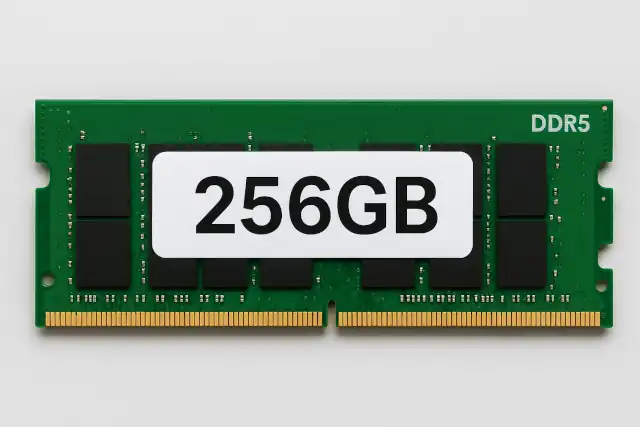
At the recent SC25 supercomputing conference in St. Louis, SK Hynix unveiled a technological breakthrough that could fundamentally change how we think about computer storage: a 256GB DDR5 memory module.
This advancement raises an intriguing question that has tantalized computer enthusiasts for decades—could we finally run entire operating systems directly from RAM?
World’s First Self-Destructing SSD: T-CREATE EXPERT P35S Enables One-Button Data Destruction
The Technical Breakthrough
SK Hynix’s latest innovation represents a significant leap in memory technology. The company showcased its 3DS (three-dimensional stacking) DDR5 RDIMM (Registered Dual In-line Memory Module), built on 1-beta nanometer process technology with 2-Hi stacking architecture. Each chip contains 32 gigabits (4GB), and when combined into a single module, delivers an impressive 256GB capacity with transfer speeds reaching 8,000 Mbps.
Originally designed for data centers and AI applications, these modules offer enhanced power efficiency and are optimized for high-density deployment scenarios. While their primary target market is enterprise computing, the technology signals where consumer memory is heading.
How Close Are Quantum Computers to Breaking RSA-2048?
The RAM Disk Concept: Old Dream, New Possibilities
The idea of running an operating system from RAM isn’t new. RAM disks—portions of memory configured to behave like storage drives—have existed for years. Enthusiasts have long used smaller RAM disks to accelerate specific applications or cache frequently accessed files. The appeal is obvious: RAM operates at speeds that make even the fastest SSDs look sluggish, with access times measured in nanoseconds rather than microseconds.
However, capacity has always been the limiting factor. Modern operating systems like Windows 11 or recent Linux distributions require 20-64GB just for installation, with additional space needed for applications and user data. Until now, dedicating enough RAM to host an entire OS meant sacrificing memory needed for actual computing tasks.
Understanding Zero-Day Vulnerabilities: How Hackers Exploit Windows Kernel Flaws
The Case for RAM-Based Operating Systems
With 256GB modules becoming available, the equation changes dramatically. Consider the advantages:
Speed Beyond Comparison: RAM operates at fundamentally different performance levels than storage devices. While a high-end NVMe SSD might achieve 7,000 MB/s sequential reads, DDR5 memory at 8,000 Mbps per pin—with 64-bit wide interfaces—delivers theoretical bandwidth exceeding 60,000 MB/s. Boot times could shrink to seconds, and application launches would become nearly instantaneous.
System Responsiveness: Every file read, every system call, every temporary file creation would happen at memory speeds. The sluggishness caused by storage bottlenecks would essentially disappear. For developers, content creators, and data analysts working with large datasets, this could represent a transformative improvement in workflow efficiency.
Reduced Wear on Storage: By running the OS and frequently-written temporary files in RAM, you’d dramatically reduce write cycles to your SSD, potentially extending its lifespan significantly.
How Did Tesla and Major Companies Fall Victim to Cryptojacking?
The Practical Challenges
Despite the appeal, several obstacles stand between concept and reality:
Volatility Remains the Fundamental Problem: RAM is volatile storage—everything disappears when power is lost. While you could load a fresh OS image on each boot from a small SSD, any system configurations, installed programs, or documents not explicitly saved to persistent storage would vanish with every shutdown or power failure. Modern operating systems expect persistence. User profiles, system updates, application settings, and cached data all assume they’ll survive a reboot.
Cost Considerations: Enterprise-grade 256GB DDR5 modules will initially carry premium pricing, likely in the thousands of dollars per module. Even as prices decrease, RAM remains significantly more expensive per gigabyte than SSDs. A 1TB NVMe drive costs perhaps one-tenth what comparable RAM capacity would.
Diminishing Returns for Most Users: Modern operating systems already cache frequently accessed files in RAM automatically. Between Windows’ SuperFetch, Linux’s page cache, and macOS’s unified memory architecture, today’s systems already keep hot data in memory. For typical usage patterns—web browsing, office work, media consumption—the difference between a RAM disk OS and a well-configured SSD system might be imperceptible.
Power Consumption: Keeping 256GB of RAM active draws considerably more power than idle storage, impacting both electricity costs and laptop battery life.
How Do Hackers Gain Administrator Access in Under an Hour?
Where RAM Disks Make Sense Today
Certain specialized use cases already benefit from RAM-based storage, and these will only expand:
High-frequency trading systems, where microseconds matter, already use RAM disks extensively. Scientific computing workloads that process massive datasets through multiple iterations can see dramatic speedups. Video editors working with 8K footage could load entire projects into RAM for seamless scrubbing and real-time effects. Database administrators use RAM disks for temporary tables and caching layers.
Virtualization environments could store entire virtual machine images in RAM, allowing instant snapshots and rapid provisioning. Software developers could run build processes entirely in memory, dramatically accelerating compilation times.
Why Enterprises Must Implement Zero Trust Security?
The Hybrid Future
Rather than wholesale migration to RAM-based operating systems, we’re more likely to see increasingly sophisticated hybrid approaches. Operating systems will continue evolving to use available memory more intelligently, perhaps automatically identifying which components benefit most from RAM placement.
Windows’ DirectStorage technology and similar innovations already blur the lines between memory and storage. As persistent memory technologies like Intel’s Optane (though currently discontinued) eventually mature and return in new forms, we may see memory that combines RAM’s speed with storage’s persistence.
The real breakthrough might come from operating systems designed specifically for high-memory environments—lightweight distributions that assume abundant RAM and optimize accordingly, perhaps keeping the core OS and applications in memory while using SSDs purely for document storage and backups.
How to Defend Against Large-Scale DDoS Attacks: A Comprehensive Strategy
Conclusion
SK Hynix’s 256GB memory modules represent genuine progress, pushing boundaries in capacity and performance. While completely RAM-based operating systems remain impractical for mainstream use, we’re approaching a threshold where memory abundance enables new computing paradigms.
The future likely isn’t “RAM disk or SSD” but rather smarter systems that leverage both according to their strengths—RAM for speed and SSD for persistence, with operating systems intelligent enough to manage the distinction seamlessly. As memory capacities continue growing and prices eventually fall, we’ll see more creative uses of RAM beyond simply “more is better.”
For now, the technology exists. Whether mainstream computing embraces RAM disks depends less on technical capability and more on solving the persistence problem and justifying the cost. The dream of instant-on, blazingly fast computing from RAM alone remains tantalizing—and with 256GB modules, it’s closer than ever to reality.