Will Japanese EVs Flood the US Market soon?
Will Japanese EVs Flood the US Market soon? Toyota’s New Battery Plant Signals Strategic Shift
- Why Enterprise RAID Rebuilding Succeeds Where Consumer Arrays Fail?
- Linus Torvalds Rejects MMC Subsystem Updates for Linux 7.0: “Complete Garbage”
- The Man Who Maintained Sudo for 30 Years Now Struggles to Fund the Work That Powers Millions of Servers
- How Close Are Quantum Computers to Breaking RSA-2048?
- Why Windows 10 Users Are Flocking to Zorin OS 18 Instead of Linux Mint?
- How to Prevent Ransomware Infection Risks?
- What is the best alternative to Microsoft Office?
Will Japanese EVs Flood the US Market soon? Toyota’s New Battery Plant Signals Strategic Shift
Toyota’s massive North Carolina investment highlights Japan’s cautious approach to the American EV market amid policy uncertainty
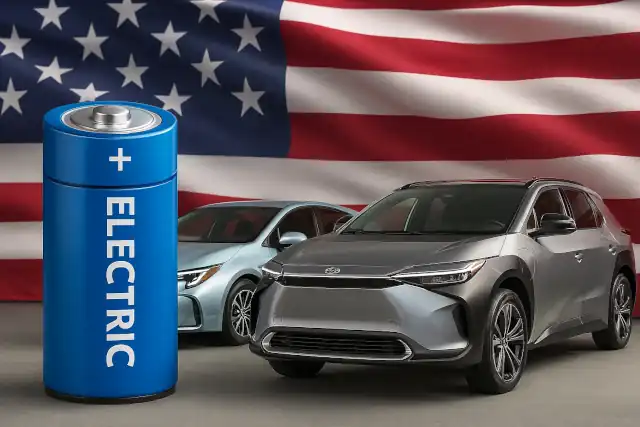
Toyota Motor Corporation inaugurated its first North American battery plant in North Carolina on November 12, marking a pivotal moment in the Japanese automaker’s electrification strategy.
However, rather than signaling an imminent flood of Japanese electric vehicles into the US market, the development reveals a more nuanced picture of cautious expansion amid challenging market conditions.
Stop Whining About China: What Toyota’s EV Success Teaches Foreign Automakers
A $13.9 Billion Bet on Flexibility
The new facility represents Toyota’s largest single investment in US battery production, with a total commitment of $13.9 billion (approximately 2.2 trillion yen). Spanning 650,000 square meters—equivalent to about 14 Tokyo Domes—the plant will eventually employ 5,100 workers across 14 production lines.
Tetsuo Ogawa, President of Toyota North America, described the opening as “an extremely important turning point for Toyota and America’s electrification.” The plant began shipping batteries in June 2025 and aims to reach full capacity by 2034, producing enough batteries to power 400,000 to 500,000 EVs annually.
Trump Administration Ended California’s 100% EV Dream
Strategic Hedge Against Policy Volatility
Toyota’s approach reflects the complex reality facing Japanese automakers in the US market. Currently, Toyota sells only two EV models in America, both imported as finished vehicles from Japan. The automotive tariffs implemented in April 2025 are expected to reduce Toyota’s operating profit by 1.45 trillion yen ($9.1 billion) in the fiscal year ending March 2026.
Local battery production offers a potential path to mitigate these tariff impacts, as vehicles incorporating domestically-produced components may qualify for reduced duties. The plant will initially supply batteries for hybrid vehicles (HVs) and plug-in hybrids (PHVs) currently manufactured in the US, with production of batteries for a new EV model slated to begin in 2026.
Korean EVs Benefit from Trade War and Sales Surge in US
Market Headwinds Challenge EV Expansion
The timing of Toyota’s plant opening coincides with significant headwinds for EV adoption in the United States. The Trump administration ended EV tax incentives in September 2025, and the subsequent withdrawal of purchase subsidies has triggered a sharp downturn in American EV sales from October onward, as the market absorbs the impact of earlier rush purchases.
This policy shift underscores Toyota’s strategic wisdom in maintaining production flexibility. Rather than committing exclusively to EV battery manufacturing, the facility is designed to pivot between producing batteries for hybrids and full EVs depending on market demand.
Why Don’t Tesla Vehicles Made in US and Europe Use Safer LFP Batteries?
The Reality: Measured Growth, Not a Flood
Despite the substantial investment, several factors suggest Japanese EVs are unlikely to “flood” the US market in the near term:
Limited current presence: Toyota and other Japanese manufacturers have minimal EV offerings in the US compared to their internal combustion and hybrid lineups. Honda, Nissan, and Mazda similarly maintain small EV portfolios for the American market.
Hybrid-first strategy: Toyota’s new plant prioritizes hybrid vehicle batteries in the short term, reflecting consumer preferences and policy uncertainty rather than an aggressive EV push.
Infrastructure challenges: The US charging infrastructure remains underdeveloped in many regions, constraining rapid EV adoption regardless of vehicle availability.
Competition intensifies: Japanese automakers face entrenched competition from Tesla’s established US presence and aggressive expansion by Chinese manufacturers in global markets, though tariffs currently limit Chinese EV imports to America.
What is a Plug-in Hybrid Vehicle (PHV)?
Long-Term Positioning
Toyota’s North Carolina facility represents strategic positioning rather than immediate market disruption. By establishing large-scale domestic battery production, Japanese automakers are preparing for a future where EV demand eventually rebounds, while maintaining the flexibility to serve today’s hybrid-dominant market.
The plant’s 2034 timeline for full capacity suggests Toyota envisions gradual rather than explosive EV growth. This measured approach contrasts sharply with the “flooding” scenario, instead indicating Japanese manufacturers expect a decade-long transition period for American consumers to embrace electric vehicles fully.
As policy, infrastructure, and consumer preferences evolve, Japanese automakers are building the foundation for expanded EV sales—but they’re doing so with characteristic caution, ready to adapt to whatever direction the market ultimately takes.