Will Linux Adopt TPM 2.0 Mandatory Like Windows 11 near soon?
Will Linux Adopt TPM 2.0 Mandatory Like Windows 11 near soon? Understanding the Future of PC Security
- Why Enterprise RAID Rebuilding Succeeds Where Consumer Arrays Fail?
- Linus Torvalds Rejects MMC Subsystem Updates for Linux 7.0: “Complete Garbage”
- The Man Who Maintained Sudo for 30 Years Now Struggles to Fund the Work That Powers Millions of Servers
- How Close Are Quantum Computers to Breaking RSA-2048?
- Why Windows 10 Users Are Flocking to Zorin OS 18 Instead of Linux Mint?
- How to Prevent Ransomware Infection Risks?
- What is the best alternative to Microsoft Office?
Will Linux Adopt TPM 2.0 Mandatory Like Windows 11 near soon? Understanding the Future of PC Security
The computing landscape is shifting toward hardware-based security, and Trusted Platform Module (TPM) 2.0 chips sit at the center of this transformation.
While Windows 11 has made TPM 2.0 mandatory, sparking widespread debate, Linux’s approach remains characteristically flexible.
But as security threats evolve, the question isn’t whether Linux can use TPM 2.0—it already does—but whether it should require it universally in the future.
The Most Windows-Friendly Linux Distributions for General Consumers: A Complete Guide
Linux Already Supports TPM 2.0
Unlike Windows 11’s hard requirement, Linux has supported TPM technology for years through a voluntary, modular approach.
The Linux kernel includes TPM drivers, and distributions offer tools like tpm2-tools for interacting with TPM chips. Major distributions such as Ubuntu, Fedora, and RHEL provide TPM integration for encryption, secure boot, and attestation.
This reflects Linux’s fundamental philosophy: providing capabilities without imposing restrictions.
Users who want TPM-based security can enable it; those who don’t need it or prefer alternative approaches aren’t forced to upgrade hardware.
What is the best alternative to Microsoft Office?
Why TPM 2.0 Matters for PC Security
TPM 2.0 represents a significant advancement in protecting computers from sophisticated attacks. Understanding its importance requires looking at what it actually does.
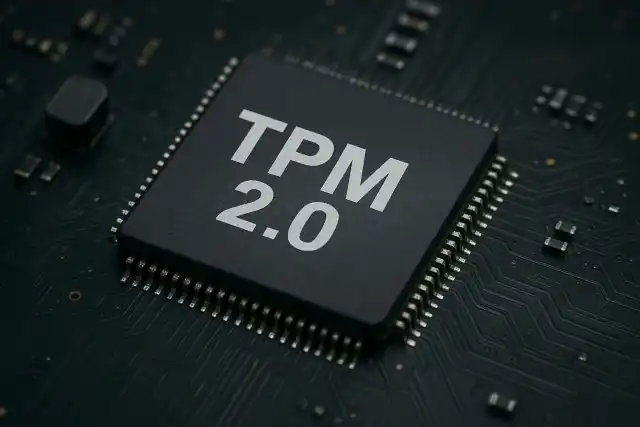
A TPM is a dedicated cryptographic processor—a separate chip on the motherboard that performs security operations independently from the main CPU. This isolation is crucial. Even if malware compromises the operating system, the TPM’s secure environment remains protected, making it exponentially harder for attackers to steal encryption keys or tamper with system integrity.
The chip excels at several critical security functions. It generates and stores cryptographic keys in hardware, preventing software-based attacks from extracting them. When you encrypt your hard drive, the TPM can hold the master key in a way that makes it nearly impossible to recover through traditional hacking methods.
TPM 2.0 also enables measured boot, a process that creates a cryptographic record of every component loaded during startup—from firmware to bootloader to kernel. If malware modifies the boot sequence, the measurements change, and the system can detect the tampering. This protects against rootkits and bootkits that try to gain control before the operating system loads.
For enterprise environments, TPM enables remote attestation, allowing administrators to verify that machines are running unmodified, approved software before granting network access. This becomes increasingly important as sophisticated attacks target the supply chain and firmware levels.
The evolution from TPM 1.2 to 2.0 brought algorithmic improvements, better performance, and standardized implementations across vendors. These enhancements make modern security protocols more practical and reliable.
Replacing Microsoft Outlook on Linux: The Best Email Clients Compared
The Case for TPM in Linux’s Future
Several factors suggest TPM adoption will increase in Linux environments, even without mandatory requirements.
Security threats continue advancing toward firmware and hardware levels. Traditional software-only defenses struggle against attacks that compromise the boot process or persist across operating system reinstalls. TPM-based measured boot provides detection capabilities that pure software solutions cannot match.
Enterprise adoption is accelerating. Organizations deploying Linux servers and workstations increasingly demand hardware security features for compliance and risk management. TPM enables features like encrypted storage with hardware-backed keys and secure credential management that enterprises expect.
Cloud and edge computing environments benefit significantly from TPM capabilities. Remote attestation allows cloud providers to verify the integrity of virtual machines and containers. Edge devices deployed in physically accessible locations gain protection against tampering through sealed storage and measured boot.
As full-disk encryption becomes standard practice, TPM integration offers usability improvements. Instead of typing lengthy passwords at boot, TPM can automatically unlock encrypted drives after verifying system integrity—providing both better security and better user experience.
When and Why You Need Antivirus on Linux (and How to Install ClamAV)
Why Linux Won’t (and Shouldn’t) Mandate TPM
Despite these advantages, several compelling reasons suggest Linux distributions will maintain their optional approach rather than following Windows 11’s mandatory model.
The Linux ecosystem spans an enormous range of hardware. From vintage computers to embedded systems to custom-built servers, Linux runs on devices that may never have TPM chips. A hard requirement would abandon this installed base, contradicting Linux’s reputation for breathing new life into older hardware.
Many Linux use cases don’t benefit from TPM. Single-board computers like Raspberry Pi, embedded systems, virtual machines, and air-gapped security workstations often lack TPM hardware or use alternative security models. Forcing TPM would exclude these legitimate use cases without providing corresponding benefits.
The philosophical mismatch runs deeper. Linux users value control and transparency. TPM technology, while open in specification, relies on proprietary firmware and raises concerns about whose interests the hardware ultimately serves. Some view mandatory TPM as potentially enabling unwanted restrictions on software freedom or user control.
Alternative security approaches exist. SELinux, AppArmor, and other mandatory access control systems provide strong security without hardware dependencies. Full-disk encryption works with password-based key derivation. For many threat models, these software solutions suffice.
The diversity of Linux distributions represents a feature, not a bug.
Some distributions may choose to require or emphasize TPM (particularly enterprise-focused distributions), while others remain hardware-agnostic. This variety allows the ecosystem to serve different needs and philosophies simultaneously.
Why Windows 10 Users Are Flocking to Zorin OS 18 Instead of Linux Mint?
The Likely Future Path
Rather than universal mandates, Linux will probably see stratified adoption based on use case and threat model.
Enterprise and government distributions may increasingly default to TPM-enabled security features and potentially require TPM for certain configurations, particularly for devices handling sensitive data or requiring compliance certifications.
Desktop distributions will likely enhance TPM integration while keeping it optional. Installation tools might detect TPM availability and offer streamlined setup for disk encryption and secure boot, but continue supporting non-TPM installations.
Embedded and specialized distributions will remain hardware-agnostic, focusing on the specific security requirements of their target environments rather than following general-purpose computing trends.
Security-conscious users and organizations will adopt TPM-based protections regardless of requirements, recognizing the defense-in-depth value these capabilities provide.
Windows 10 Users Flee to Linux After Support Cutoff
Conclusion
TPM 2.0 offers genuine security benefits that matter for protecting modern computers against sophisticated threats. Its ability to provide hardware-based key storage, boot integrity verification, and attestation fills gaps that software-only solutions cannot address.
Linux doesn’t need to mandate TPM to benefit from it. The operating system’s flexibility allows those who need enhanced security to leverage TPM capabilities while preserving support for the diverse hardware landscape where Linux thrives. This approach respects both the technical value of hardware security and the practical reality of Linux’s broad ecosystem.
For individual users and organizations, the question isn’t whether Linux will force you to use TPM, but whether your threat model and use case justify adopting it voluntarily. As security threats evolve and TPM-equipped hardware becomes more common, TPM integration will likely grow organically within Linux environments—driven by genuine security needs rather than imposed requirements.
The future of Linux security involves TPM as one important tool among many, available to those who need it while preserving the freedom and flexibility that define the Linux experience.