World-First: Japan Validates Insulation-Free HTS Coils for Stellarator Fusion Reactors
World-First: Japan Validates Insulation-Free HTS Coils for Stellarator Fusion Reactors
- Why Enterprise RAID Rebuilding Succeeds Where Consumer Arrays Fail?
- Linus Torvalds Rejects MMC Subsystem Updates for Linux 7.0: “Complete Garbage”
- The Man Who Maintained Sudo for 30 Years Now Struggles to Fund the Work That Powers Millions of Servers
- How Close Are Quantum Computers to Breaking RSA-2048?
- Why Windows 10 Users Are Flocking to Zorin OS 18 Instead of Linux Mint?
- How to Prevent Ransomware Infection Risks?
- What is the best alternative to Microsoft Office?
World-First: Japan Validates Insulation-Free HTS Coils for Stellarator Fusion Reactors
Japanese Startup Achieves World-First Breakthrough in Fusion Energy, Eyes 2030s Commercial Operation
October 27, 2025 — Japanese fusion startup Helical Fusion announced a groundbreaking milestone today, completing the world’s first full-function performance test of high-temperature superconducting (HTS) coils for stellarator-type fusion reactors, marking a significant advance toward commercial fusion power generation.
Historic Technical Achievement
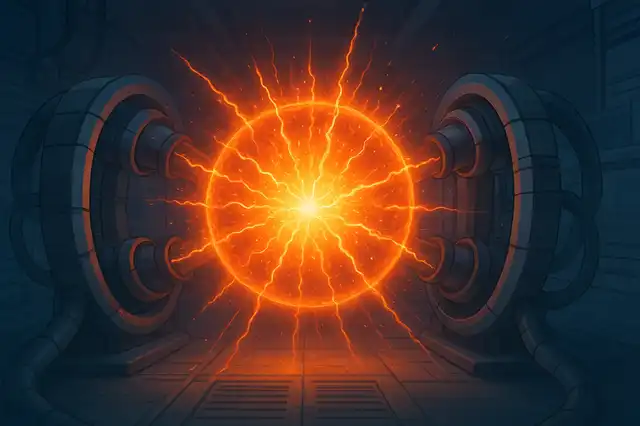
The company successfully demonstrated stable superconducting current of 40 kiloamperes (kA) at 15 Kelvin (-258°C) under a 7-tesla magnetic field—conditions that replicate the magnetic environment inside a fusion reactor. Notably, the HTS coils achieved this without electrical insulation, representing the first successful test of large-scale, insulation-free high-temperature superconducting coils globally.
The breakthrough addresses three critical technical milestones:
- Commercial-grade design: The HTS coils were specifically engineered for commercial fusion power applications
- Authentic magnetic environment: The test replicated both self-generated and external magnetic fields found in operational fusion devices
- Superconducting current validation: Successful demonstration of high-current operation under superconducting conditions
The Stellarator Advantage
Fusion energy requires two primary magnetic confinement approaches: tokamak and stellarator designs. According to the International Atomic Energy Agency, tokamaks excel at maintaining plasma temperature, while stellarators demonstrate superior plasma stability—though at the cost of increased complexity.
Currently, approximately 60 tokamaks and 10 stellarators operate worldwide, with stellarator technology representing the less-traveled but potentially more stable path to fusion energy.
Helical Fusion claims to be the world’s only company focused exclusively on Helical Stellarator technology, drawing on over 60 years of accumulated research from Japanese institutions and universities.
Ambitious Commercial Timeline
The company is advancing its HPLF (Helical Power and Light Fusion) program, targeting construction of the world’s first commercial stellarator fusion power plant in the 2030s. The $5 billion project must meet three fundamental commercial viability requirements:
- 24/7/365 continuous operation
- Net positive electricity generation (output exceeding input)
- Maintainability for long-term operation
Global Fusion Race Intensifies
The announcement comes as multiple nations accelerate their fusion programs. China’s BEST fusion device is expected to be completed in 2027 and could potentially become humanity’s first fusion power generator to achieve net electricity production.
With fusion energy promising virtually unlimited, clean power generation, the race to commercialize this technology represents one of the most significant technological pursuits of the 21st century.
Today’s breakthrough by Helical Fusion demonstrates that multiple technological pathways to fusion power remain viable, bringing the dream of limitless clean energy closer to reality.