Seagate Plans to Launch a 32TB HAMR Hard Drive in 2024 Q1
Seagate Plans to Launch a 32TB HAMR Hard Drive in 2024 Q1, Progressing to Over 40TB by 2025
- 60% of MD5 Password Hashes Can Be Cracked in Under an Hour with a Single GPU
- Dirty Frag: Root Access on Every Major Linux Distribution — No Patch, No Warning
- Ubuntu 26.04 LTS (Resolute Raccoon): The Most Ambitious Ubuntu LTS in a Decade
- Proton Mail: Data Transferred to FBI Again!
- How Close Are Quantum Computers to Breaking RSA-2048?
- How to Prevent Ransomware Infection Risks?
- What is the best alternative to Microsoft Office?
Seagate Plans to Launch a 32TB HAMR Hard Drive in 2024 Q1, Progressing to Over 40TB by 2025
Previously, Seagate had indicated that the capacity of their last CMR/PMR product would be capped at 24TB, while SMR products were expected to reach 28TB. Seagate’s recent financial report, released last week, outlines their plan to introduce the industry’s first hard drive utilizing second-generation HAMR (Heat-Assisted Magnetic Recording) technology by early 2024 and progress to capacities exceeding 40TB by 2025.
According to TomsHardware, Seagate’s CEO, Dave Mosley, during a conference call with financial analysts and investors, mentioned that the capacity of each disk using second-generation HAMR technology will increase to 3TB, with products starting at 30TB or more, offering flexibility with both CMR and SMR configurations. Initial customer qualification progress has been smooth, and Seagate is committed to meeting reliability and yield targets.
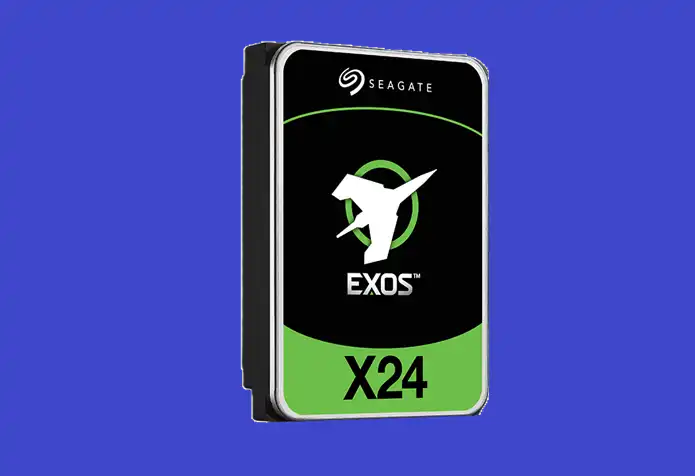
Seagate states that hard drives employing second-generation HAMR technology will feature 10 disks and come equipped with enhanced laser-based write heads and other improvements. The first product, with a capacity of 32TB, is set to enter mass production in early 2024, slightly later than previously shown on the roadmap for 2023. Seagate believes it’s crucial to ensure that second-generation HAMR hard drives meet design and production requirements while also guaranteeing compatibility with existing infrastructure in terms of power consumption.
Seagate’s product advancement in the coming years largely aligns with their original roadmap expectations, and the introduction of HAMR technology hard drives serves as a competitive differentiator. They have already begun to witness the budding trends in cloud demand, making this an increasingly significant aspect of their strategy.
Heat-Assisted Magnetic Recording (HAMR) is an advanced data storage technology used in hard disk drives (HDDs) to increase their data storage capacity and data reliability.
HAMR is designed to overcome the limitations of conventional magnetic recording methods and enable higher areal density, which means more data can be stored on the same physical disk platter.
Here are some key aspects of HAMR technology:
-
Principle of Operation: HAMR works by using a laser to heat a tiny area on the disk’s surface before data is written. This heating process temporarily reduces the magnetic coercivity of the disk material, making it easier to write data at a high areal density. Once the data is written, the heated area cools down and retains its magnetic properties.
-
Areal Density: Areal density refers to the amount of data that can be stored in a given area of a disk platter. HAMR significantly increases areal density compared to traditional recording methods, such as perpendicular magnetic recording (PMR) or shingled magnetic recording (SMR). This allows for higher-capacity hard drives without the need for physically larger disks.
-
Increased Storage Capacity: HAMR technology enables hard drives to store more data on the same physical footprint. This is especially important in an era of growing data storage demands for both consumer and enterprise applications.
-
Data Reliability: HAMR is designed to maintain data integrity and reliability, even with the higher areal densities. The controlled heating and writing process ensure that the stored data is stable and can be accessed without errors.
-
Compatibility: Seagate and other HDD manufacturers have been working to ensure that HAMR technology can be seamlessly integrated into existing hard drive designs. This involves making sure HAMR drives are backward compatible and can work within existing infrastructure.
-
Roadmap for Future HDDs: HAMR technology represents a critical step in the advancement of HDD technology. It allows for HDDs to remain competitive in the storage market, particularly for applications where high-capacity storage is necessary.
-
Deployment Timeline: Seagate and other manufacturers have been gradually introducing HAMR technology into their product lines. The technology was expected to evolve and expand in the coming years to meet the growing demand for higher-capacity storage solutions.
HAMR technology is a significant development in the hard drive industry, ensuring that HDDs remain a relevant and competitive storage solution for various applications despite the increasing popularity of solid-state drives (SSDs).