The AMD Radeon RX 7900 XT now supports ROCm 5.7
The AMD Radeon RX 7900 XT now supports ROCm 5.7, enabling PyTorch ML and AI acceleration.
- 60% of MD5 Password Hashes Can Be Cracked in Under an Hour with a Single GPU
- Dirty Frag: Root Access on Every Major Linux Distribution — No Patch, No Warning
- Ubuntu 26.04 LTS (Resolute Raccoon): The Most Ambitious Ubuntu LTS in a Decade
- Proton Mail: Data Transferred to FBI Again!
- How Close Are Quantum Computers to Breaking RSA-2048?
- How to Prevent Ransomware Infection Risks?
- What is the best alternative to Microsoft Office?
The AMD Radeon RX 7900 XT now supports ROCm 5.7, enabling PyTorch ML and AI acceleration.
Last month, AMD released the ROCm 5.7.1 driver update for Ubuntu Linux, bringing ROCm and PyTorch support to the Radeon Pro W7900 and Radeon RX 7900 XTX graphics cards.
Prior to the AMD Advancing AI event in early December, AMD announced that ROCm and PyTorch support is now available for the RX 7900 XT graphics card, which shares the RDNA 3 architecture with the aforementioned products, covering all top-tier products of the RDNA 3 architecture.
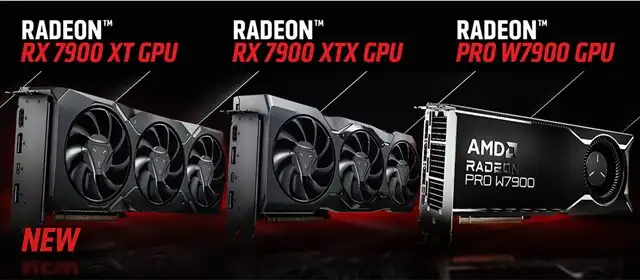
According to AMD Software Product Manager Erik Hultgren, “We are excited about the latest additions to our product portfolio. These high-end GPUs, combined with ROCm, make artificial intelligence more accessible from both a software and hardware perspective, allowing developers to choose solutions that best suit their needs.”
Similar to the other two graphics cards, the RX 7900 XT features a massive 20GB of VRAM and a total of 168 AI acceleration units on the Navi 31 chip, providing fast machine learning training and inference performance. The GPU also supports PyTorch machine learning models and algorithms, optimized for AMD and compatible with Ubuntu Linux systems running version 22.04.3.
This is hopefully just the beginning, as AMD has many other RDNA 3 architecture GPUs. Consumers are hoping for ROCm support, as their competitors, NVIDIA and Intel, have consistently provided better general computing support on consumer-grade graphics cards, such as CUDA and the open-source Intel Compute Runtime. In comparison, AMD’s ROCm support is currently quite limited.