Seagate’s HAMR Technology Brings 60TB Hard Drives Within Reach
Seagate’s HAMR Technology Brings 60TB Hard Drives Within Reach
- 60% of MD5 Password Hashes Can Be Cracked in Under an Hour with a Single GPU
- Dirty Frag: Root Access on Every Major Linux Distribution — No Patch, No Warning
- Ubuntu 26.04 LTS (Resolute Raccoon): The Most Ambitious Ubuntu LTS in a Decade
- Proton Mail: Data Transferred to FBI Again!
- How Close Are Quantum Computers to Breaking RSA-2048?
- How to Prevent Ransomware Infection Risks?
- What is the best alternative to Microsoft Office?
Seagate’s HAMR Technology Brings 60TB Hard Drives Within Reach
On January 21, Seagate announced the delivery of its latest 36TB Exos M hard drives to select customers, marking the highest-capacity hard drive currently available on the market.
This groundbreaking product utilizes Seagate’s Heat-Assisted Magnetic Recording (HAMR) technology and is developed on the Mozaic 3+ platform. It features a 10-platter design, with each platter capable of storing 3.6TB of data.
Toshiba Pioneers 12-Platter Hard Drive: 40TB Model Set for 2027 Launch
The Road to 60TB Hard Drives
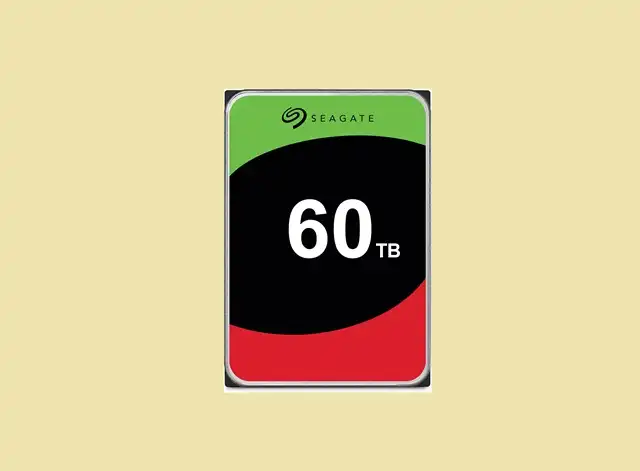
Seagate’s CEO, Dave Mosley, revealed a significant breakthrough achieved in the company’s laboratory: the development of platters with over 6TB capacity. This milestone brings the advent of 60TB hard drives closer, with the potential for release in the coming years.
Looking ahead, Seagate plans to push platter capacity even further, targeting a single platter capacity of 10TB. This paves the way for next-generation hard drives with storage capacities of up to 100TB.
Competition and Market Landscape
While competitors like Western Digital also offer high-capacity hard drives, such as their 32TB model, it requires 11 platters compared to Seagate’s more efficient 10-platter design. Toshiba, another major player, has tested 31TB and 32TB drives using 10 and 11 platters, respectively.
For solid-state drives (SSDs), a 122TB model targeting data centers is expected to launch later this year, with an anticipated price of $80 per terabyte.
However, Seagate’s 36TB hard drive is currently aimed at enterprise customers, such as hyperscale data centers for companies like Microsoft and AWS. For retail consumers, Western Digital’s 26TB Gold Enterprise HDD remains the largest mechanical hard drive available.
Seagate’s advancements in HAMR technology signal a new era for data storage, bringing higher capacity and efficiency to meet the ever-growing demands of the modern data-driven world.
What is Heat-Assisted Magnetic Recording (HAMR) technology?
Heat-Assisted Magnetic Recording (HAMR) is a cutting-edge data storage technology that enables significantly higher data densities in hard disk drives (HDDs) compared to traditional recording methods. HAMR works by using a small, focused laser beam to temporarily heat a tiny area of the magnetic disk during the writing process. Here’s a breakdown of how it works and why it’s significant:
How HAMR Works
-
Laser Heating
- A laser diode embedded in the HDD head heats a small region of the disk to a high temperature (roughly 450–750°C) for an extremely short time—just a nanosecond or less.
- Heating reduces the magnetic coercivity of the material, making it easier to write data by orienting the magnetic grains.
-
Writing Data
- Once heated, the magnetic field applied by the write head alters the orientation of the grains in that region to encode data.
- The region quickly cools down, locking the data in place with high stability.
-
High-Density Media
- HAMR uses media made from advanced alloys (such as iron-platinum or iron-rhodium), which remain stable at small grain sizes, supporting higher data density.
Benefits of HAMR
-
Higher Data Density
HAMR enables much smaller magnetic grains, allowing significantly more data to be stored in the same physical area, resulting in HDDs with terabyte-per-square-inch capacities. -
Long-Term Reliability
Despite using small grains, HAMR ensures stability of the magnetic orientation, preventing data loss due to thermal fluctuations or time. -
Future Scalability
HAMR is a key innovation that positions HDDs to meet future demands for massive data storage in applications like data centers, cloud computing, and artificial intelligence.
Why is HAMR Necessary?
Traditional magnetic recording methods face limitations in data density due to the superparamagnetic effect, where grains become unstable as they shrink further. HAMR overcomes this barrier by temporarily reducing the material’s coercivity, enabling data to be written at high densities without sacrificing long-term data retention.
In essence, HAMR marks a fundamental technological shift for HDDs, offering capacities that rival some SSDs while retaining the cost-efficiency of traditional mechanical drives.