The Fall of Fax Security: Why VoIP Killed the “Secure” Transmission?
The Fall of Fax Security: Why VoIP Killed the “Secure” Transmission?
- 60% of MD5 Password Hashes Can Be Cracked in Under an Hour with a Single GPU
- Dirty Frag: Root Access on Every Major Linux Distribution — No Patch, No Warning
- Ubuntu 26.04 LTS (Resolute Raccoon): The Most Ambitious Ubuntu LTS in a Decade
- Proton Mail: Data Transferred to FBI Again!
- How Close Are Quantum Computers to Breaking RSA-2048?
- How to Prevent Ransomware Infection Risks?
- What is the best alternative to Microsoft Office?
The Fall of Fax Security: Why VoIP Killed the “Secure” Transmission?
For decades, fax machines were considered the gold standard for secure document transmission, particularly in industries like healthcare, legal services, and finance.
The distinctive screeching sound of a fax machine was synonymous with reliability and security. However, the transition from traditional telephone lines to Voice over Internet Protocol (VoIP) has fundamentally undermined the security advantages that once made fax superior to email.
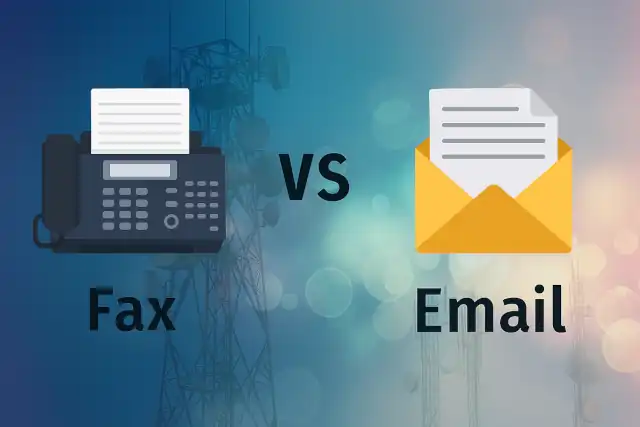
Today, faxing over VoIP networks may actually be less secure than email—a dramatic reversal that many organizations have been slow to recognize.
Anatomy of a Ransomware Attack: The Askul and Asahi Cyber Incidents In Japan
Why Traditional Fax Was More Secure Than Email
To understand this transformation, we must first examine why traditional fax technology earned its reputation for security.
Direct Point-to-Point Connection
Traditional fax machines operated over the Public Switched Telephone Network (PSTN), creating a direct, dedicated circuit between sender and receiver. When you dialed a fax number, the telephone network established a physical electrical path between the two machines that existed only for the duration of that transmission. This circuit-switched connection meant your document traveled through a closed channel, never stored on intermediate servers or accessible to multiple network nodes.
Email, by contrast, operates on a store-and-forward model. Your message bounces through multiple mail servers, each temporarily storing a copy before passing it along. An email from New York to Los Angeles might pass through five or more servers, creating multiple vulnerability points and data copies that could persist indefinitely.
No Intermediate Storage
With PSTN fax, once transmission completed, the data ceased to exist in the network. There were no server logs containing your document content, no backup copies on network infrastructure, and no permanent records beyond the physical pages at each endpoint. The ephemeral nature of the transmission meant there was nothing to hack, subpoena, or accidentally expose months or years later.
Email systems, however, maintain extensive logs and archives. Your confidential document might reside on your mail server, your recipient’s mail server, backup systems, and potentially several intermediate relay servers—all potential targets for breaches or legal discovery.
Analog Simplicity and Encryption Immunity
Traditional fax transmitted documents as analog audio signals—essentially a series of tones representing light and dark pixels. This analog format was effectively “encryption immune” in a counterintuitive way: it couldn’t be easily intercepted and reconstructed without physically tapping the telephone line, which required direct access to the physical infrastructure. While technically possible, such wiretapping required significant resources, physical presence, and obvious illegal activity.
Early email, transmitted as unencrypted digital text, could be intercepted anywhere along its path through the internet by anyone with access to the network infrastructure—a much larger threat surface requiring far less sophisticated equipment or access.
Authentication Through Phone Numbers
PSTN infrastructure provided a basic form of authentication through Caller ID and the phone number system itself. While not cryptographically secure, the telephone numbering system was managed by regulated telecommunications providers, making number spoofing more difficult than email address spoofing. You could have reasonable confidence that a fax from a known number was genuinely from that location.
Email addresses, conversely, are trivially easy to spoof, making phishing and impersonation attacks commonplace.
How Did Tesla and Major Companies Fall Victim to Cryptojacking?
The Era of the Copper Wire: Why Fax Beat Email
In the analog world of the Public Switched Telephone Network (PSTN)—the copper phone lines—faxing enjoyed a security edge that basic email simply could not match.
| Feature | Traditional Fax (PSTN) | Basic Email (Unencrypted) |
| Transmission Path | Dedicated, Point-to-Point. The signal traveled a physically isolated path from one machine to another. | Store-and-Forward. Data hops across multiple servers, firewalls, and ISPs, where copies are stored. |
| Data Format | Analog Signal. The data was a noisy, high-frequency sound wave (audio tone). | Digital Packets. Data is clear, easily readable digital text. |
| Interception Difficulty | High. Required physical access to the phone line and specialized equipment (a fax modem) to demodulate the analog signal in real-time. Low automation potential. | Low. Easy to intercept, sniff, or steal from any server along the route. High automation potential for hackers. |
| Vulnerabilities | Primarily human error (leaving a printed fax unattended). | Phishing, malware, server breaches, and man-in-the-middle attacks. |
The VoIP Revolution: A Security Paradigm Shift
The migration from PSTN to VoIP fundamentally changed the nature of fax transmission, eliminating nearly every security advantage the technology once held.
From Circuits to Packets
VoIP converts voice (and fax signals) into digital data packets that travel over the internet like any other data. When you send a fax over VoIP, your document is no longer transmitted through a dedicated circuit. Instead, it’s broken into thousands of small packets that travel independently through the internet, potentially taking different routes, passing through numerous routers and network nodes, and sharing bandwidth with countless other data streams.
This packet-switched architecture means your “fax” is now just internet traffic—subject to all the same vulnerabilities as any other online communication. The dedicated, isolated channel that made traditional fax secure simply doesn’t exist in a VoIP environment.
Signal Degradation and Quality Issues
Fax protocols (T.30 and T.38) were designed for the predictable, consistent quality of analog phone lines. VoIP networks introduce packet loss, jitter (variable delay), and latency that can corrupt fax transmissions. Many VoIP providers implement compression algorithms to save bandwidth, which can further degrade the fax signal.
The result is that VoIP fax transmissions frequently fail or produce corrupted documents—but without clear error messages. You might believe a confidential document was successfully transmitted when only a partial or garbled version arrived, creating security gaps through unreliability.
Network Vulnerability
Once your fax enters a VoIP system, it becomes vulnerable to all standard network attacks:
- Man-in-the-Middle Attacks: Attackers can intercept packets traversing the internet, potentially capturing your fax data.
- Network Sniffing: Anyone with access to network infrastructure (ISPs, network administrators, hackers) can monitor VoIP traffic.
- Server-Based Vulnerabilities: Many VoIP systems store faxes temporarily or permanently on servers, creating the same storage vulnerabilities that plague email.
- Denial of Service: VoIP systems can be overwhelmed with traffic, preventing legitimate fax transmissions.
Loss of Authentication
VoIP fundamentally broke the phone number authentication system. In a VoIP world, phone numbers are just database entries that can be easily spoofed or manipulated. Caller ID information in VoIP can be set to any value the sender chooses, making it trivially easy to impersonate legitimate fax sources. The weak authentication that PSTN provided vanished entirely.
Why VPN Security Should Be Every Enterprise’s Top Priority
Why VoIP Fax Is Now Less Secure Than Email
The cruel irony is that while traditional fax had genuine security advantages over early email, modern email has evolved robust security features while VoIP fax has lost its inherent protections without gaining equivalent replacements.
Email Has Evolved; VoIP Fax Has Not
Modern email systems routinely implement:
- Transport Layer Security (TLS): Encrypts email in transit between servers, protecting against interception.
- End-to-End Encryption: Solutions like S/MIME and PGP allow complete encryption where only sender and recipient can read messages.
- SPF, DKIM, and DMARC: Authentication protocols that verify sender identity and prevent spoofing.
- Secure Storage: Encrypted storage for email archives.
- Access Controls: Granular permissions, multi-factor authentication, and audit logs.
VoIP fax, by contrast, typically operates with no encryption, no strong authentication, and no security enhancements beyond what the underlying internet connection provides (which is often nothing). The fax protocols themselves (T.30/T.38) have no built-in security features—they were designed for the inherent security of circuit-switched networks, which no longer exist.
The False Sense of Security
Perhaps most dangerously, VoIP fax creates a false sense of security. Organizations continue using fax for sensitive documents because of its historical reputation, not realizing that the underlying technology has completely changed. They believe they’re using a secure “fax line” when they’re actually sending unencrypted data over the public internet—often less securely than if they’d used email with TLS encryption.
Compliance Theater
Many regulations (like HIPAA in the United States) were written when traditional PSTN fax was genuinely more secure than email. These regulations often still permit or even prefer fax transmission, but haven’t been updated to reflect the VoIP reality. Organizations may be technically compliant while actually transmitting sensitive data less securely than modern alternatives would allow.
| Feature | VoIP Fax (Unencrypted T.38) | Basic Email (TLS Encrypted Connection) |
| Data Security | T.38 packets are typically unencrypted and easily captured/reassembled into an image. | Most major email providers use TLS encryption to secure the connection between mail servers, making interception more difficult. |
| Spam/Malware Risk | Low risk of malicious attachments. | High risk of phishing and malware/ransomware attachments—the number one security threat. |
| Ease of Capture | Data packets are vulnerable to network sniffing, especially at the service provider level. | While the content may be stored unencrypted on servers, the transport usually has some level of TLS protection. |
Which Honeypot Is Best for Enterprise Security Teams?
Conclusion: Time to Retire the Fax Machine
The security that made fax superior to email was never about the fax machine itself—it was about the PSTN infrastructure underneath. That infrastructure is rapidly disappearing, and with it, any rational security justification for fax transmission.
Organizations continuing to use fax for security reasons should recognize they’re relying on obsolete assumptions. Modern email with proper encryption, authentication, and security controls is demonstrably more secure than VoIP fax. Better yet, purpose-built secure file transfer systems, encrypted messaging platforms, or patient portals offer even stronger protection with better user experience and audit capabilities.
The distinctive screech of the fax machine once signaled security. Today, it should be recognized as a warning: a reminder that security based on outdated infrastructure assumptions is no security at all. It’s time to let the fax machine join the typewriter as a relic of office history—and embrace modern communications technologies designed for the security challenges of our interconnected world.