Why Don’t Tesla Vehicles Made in US and Europe Use Safer LFP Batteries?
Why Don’t Tesla Vehicles Made in US and Europe Use Safer LFP Batteries?
- 60% of MD5 Password Hashes Can Be Cracked in Under an Hour with a Single GPU
- Dirty Frag: Root Access on Every Major Linux Distribution — No Patch, No Warning
- Ubuntu 26.04 LTS (Resolute Raccoon): The Most Ambitious Ubuntu LTS in a Decade
- Proton Mail: Data Transferred to FBI Again!
- How Close Are Quantum Computers to Breaking RSA-2048?
- How to Prevent Ransomware Infection Risks?
- What is the best alternative to Microsoft Office?
Why Don’t Tesla Vehicles Made in US and Europe Use Safer LFP Batteries?
Tesla’s decision to use different battery chemistries across its global production facilities has sparked considerable debate among automotive experts and consumers.
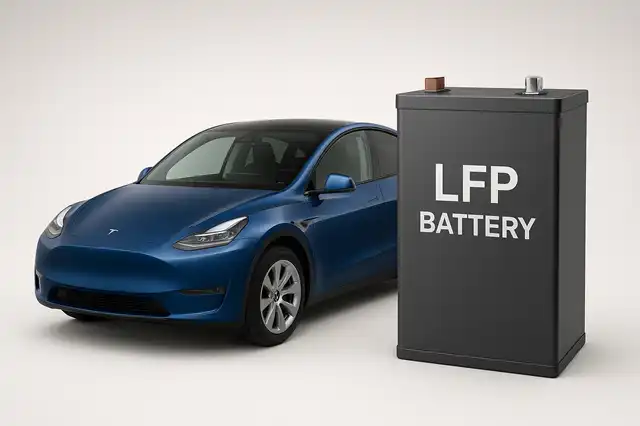
While the company has increasingly adopted Lithium Iron Phosphate (LFP) batteries in vehicles produced in China, its American and European-made vehicles continue to rely primarily on Nickel Cobalt Aluminum (NCA) and Nickel Cobalt Manganese (NCM) batteries.
This raises an important question: if LFP batteries are indeed safer, why hasn’t Tesla embraced them universally?
Understanding the Battery Chemistry Trade-offs
The characterization of LFP batteries as “safer” requires context. LFP batteries do offer superior thermal stability compared to nickel-based chemistries. They are less prone to thermal runaway—a dangerous chain reaction that can lead to battery fires. This makes them inherently more stable, particularly in extreme conditions.
However, this safety advantage comes with significant trade-offs that are particularly relevant in Western markets:
Energy Density: NCA and NCM batteries pack considerably more energy per kilogram than LFP batteries. This translates directly into driving range—a critical factor for consumer acceptance in markets where long-distance travel is common and charging infrastructure may be less developed in rural areas.
Cold Weather Performance: LFP batteries suffer notable performance degradation in cold temperatures, losing both range and charging speed. This is a serious consideration for markets like Northern Europe, Canada, and the northern United States, where sub-zero temperatures are routine during winter months.
Weight Considerations: To achieve comparable range with LFP batteries, vehicles must carry more battery mass, which affects handling, efficiency, and overall vehicle dynamics—qualities that premium car buyers expect.
Market-Specific Factors
Tesla’s battery strategy appears to reflect distinct market realities:
Consumer Expectations: American and European buyers of premium electric vehicles prioritize range and performance. These markets are accustomed to internal combustion vehicles that can travel 400+ miles on a single tank, and range anxiety remains a significant barrier to EV adoption.
Charging Infrastructure: While improving, charging networks in the US and Europe are still developing. Longer range capabilities help compensate for charging gaps, particularly in rural areas.
Climate Considerations: Much of Europe and significant portions of the US experience harsh winters. The cold-weather performance penalty of LFP batteries would be particularly problematic in these regions.
Price Positioning: Tesla’s US and European-made vehicles often target higher price points where customers expect maximum performance and range, rather than the value proposition that LFP batteries enable.
The China Exception
Tesla’s adoption of LFP batteries in China makes strategic sense for several reasons:
- Supply Chain: China dominates LFP battery production, with companies like CATL and BYD leading the technology. Local sourcing reduces costs and complexity.
- Climate: Many of China’s major urban markets have milder winters than Northern Europe or the US.
- Market Segmentation: LFP batteries are primarily used in Tesla’s Standard Range models in China, where they enable lower price points crucial for that competitive market.
- Government Support: Extensive fast-charging infrastructure in Chinese cities mitigates the range limitations of LFP batteries.
The Safety Question Revisited
While LFP batteries do have superior thermal stability, it’s important to note that modern NCA and NCM batteries incorporate extensive safety systems. Tesla’s vehicles include sophisticated battery management systems, thermal regulation, physical protection structures, and multiple safety redundancies. Statistical data on actual vehicle fires shows that electric vehicles, regardless of battery chemistry, have significantly lower fire rates than gasoline-powered vehicles.
The notion that Tesla is choosing “less safe” batteries for Western markets oversimplifies a complex engineering and business decision. Rather, Tesla is optimizing for the complete package of safety, performance, range, cost, and user experience based on regional requirements.
Looking Forward
Tesla has indicated interest in expanding LFP battery usage globally, particularly as the technology improves and as the company introduces more affordable vehicle models. Future developments may include:
- Improved LFP chemistries with better energy density
- Enhanced cold-weather performance through technological advances
- Greater LFP adoption in entry-level models across all markets
- Continued use of nickel-based batteries in performance and long-range variants
The battery chemistry question ultimately reflects the complex challenge of serving diverse global markets with different priorities, climates, and infrastructure. Rather than a simple safety versus performance trade-off, Tesla’s battery strategy represents a nuanced approach to meeting varied customer needs while navigating supply chain realities and technological constraints.
As battery technology continues to evolve, the distinctions between these chemistries may blur, potentially leading to more unified global battery strategies. For now, however, Tesla’s region-specific approach reflects pragmatic responses to real-world constraints and market demands.