Why Proton Mail Offers Superior Security and Privacy Compared to Gmail
Why Proton Mail Offers Superior Security and Privacy Compared to Gmail
- 60% of MD5 Password Hashes Can Be Cracked in Under an Hour with a Single GPU
- Dirty Frag: Root Access on Every Major Linux Distribution — No Patch, No Warning
- Ubuntu 26.04 LTS (Resolute Raccoon): The Most Ambitious Ubuntu LTS in a Decade
- Proton Mail: Data Transferred to FBI Again!
- How Close Are Quantum Computers to Breaking RSA-2048?
- How to Prevent Ransomware Infection Risks?
- What is the best alternative to Microsoft Office?
Why Proton Mail Offers Superior Security and Privacy Compared to Gmail
In an era where digital privacy is increasingly under threat, choosing the right email provider has become a critical decision for anyone concerned about data security.
While Gmail dominates the market with billions of users, Proton Mail has emerged as a compelling alternative for those who prioritize privacy and security.
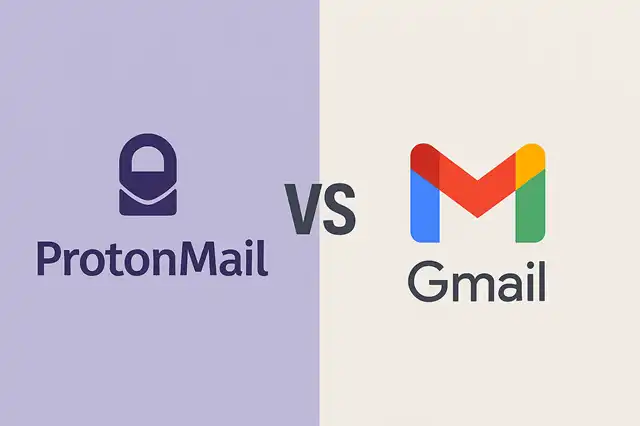
Here’s why Proton Mail offers fundamentally stronger protection than Gmail.
End-to-End Encryption: The Core Difference
The most significant advantage Proton Mail holds over Gmail is its implementation of end-to-end encryption (E2EE). With Proton Mail, your messages are encrypted on your device before they’re sent to Proton’s servers. This means that even Proton itself cannot read your emails—only you and your intended recipient hold the decryption keys.
Gmail, by contrast, does not offer true end-to-end encryption for standard email communications. While Google does encrypt data in transit (between your device and their servers) and at rest (when stored on their servers), Google retains the ability to decrypt and read your emails. This is a fundamental architectural difference that has profound implications for privacy.
Zero-Access Architecture
Proton Mail’s zero-access encryption architecture ensures that all your data is encrypted before it reaches their servers. Your emails, contacts, and calendar events are all protected with encryption keys that only you control. Even if compelled by legal authorities or in the event of a data breach, Proton cannot hand over readable content because they literally cannot access it.
Google’s business model, however, relies on data access. While Gmail no longer scans emails for ad targeting purposes (a practice they discontinued in 2017), Google’s systems still process your email content for features like Smart Compose, spam filtering, and automatic categorization. This requires Google to maintain the technical capability to read your messages.
Privacy-First Business Model
The divergence in encryption capabilities stems from fundamentally different business models. Google’s revenue primarily comes from advertising, which historically has been powered by user data analysis. Although Gmail itself may not directly serve targeted ads based on email content anymore, the broader Google ecosystem still relies on data collection across its services.
Proton Mail operates on a subscription-based model with a commitment to never profit from user data. Based in Switzerland, Proton benefits from some of the world’s strongest privacy laws, including the Swiss Federal Data Protection Act. The company is not subject to US or EU jurisdiction, providing an additional layer of legal protection against mass surveillance programs.
Open Source Transparency
Proton Mail’s encryption code is open source and has been independently audited by security experts. This transparency allows the security community to verify that Proton’s encryption is implemented correctly and that there are no backdoors. Users don’t have to simply trust Proton’s claims—they can verify them.
Gmail’s code, being proprietary, cannot be independently verified in the same way. Users must trust Google’s security practices without the ability to audit the underlying code themselves.
Protection Against Third-Party Requests
When law enforcement or government agencies request user data, the type of information providers can hand over differs dramatically. Because of Proton’s encryption architecture, even if they receive a valid legal request, they can only provide encrypted data and limited metadata. The content of emails remains protected.
Google, with full access to unencrypted email content, can provide much more comprehensive information when served with legal requests, including the full content of messages, search histories, and detailed metadata.
Conclusion
While Gmail offers convenience, integration with Google’s ecosystem, and excellent spam filtering, Proton Mail provides something fundamentally different: genuine privacy by design.
Its end-to-end encryption, zero-access architecture, privacy-focused business model, and Swiss legal protection create a security posture that Gmail simply cannot match given its current architecture and business requirements.
For users whose threat model includes concerns about government surveillance, corporate data collection, or who simply believe in the principle of digital privacy, Proton Mail’s encryption mechanisms offer substantially better protection.
The choice between Gmail and Proton Mail ultimately comes down to what you value more: seamless integration with Google services or the peace of mind that comes from knowing your private communications truly remain private.
Understanding End-to-End Encryption (E2EE): Applications and Use Cases
The best free email with end-to-end encryption (E2EE)