Toyota Accelerates Solid-State Battery Development: All-Solid-State EVs Targeted for 2027-2028
Toyota Accelerates Solid-State Battery Development: All-Solid-State EVs Targeted for 2027-2028
- 60% of MD5 Password Hashes Can Be Cracked in Under an Hour with a Single GPU
- Dirty Frag: Root Access on Every Major Linux Distribution — No Patch, No Warning
- Ubuntu 26.04 LTS (Resolute Raccoon): The Most Ambitious Ubuntu LTS in a Decade
- Proton Mail: Data Transferred to FBI Again!
- How Close Are Quantum Computers to Breaking RSA-2048?
- How to Prevent Ransomware Infection Risks?
- What is the best alternative to Microsoft Office?
Toyota Accelerates Solid-State Battery Development: All-Solid-State EVs Targeted for 2027-2028
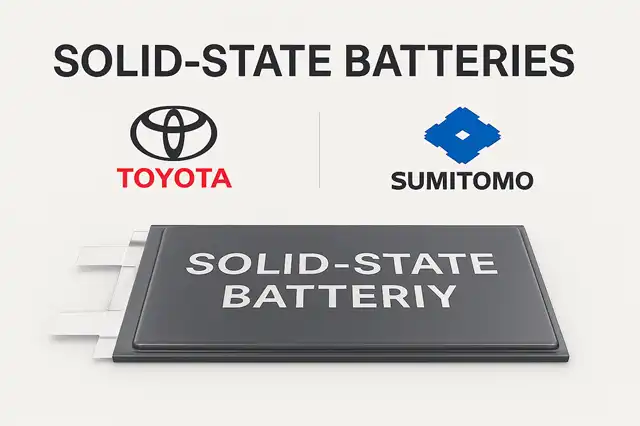
Toyota Motor Corporation has announced a major partnership with Sumitomo Metal Mining Co., Ltd. to advance the mass production and technological development of cathode materials for all-solid-state batteries in battery electric vehicles (BEVs).
The Japanese automaker is targeting 2027-2028 for the launch of its first electric vehicles equipped with this next-generation battery technology.
Strategic Partnership for Next-Generation Technology
The collaboration between Toyota and Sumitomo Metal Mining focuses on accelerating the commercialization of all-solid-state battery cathode materials. This partnership represents a significant step in Toyota’s efforts to overcome current limitations in electric vehicle technology.
All-solid-state batteries differ fundamentally from conventional lithium-ion batteries by using solid electrolytes instead of liquid ones. The technology comprises three main components: a cathode, an anode, and a solid electrolyte. This configuration offers several key advantages over traditional battery designs.
Performance Advantages
According to Toyota’s technical analysis, all-solid-state batteries deliver substantial improvements in multiple areas:
- Compact design: Smaller physical footprint compared to liquid electrolyte batteries
- Higher power output: Enhanced performance capabilities
- Extended lifespan: Longer operational durability
- Faster charging: Significantly reduced charging times
- Greater range: Substantially longer driving distances per charge
When applied to electric vehicles, these characteristics could directly address two of the most significant barriers to EV adoption: charging convenience and range anxiety.
Part of Toyota’s Multi-Pathway Strategy
At Toyota’s annual shareholder meeting this year, Executive Vice President Hiroki Nakajima positioned all-solid-state batteries as a crucial pillar of the company’s “multi-pathway strategy.” This approach involves offering different vehicle types tailored to the energy infrastructure and needs of specific countries and regions.
Toyota’s product portfolio under this strategy includes:
- Traditional internal combustion engine vehicles
- Hybrid electric vehicles (HEVs)
- Plug-in hybrid electric vehicles (PHEVs)
- Battery electric vehicles (BEVs)
- Fuel cell electric vehicles (FCEVs)
- Hydrogen engine vehicles
Addressing Critical EV Bottlenecks
Nakajima explained the strategic importance of solid-state battery development: “We clearly recognize that charging time and driving range remain critical bottlenecks that battery electric vehicles urgently need to overcome. Developing all-solid-state batteries is precisely aimed at fundamentally solving these pain points.”
He emphasized that this technology would not only dramatically reduce charging times and extend driving range but also significantly improve overall battery lifespan—addressing three major concerns of potential EV buyers simultaneously.
Racing Toward Commercialization
Toyota’s timeline of 2027-2028 for bringing solid-state battery EVs to market places the automaker in the midst of a global race to commercialize this promising technology. Multiple manufacturers worldwide are pursuing similar developments, viewing solid-state batteries as a potential game-changer for the electric vehicle industry.
The partnership with Sumitomo Metal Mining, a company with extensive expertise in materials science and mining, suggests Toyota is serious about overcoming the manufacturing challenges that have historically hindered solid-state battery commercialization. Mass production of cathode materials at scale will be essential for making these advanced batteries economically viable.
As the automotive industry continues its transition toward electrification, Toyota’s investment in solid-state battery technology demonstrates the company’s commitment to providing diverse solutions that address real-world concerns about electric vehicle practicality and performance.
Why Tesla Still Prefers Ternary Lithium-Ion Batteries Over Solid-State Technology
Will Solid-State Batteries Replace Current Lithium-Ion Technology in Electric Vehicles?