TP-Link Successfully Completes First Wi-Fi 8 Hardware Trial: A Leap Forward in Wireless Reliability
TP-Link Successfully Completes First Wi-Fi 8 Hardware Trial: A Leap Forward in Wireless Reliability
- 60% of MD5 Password Hashes Can Be Cracked in Under an Hour with a Single GPU
- Dirty Frag: Root Access on Every Major Linux Distribution — No Patch, No Warning
- Ubuntu 26.04 LTS (Resolute Raccoon): The Most Ambitious Ubuntu LTS in a Decade
- Proton Mail: Data Transferred to FBI Again!
- How Close Are Quantum Computers to Breaking RSA-2048?
- How to Prevent Ransomware Infection Risks?
- What is the best alternative to Microsoft Office?
TP-Link Successfully Completes First Wi-Fi 8 Hardware Trial: A Leap Forward in Wireless Reliability
The next generation of wireless networking is taking shape, with TP-Link achieving a significant milestone in Wi-Fi 8 development.
Just a few short years after consumer Wi-Fi 7 devices entered the market, the development of the Wi-Fi 8 (802.11bn) standard is already accelerating.
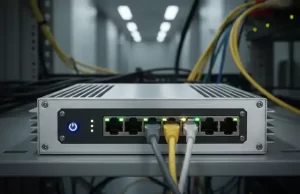
TP-Link has announced the successful completion of the first Wi-Fi 8 hardware trial using a prototype device, marking a crucial step toward the next generation of wireless connectivity.

The Milestone Achievement
While TP-Link has not disclosed specific details about the hardware used in this Wi-Fi 8 trial, the company acknowledged working through “industry partnerships.” The Wi-Fi chip market is dominated by major players including Broadcom, Qualcomm, Intel, MediaTek, and Marvell. Given TP-Link’s close collaboration with Qualcomm on Wi-Fi 7 chipset supply, it’s reasonable to speculate that this partnership may extend into the Wi-Fi 8 hardware domain.
According to TP-Link, the testing successfully validated Wi-Fi 8’s beacon functionality and data throughput, representing a “critical milestone” in the Wi-Fi 8 development process.
Wi-Fi 8 vs. Wi-Fi 7: Understanding the Key Differences
Philosophy: Reliability Over Raw Speed
The most fundamental difference between Wi-Fi 8 and Wi-Fi 7 lies in their core objectives. While Wi-Fi 7 focused on delivering dramatic speed improvements, Wi-Fi 8 prioritizes overall reliability and real-world performance rather than pursuing headline-grabbing theoretical speeds.
Technical Specifications: Evolutionary, Not Revolutionary
What Stays the Same:
- Frequency bands: Wi-Fi 8 continues to use the same 2.4 GHz, 5 GHz, and 6 GHz bands as Wi-Fi 7
- Modulation: Retains the 4096 QAM (Quadrature Amplitude Modulation) introduced in Wi-Fi 7
- Channel bandwidth: Maintains the maximum 320 MHz channel bandwidth
- Maximum theoretical speed: Remains at 46 Gbps, identical to Wi-Fi 7
What’s New: The innovation in Wi-Fi 8 comes through its Ultra High Reliability (UHR) goal, which aims to increase actual data rates by 25% for compliant devices—focusing on what users experience in real-world conditions rather than laboratory maximums.
Four Revolutionary Technologies
According to MediaTek’s white paper, Wi-Fi 8 introduces four new technologies designed to enhance various aspects of wireless performance:
-
Coordinated Spatial Reuse (Co-SR): Monitors power levels to achieve optimal signal strength between devices, reducing interference in crowded environments
-
Coordinated Beamforming (Co-BF): Improves signal directionality and strength for more efficient data transmission
-
Dynamic Sub-Channel Operation (DSO): Allocates sub-channels to devices dynamically, potentially increasing throughput by up to 80%
-
Enhanced Modulation Coding Scheme (MCS): Optimizes data encoding for better performance under varying signal conditions
Real-World Benefits for Consumers
For everyday users, especially those in densely populated urban environments, Wi-Fi 8 promises tangible improvements:
- Reduced interference: Better performance in apartment buildings and crowded areas where multiple networks compete for airspace
- Improved roaming: More stable connections with fewer interruptions when moving between access points
- Enhanced weak-signal performance: Better connectivity in areas with poor signal coverage
- Consistent speeds: More reliable actual speeds that align closer to advertised capabilities
Looking Ahead
While Wi-Fi 8 may not wow consumers with massive speed increases on spec sheets, its focus on real-world reliability and performance represents a maturation of wireless technology. In an era where most homes have dozens of connected devices and urban environments are saturated with competing signals, the practical improvements offered by Wi-Fi 8 may prove more valuable than incremental speed gains.
As the standard continues development and more manufacturers complete their trials, consumers can look forward to a wireless future where connections are not just faster on paper, but genuinely more dependable in everyday use.