Why Smartphones Can’t Install Operating Systems as Freely as PCs
Why Smartphones Can’t Install Operating Systems as Freely as PCs: The Technical and Business Barriers
- 60% of MD5 Password Hashes Can Be Cracked in Under an Hour with a Single GPU
- Dirty Frag: Root Access on Every Major Linux Distribution — No Patch, No Warning
- Ubuntu 26.04 LTS (Resolute Raccoon): The Most Ambitious Ubuntu LTS in a Decade
- Proton Mail: Data Transferred to FBI Again!
- How Close Are Quantum Computers to Breaking RSA-2048?
- How to Prevent Ransomware Infection Risks?
- What is the best alternative to Microsoft Office?
Why Smartphones Can’t Install Operating Systems as Freely as PCs: The Technical and Business Barriers
For decades, personal computer users have enjoyed the freedom to install virtually any operating system they choose—whether Windows, Linux, macOS (on compatible hardware), or countless other alternatives.
Yet when it comes to smartphones, this fundamental freedom remains largely absent.
Despite being powerful computers in their own right, phones operate within a locked ecosystem that prevents users from exercising the same level of control.
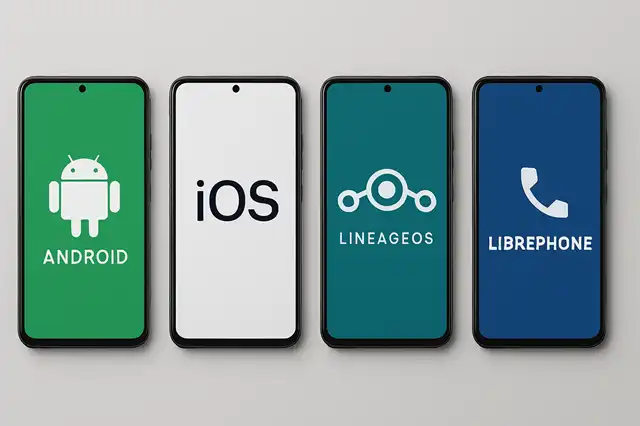
The Free Software Foundation’s recent announcement of the “Librephone” project highlights this persistent frustration and raises an important question: why can’t smartphones be as open as PCs?
The Locked Bootloader Problem
At the heart of the smartphone freedom issue lies the bootloader—the low-level software that initializes the device and loads the operating system. Unlike most PCs, which feature unlocked BIOS or UEFI systems that allow users to boot from alternative media, most smartphones ship with locked bootloaders that only accept digitally signed software from the manufacturer.
This technical restriction serves multiple purposes for manufacturers. They argue it enhances security by preventing malicious software from gaining deep system access, and it helps carriers maintain control over subsidized devices. However, it also effectively prevents users from installing alternative operating systems, even if they own the device outright. While some manufacturers offer bootloader unlocking procedures, doing so typically voids warranties and may disable critical features like mobile payment systems or DRM-protected content playback.
The Proprietary Blob Dilemma
Even when users successfully unlock bootloaders and install alternative operating systems like LineageOS, they encounter another fundamental obstacle: proprietary binary blobs. These are closed-source software components that control essential hardware functions—cellular modems, Wi-Fi chips, GPS modules, cameras, and graphics processors.
Unlike PC hardware, which has benefited from decades of standardization and open driver development, smartphone system-on-chip (SoC) manufacturers have maintained tight control over their hardware interfaces. Qualcomm, MediaTek, Samsung, and other chipmakers provide these binary blobs to phone manufacturers but rarely release the source code or documentation needed for independent developers to write free software alternatives.
As FSF’s new Librephone initiative recognizes, this creates a situation where even the most “open” Android distributions remain fundamentally unfree at their deepest levels.
LineageOS, despite removing Google’s proprietary services and representing years of community development work, still depends on these manufacturer-supplied blobs to function. The phone may run open-source software at the application and framework levels, but its firmware and low-level drivers remain black boxes.
Vertical Integration and Business Models
The smartphone industry’s business model differs fundamentally from the PC market’s horizontal structure. PC manufacturers generally don’t produce operating systems, and operating system vendors don’t manufacture hardware (Apple being the notable exception). This separation created natural pressure toward standardization and openness.
Smartphones, by contrast, feature tight vertical integration. Apple controls both iOS and iPhone hardware completely. Google develops Android but also manufactures Pixel phones and maintains close relationships with Android device manufacturers through licensing agreements. This vertical integration allows companies to optimize performance and user experience, but it also enables them to maintain control over the entire stack—from silicon to software.
These companies have strong financial incentives to maintain closed ecosystems. App store revenue, advertising data, and ecosystem lock-in all depend on preventing users from easily switching to alternative platforms. A truly open smartphone market, where users could freely install any operating system, would disrupt these carefully constructed business models.
Security and Complexity Arguments
Manufacturers defend locked ecosystems by pointing to genuine security concerns. Modern smartphones store incredibly sensitive information—financial data, health records, biometric information, and constant location tracking. The argument goes that allowing unrestricted OS installation would create security vulnerabilities that most users lack the expertise to manage safely.
There’s some merit to this concern, but it also conveniently serves manufacturers’ business interests. PCs face similar security challenges, yet the industry found solutions that preserve user freedom—secure boot with user-controllable keys, hardware-based encryption, and graduated permission models. The technical security requirements don’t inherently demand the level of lockdown currently imposed on smartphones.
Furthermore, the complexity argument cuts both ways. The FSF’s Zoë Kooyman acknowledged that mobile computing represents “one of the most challenging directions in computing,” but that complexity doesn’t make freedom impossible—merely difficult. The FSF spent forty years working on desktop and server freedom before turning to phones, demonstrating that complex technical challenges can be overcome with sustained effort.
The Path Forward: Reverse Engineering and Community Effort
FSF’s Librephone project represents a renewed effort to close the gap between existing open-source Android versions and truly free software. Led by Rob Savoye, the initiative aims to investigate the current state of device firmware and binary blobs across various free software phone projects, with particular focus on LineageOS.
The strategy involves reverse engineering the proprietary components that currently prevent complete software freedom on smartphones. This is painstaking work—each SoC requires separate analysis, and manufacturers actively obfuscate their code to prevent exactly this kind of reverse engineering. Unlike the PC world, where even proprietary hardware eventually received open-source driver support through community efforts, smartphone hardware moves faster and documentation remains tightly held.
The FSF explicitly states that Librephone isn’t intended to create yet another Android distribution, but rather to serve as a long-term research project aimed at understanding and replacing the non-free blobs present in nearly all modern SoCs. This represents a fundamental prerequisite for achieving the same freedom on phones that PC users have long enjoyed.
Conclusion
The inability to freely install operating systems on smartphones stems from a combination of technical barriers, business incentives, and deliberate design choices rather than any inherent technical limitation. Locked bootloaders, proprietary firmware blobs, vertical integration, and closed ecosystems all work together to maintain manufacturer control over devices that users nominally own.
The FSF’s Librephone initiative recognizes that “most people’s daily computing happens on their phones,” making mobile freedom one of the most important battles for user rights in modern computing. While the organization acknowledges this work is complex and time-consuming, they’re “used to playing the long game.”
The question isn’t whether smartphones could be as open as PCs—technically, they certainly could. The question is whether manufacturers can be convinced or compelled to relinquish the control that has proven so profitable. Until the industry embraces genuine openness, or until projects like Librephone successfully reverse-engineer the remaining proprietary components, smartphone users will continue to lack the fundamental computing freedom that PC users take for granted. Four decades after the FSF began fighting for software freedom on desktops, the battle has simply moved to the devices in our pockets—and it’s only just beginning.
LibrePhone Aims to Challenge Android and iOS Duopoly