Ubuntu to Support Alibaba’s XuanTie C930 RISC-V Processor Architecture
Ubuntu to Support Alibaba’s XuanTie C930 RISC-V Processor Architecture
- 60% of MD5 Password Hashes Can Be Cracked in Under an Hour with a Single GPU
- Dirty Frag: Root Access on Every Major Linux Distribution — No Patch, No Warning
- Ubuntu 26.04 LTS (Resolute Raccoon): The Most Ambitious Ubuntu LTS in a Decade
- Proton Mail: Data Transferred to FBI Again!
- How Close Are Quantum Computers to Breaking RSA-2048?
- How to Prevent Ransomware Infection Risks?
- What is the best alternative to Microsoft Office?
Ubuntu to Support Alibaba’s XuanTie C930 RISC-V Processor Architecture
Canonical Partners with Alibaba’s DAMO Academy to Expand RISC-V Ecosystem Support
In a significant development for the RISC-V ecosystem, Canonical, the company behind the popular Ubuntu Linux distribution, announced on October 22, 2025, that it will provide comprehensive support for Alibaba DAMO Academy’s XuanTie C930 RISC-V processor architecture.
The Partnership Details
The collaboration between Canonical and Alibaba’s DAMO Academy XuanTie team aims to achieve compatibility between Ubuntu and the latest RISC-V international specification, RVA23, based on the XuanTie C930 platform. This partnership focuses on three key objectives:
- Enhancing hardware-software coordination and consistency
- Building a secure and reliable operating system platform
- Providing long-term maintenance support
This announcement builds upon previous successful collaborations between the two companies, including work on the XuanTie C906 processor and demonstrations of Ubuntu running on C930 FPGA at the RISC-V China Summit in July 2025.
What is the XuanTie C930 RISC-V CPU Architecture?
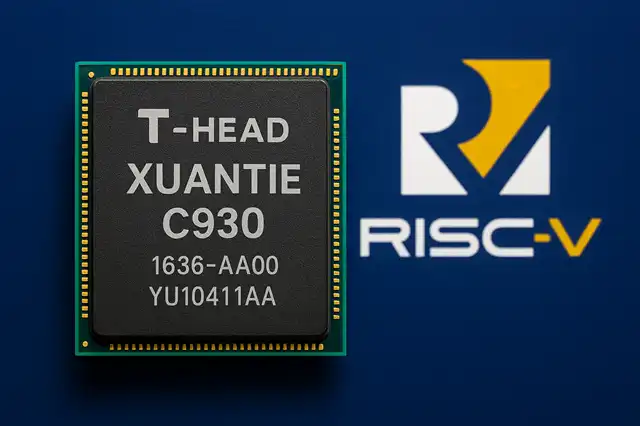
The XuanTie C930 is a high-performance RISC-V processor developed by Alibaba’s DAMO Academy. It represents a significant advancement in RISC-V processor design with the following technical specifications:
Architecture Features:
- Superscalar design with out-of-order execution capability
- 6-way decode width, allowing simultaneous decoding of six instructions
- 16-stage pipeline microarchitecture for optimized instruction throughput
- High performance: Achieves a Specint2006 benchmark score exceeding 15 per GHz, demonstrating competitive performance with established architectures
The C930 is designed to push RISC-V beyond embedded and IoT applications into high-performance computing scenarios, competing with traditional x86 and ARM processors in terms of computational capability.
Current Linux Support for RISC-V Architecture
RISC-V architecture has been gaining substantial support across the Linux ecosystem:
Major Linux Distributions with RISC-V Support:
- Ubuntu – With this announcement, Ubuntu now officially supports both XuanTie C906 and C930 processors, expanding its RISC-V portfolio
- Debian – Offers official RISC-V port with growing hardware compatibility
- Fedora – Provides RISC-V support with regular updates and community involvement
- openSUSE – Maintains RISC-V images and development support
- Arch Linux – Offers RISC-V port for enthusiasts and developers
Kernel Support: The mainline Linux kernel has included RISC-V support since version 4.15 (released in 2018), with continuous improvements and optimizations in subsequent releases. Modern Linux kernels provide comprehensive support for RISC-V base instruction sets and various extensions.
Industry Perspectives
Cindy Goldberg, Vice President of Silicon Alliances at Canonical, expressed enthusiasm about the partnership: “We are delighted to collaborate with DAMO Academy XuanTie to bring Ubuntu to the new generation of XuanTie processors. We have successfully cooperated on processors such as the XuanTie C906, and demonstrated Ubuntu running on C930 FPGA at the RISC-V China Summit in July. Through this deeper collaboration, we look forward to bringing Ubuntu to more XuanTie RISC-V developers.”
Li Chunqiang, Senior Technical Expert on RISC-V at Alibaba DAMO Academy and Head of XuanTie Software Ecosystem, stated: “We are pleased to deepen our cooperation with Canonical, which is an important step in promoting the widespread adoption of RISC-V. We have successfully introduced Ubuntu to multiple ecosystem products based on XuanTie processors. In the future, we look forward to continuing to unleash the value of RISC-V in various computing scenarios and further promote the development of the RISC-V community.”
Implications for the RISC-V Ecosystem
This partnership represents a significant milestone for RISC-V adoption in mainstream computing. By ensuring Ubuntu compatibility with the high-performance C930 processor and the latest RVA23 specification, Canonical and Alibaba are addressing one of the key barriers to RISC-V adoption: robust software ecosystem support.
The collaboration signals growing confidence in RISC-V as a viable alternative to proprietary architectures, particularly in regions seeking technological independence and open-source solutions. With Ubuntu’s extensive user base and Alibaba’s manufacturing capabilities, this partnership could accelerate RISC-V deployment in cloud computing, edge devices, and enterprise applications.
As the RISC-V ecosystem continues to mature, such collaborations between major software distributors and hardware developers will be crucial in establishing RISC-V as a competitive architecture in the global computing landscape.