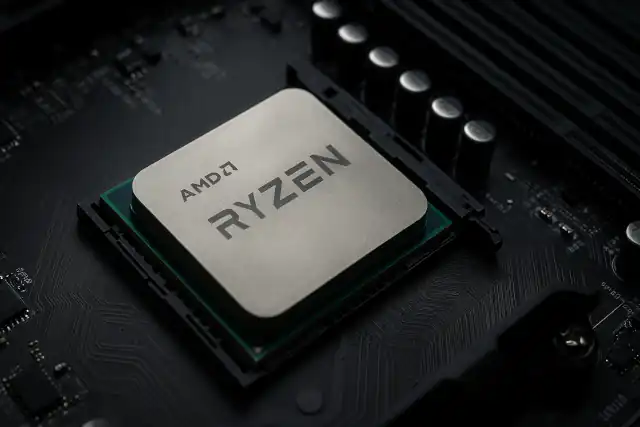
AMD Confirms 2nm Zen6 Processors Coming in 2026 But Desktop Users Will Have to Wait
AMD Confirms 2nm Zen6 Processors Coming in 2026 But Desktop Users Will Have to Wait
- 60% of MD5 Password Hashes Can Be Cracked in Under an Hour with a Single GPU
- Dirty Frag: Root Access on Every Major Linux Distribution — No Patch, No Warning
- Ubuntu 26.04 LTS (Resolute Raccoon): The Most Ambitious Ubuntu LTS in a Decade
- Proton Mail: Data Transferred to FBI Again!
- How Close Are Quantum Computers to Breaking RSA-2048?
- How to Prevent Ransomware Infection Risks?
- What is the best alternative to Microsoft Office?
AMD Confirms 2nm Zen6 Processors Coming in 2026 But Desktop Users Will Have to Wait
Data center and AI platforms get priority as AMD pushes aggressive roadmap, while consumer desktop chips face delays
AMD has officially confirmed its next-generation Zen6 architecture processors will launch in 2026, but desktop enthusiasts shouldn’t hold their breath just yet.
During the company’s Q3 2024 earnings call, CEO Lisa Su announced that the server-focused EPYC “Venice” processors will be among the first to adopt TSMC’s cutting-edge 2nm manufacturing process.
Why VPN Security Should Be Every Enterprise’s Top Priority
Server and AI Take Priority
The Venice-codename EPYC processors represent AMD’s most aggressive technology push to date. According to Su, these chips have already entered laboratory testing phases, with multiple partners bringing early Venice platforms online for evaluation. Initial feedback has been “excellent,” though specific performance metrics remain under wraps.
What AMD did reveal is that the 2nm process node will deliver substantial improvements in performance, power efficiency, and compute density compared to current Zen5-based Turin EPYC processors. This advancement comes at a crucial time as AMD battles NVIDIA for dominance in the lucrative AI and data center markets.
Alongside Venice, AMD will launch its MI400 series AI accelerators in 2026. These cards pack impressive specifications: 40 PFLOPS of computing power, 432GB of HBM4 memory, and bandwidth reaching 19.6TB/s. The MI400 series is designed to compete directly with NVIDIA’s upcoming Rubin architecture and has already secured orders from major AI players including OpenAI and Oracle.
Anatomy of a Ransomware Attack: The Askul and Asahi Cyber Incidents In Japan
Desktop Ryzen Users Face Extended Wait
The picture is far less optimistic for consumer desktop users. AMD’s 2025 roadmap remains firmly planted in 4nm Zen5 territory, with mostly incremental updates and refreshes planned. Recent product launches have confirmed this conservative approach.
The desktop Ryzen 9000 series has yet to see widespread availability even as 2025 approaches, raising questions about when Zen6 might reach consumer platforms. Industry observers now speculate that Zen6-based Ryzen processors may not arrive until 2027, and when they do, mobile platforms will likely receive priority over desktop.
This delay reflects both market conditions and strategic priorities. Memory and SSD prices have surged in recent months, potentially dampening consumer demand. With strong AI and server revenues driving growth, AMD appears comfortable taking a measured approach to the consumer segment.
How Do Hackers Gain Administrator Access in Under an Hour?
The AM5 Silver Lining
One bright spot for desktop users: AMD has confirmed continued AM5 socket compatibility through the Zen6 generation. Most existing motherboards should support the new processors after a BIOS update, extending the platform’s viability through at least 2027. This commitment to backward compatibility stands in contrast to competitors’ more frequent platform changes.
The 2nm Cost Conundrum
AMD’s roadmap reveals an intriguing detail: the company appears to be skipping 3nm entirely, jumping from current-generation nodes directly to 2nm. However, 2nm wafer production costs are expected to increase by approximately 50% over previous nodes, creating significant cost pressure.
For AI accelerators and server processors, AMD can justify premium pricing given the substantial performance benefits and strong demand. But consumer desktop processors operate in a more price-sensitive market. This raises an important question: will consumer Zen6 chips actually use 2nm, or might AMD employ 3nm for mainstream desktop parts to control costs?
Industry analysts suggest a tiered approach is likely. High-end and AI-focused products will leverage 2nm for maximum performance, while consumer desktop chips may utilize 3nm to balance performance improvements with acceptable pricing. Without such differentiation, AMD would face difficult choices between profit margins and market competitiveness.
Looking Ahead
AMD’s aggressive 2nm push for 2026 demonstrates the company’s commitment to maintaining competitive pressure on both Intel and NVIDIA. However, the delayed consumer roadmap suggests desktop PC enthusiasts will need patience as AMD prioritizes higher-margin server and AI segments.
For now, desktop users can look forward to incremental Zen5 updates in 2025, with the promise of AM5 compatibility ensuring their platforms won’t become obsolete when Zen6 eventually arrives—whenever that may be.