Stop Whining About China: What Toyota’s EV Success Teaches Foreign Automakers
Stop Whining About China: What Toyota’s EV Success Teaches Foreign Automakers
- 60% of MD5 Password Hashes Can Be Cracked in Under an Hour with a Single GPU
- Dirty Frag: Root Access on Every Major Linux Distribution — No Patch, No Warning
- Ubuntu 26.04 LTS (Resolute Raccoon): The Most Ambitious Ubuntu LTS in a Decade
- Proton Mail: Data Transferred to FBI Again!
- How Close Are Quantum Computers to Breaking RSA-2048?
- How to Prevent Ransomware Infection Risks?
- What is the best alternative to Microsoft Office?
Stop Whining About China: What Toyota’s EV Success Teaches Foreign Automakers
How Toyota’s Partnership Approach in China Offers a Blueprint for Success
When foreign automakers struggle in competitive markets, the default response is often to cry foul about unfair trade practices.
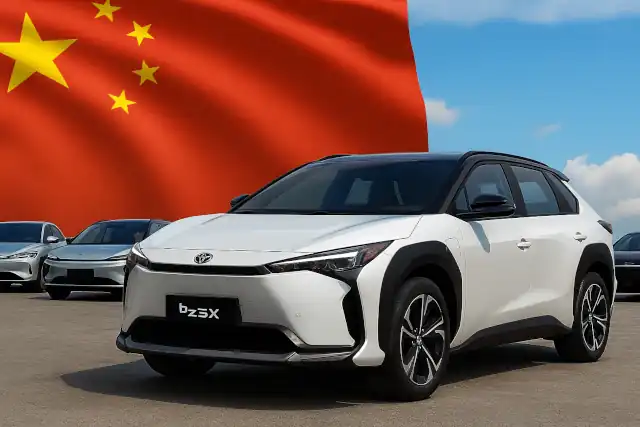
But Toyota’s recent success in China with its bZ3X electric vehicle tells a different story—one where adaptation, local partnerships, and humility trump complaints.
How Did Tesla and Major Companies Fall Victim to Cryptojacking?
The Wake-Up Call: Toyota’s Chinese Success Story
In September 2025, Toyota’s bZ3X became the top-selling foreign joint-venture EV in China with 9,017 units sold in a single month. This compact SUV, priced between $16,000-$23,000, achieved something remarkable: it matched the cost-performance ratio of BYD’s dominant ATTO3 while delivering the quality expectations of a Toyota badge.
The secret wasn’t superior Japanese engineering imposed from Tokyo. Instead, Toyota did something revolutionary for a legacy automaker—it surrendered control.
Why Tesla Still Prefers Ternary Lithium-Ion Batteries Over Solid-State Technology
The Partnership Paradigm
The bZ3X is built on Guangzhou Automobile’s AEP 3.0 platform, not Toyota’s proprietary technology. It uses Chinese suppliers for critical components: Momenta’s autonomous driving system, Desay SV controllers, RoboSense LiDAR, NVIDIA chips, and iFLYTEK voice assistants. Approximately 60-70% of components come from local Chinese suppliers.
This wasn’t Toyota compromising its standards—it was Toyota recognizing that Chinese suppliers now lead globally in EV technology, software integration, and manufacturing efficiency. By tapping into this ecosystem, Toyota slashed costs while delivering features Chinese consumers actually want: advanced driver assistance, smart cabin technology, and rapid over-the-air updates.
Why Don’t Tesla Vehicles Made in US and Europe Use Safer LFP Batteries?
The Cost of Stubbornness
Compare this to automakers still clinging to “world car” strategies. Honda saw sales drop 20.5% year-over-year in China through September 2025. Nissan fell 8.0%. Both companies have been reducing production capacity rather than investing in localization.
Meanwhile, even Tesla—once untouchable in China—experienced a 6% decline in 2025 after years of growth. The company’s response? Partnering with Chinese AI companies DeepSeek and ByteDance to enhance its vehicles’ intelligence features for the local market.
Trump Administration Ended California’s 100% EV Dream
Why Complaints Ring Hollow
When Western automakers complain about Chinese subsidies or “unfair competition,” they ignore several realities:
The Chinese market has moved beyond them. The mid-size sedan segment ($23,000-$30,000), once dominated by Toyota Camry, Honda Accord, and Volkswagen Passat, now has a 35% electrification rate. But Chinese EVs like BYD’s SEAL06 and Xiaomi’s SU7 are attacking this fortress with superior software, autonomous features, and in-cabin experiences—all at competitive prices.
The technology gap has reversed. It’s now accepted wisdom in China that gasoline cars are inferior to EVs in intelligence and user experience. The development speed enabled by AI and agile methodologies in China means vehicles become outdated quickly. Automakers who can’t keep pace simply lose relevance.
Local partnerships are available to everyone. Volkswagen is collaborating with XPeng on autonomous driving systems. GM’s Buick brand adopted Momenta’s large language model for its extended-range EVs. These partnerships are accessible—if companies are willing to share control and profits.
Will Solid-State Batteries Replace Current Lithium-Ion Technology in Electric Vehicles?
The Localization Imperative
Toyota’s China strategy includes a crucial organizational change: the Regional Chief Engineer (RCE) system, which gives Chinese engineers decision-making authority. This enables rapid response to market changes rather than waiting for approval from headquarters in Japan.
This approach acknowledges a difficult truth: global headquarters often don’t understand local markets as well as local teams do. The “world car” concept—designing one vehicle for all markets—fails when consumer preferences, infrastructure, and competitive dynamics vary dramatically by region.
Why BYD U8’s LiDAR System Outperforms Tesla Model Y’s Vision-Based Detection?
Beyond China: A Global Lesson
Toyota’s success in China offers lessons for any market where automakers face tough competition:
1. Partner with the best suppliers, regardless of origin. National pride is expensive. If local suppliers offer better technology at lower costs, use them. Toyota’s willingness to source 60-70% locally demonstrates this principle.
2. Design for the specific market. The bZ3X isn’t being sold globally—it’s optimized for Chinese urban and suburban driving, Chinese consumer preferences, and Chinese price expectations.
3. Empower local teams. Headquarters should set quality and safety standards but allow regional teams to make design and feature decisions. Markets move too quickly for centralized decision-making.
4. Accept that you may not lead everywhere. In software and autonomous driving, Chinese companies currently lead. Rather than trying to reinvent these capabilities in-house, Toyota partnered with Momenta, NVIDIA, and others who are already ahead.
Toyota Accelerates Solid-State Battery Development: All-Solid-State EVs Targeted for 2027-2028
The Alternative to Adaptation
Companies that refuse to adapt face a stark choice: retreat or irrelevance. Honda and Nissan’s production cuts in China represent managed retreat. Their inability to launch compelling vehicles stems from trying to maintain control over technology and supply chains where they no longer hold advantages.
Even in segments where traditional automakers still dominate—like the $23,000-$30,000 mid-size market—the clock is ticking. The “nèijuǎn” (internal competition) that has driven Chinese EV prices down is now shifting toward a battle over value-added features: better software, superior autonomous capabilities, and enhanced user experiences.
Tale of Two Trucks: Stellantis Retreats While BYD Advances in Electric Pickup Markets
The Path Forward
For automakers struggling in competitive markets, the prescription is clear:
- Stop blaming trade policies and start examining product-market fit
- Build genuine partnerships with local suppliers and technology companies
- Delegate design and feature decisions to regional teams who understand local consumers
- Accept that leading globally doesn’t mean leading everywhere simultaneously
- Focus on delivering value through smart partnerships rather than controlling everything in-house
Toyota’s bZ3X shows this approach can work. With 52.9% of its China sales now electrified (including hybrids), Toyota has maintained growth while competitors shrink. The company preserved its customer base with strong mid-level gasoline vehicles while simultaneously building credibility in EVs through smart localization.
Will the U.S. Sanction BYD Like It Did Huawei?
Conclusion
The automotive industry’s future belongs to companies that can adapt quickly, partner effectively, and design specifically for local markets. Complaints about unfair competition are really complaints about being outmaneuvered.
Toyota’s Chinese success demonstrates that even legacy automakers can compete against nimble local competitors—if they’re willing to check their pride at the door, trust local expertise, and build vehicles that customers actually want at prices they’re willing to pay.
The question for other automakers isn’t whether China’s market is fair. It’s whether they’re willing to do what it takes to win.