Google Revamps Cameyo Service to Help Enterprises Migrate from Windows to ChromeOS
Google Revamps Cameyo Service to Help Enterprises Migrate from Windows to ChromeOS
- 60% of MD5 Password Hashes Can Be Cracked in Under an Hour with a Single GPU
- Dirty Frag: Root Access on Every Major Linux Distribution — No Patch, No Warning
- Ubuntu 26.04 LTS (Resolute Raccoon): The Most Ambitious Ubuntu LTS in a Decade
- Proton Mail: Data Transferred to FBI Again!
- How Close Are Quantum Computers to Breaking RSA-2048?
- How to Prevent Ransomware Infection Risks?
- What is the best alternative to Microsoft Office?
Google Revamps Cameyo Service to Help Enterprises Migrate from Windows to ChromeOS
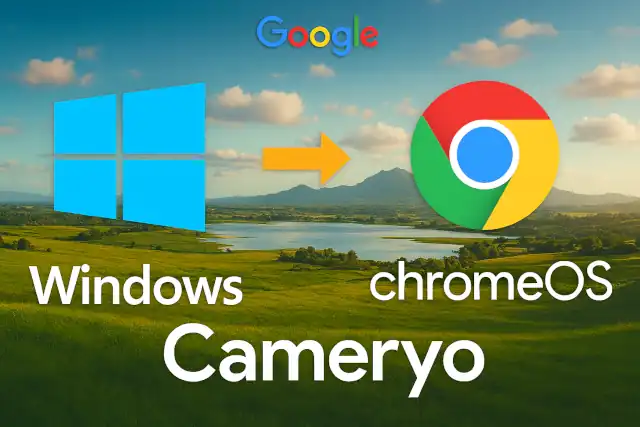
November 12, 2025 — Google is relaunching its Cameyo virtualization service with an enhanced focus on helping businesses transition from Microsoft Windows to ChromeOS, offering a solution that converts traditional desktop applications into web-accessible versions without requiring a full Windows installation.
The Most Windows-Friendly Linux Distributions for General Consumers: A Complete Guide
Streamlined Virtualization Approach
Following its acquisition of software virtualization company Cameyo in 2024, Google has repositioned the service as a key tool in its enterprise strategy. Unlike traditional virtual machine environments that require running an entire Windows operating system, the new Cameyo virtualizes only the specific applications users need, making the process significantly more efficient.
This approach allows users to run legacy Windows programs directly within the Chrome browser or as Progressive Web Applications (PWAs), eliminating the overhead associated with maintaining full virtual desktop infrastructure.
What is the best alternative to Microsoft Office?
Supporting Legacy Enterprise Software
According to reports, Cameyo currently supports running traditional Windows applications such as Microsoft Excel and AutoCAD alongside Chrome browser operations. This parallel functionality enables enterprises to seamlessly switch between Microsoft and Google services without disrupting workflows or requiring employees to choose between platforms.
The service addresses a critical pain point for businesses considering ChromeOS adoption: the need to maintain access to industry-specific Windows applications that haven’t been modernized for web-based environments.
Why is it difficult for viruses to “infect” Linux OS?
Strategic Push for Chromebook Adoption
Google’s ultimate objective with Cameyo is clear: encouraging more enterprises to adopt Chromebooks and potentially migrate entirely to ChromeOS. While Chromebooks typically offer a lower price point compared to similarly-configured Windows laptops, ChromeOS still maintains a significantly smaller user base than Windows in the enterprise market.
The pricing advantage of Chromebooks, combined with reduced IT management overhead and improved security features inherent to ChromeOS, presents a compelling value proposition for cost-conscious organizations. However, application compatibility has remained a major barrier to widespread enterprise adoption.
Replacing Microsoft Outlook on Linux: The Best Email Clients Compared
About ChromeOS
Launched by Google in 2011, ChromeOS is a lightweight operating system built around the concept of “everything is web-based.” Essentially a platform centered on the Chrome browser, ChromeOS initially supported only web browsing and PWA applications. Over time, Google has expanded its capabilities to include Android app virtualization and Linux development environments, broadening its appeal to different user segments.
By bridging the gap between Windows application dependency and ChromeOS simplicity, Cameyo represents Google’s most direct challenge yet to Microsoft’s enterprise dominance, offering businesses a practical migration path without abandoning critical legacy software investments.