“123456” and “Password” Still Reign: Most Dangerous Login Habits Exposed
“123456” and “Password” Still Reign: Most Dangerous Login Habits Exposed
- 60% of MD5 Password Hashes Can Be Cracked in Under an Hour with a Single GPU
- Dirty Frag: Root Access on Every Major Linux Distribution — No Patch, No Warning
- Ubuntu 26.04 LTS (Resolute Raccoon): The Most Ambitious Ubuntu LTS in a Decade
- Proton Mail: Data Transferred to FBI Again!
- How Close Are Quantum Computers to Breaking RSA-2048?
- How to Prevent Ransomware Infection Risks?
- What is the best alternative to Microsoft Office?
“123456” and “Password” Still Reign: Most Dangerous Login Habits Exposed
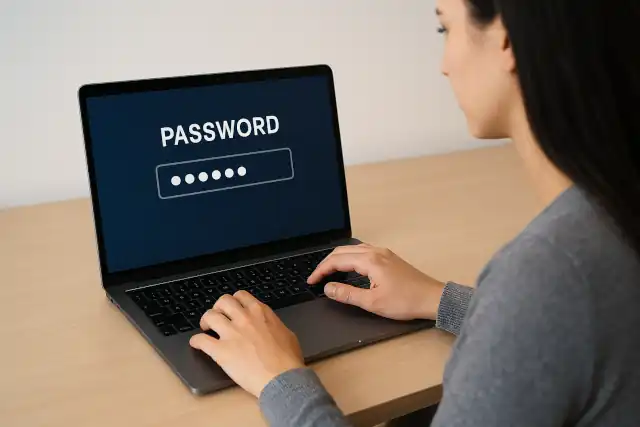
In an era where data breaches have become alarmingly commonplace, a newly released study reveals that internet users worldwide continue to rely on shockingly weak passwords—despite mounting evidence of the risks involved.
A leading password management firm has published its annual list of the 200 most commonly used passwords, and the results paint a troubling picture of digital security practices across the globe.
The findings come at a particularly critical time, following one of the largest data breaches in history earlier this year.
How Close Are Quantum Computers to Breaking RSA-2048?
The Breach That Should Have Changed Everything
In June, approximately 16 billion passwords were leaked online, including login credentials for user accounts at companies like Apple and Google, as well as social media platforms and VPNs. Cybersecurity researchers discovered that over 30 datasets containing billions of login credentials had been left exposed and vulnerable.
Despite this massive breach serving as a stark warning about password security, the latest study suggests the message hasn’t reached most people.
Lessons from the Jaguar Land Rover Ransomware Attack
The World’s Most Vulnerable Passwords
According to the latest latest research, the most commonly used password is “admin,” followed closely by “password” in second place. The top five most frequently used passwords are:
- admin
- password
- 123456
- 12345678
- 123456789
These passwords represent some of the weakest possible choices for protecting sensitive personal information, yet they remain stubbornly popular among users.
XChat Security Analysis: Safe as “Bitcoin-style” peer-to-peer encryption?
A Global Problem Across All Generations
The investigation found uniformly low password security across all generations worldwide. Rather than significant differences between age groups, researchers discovered striking commonalities in vulnerability patterns.
Simple numerical sequences like “12345” and “123456” ranked near the top across every demographic. However, some generational differences did emerge: older users tended to incorporate their own names into passwords, while younger generations favored strings like “1234567890” or trendy slang terms such as “skibidi.”
Sequential number patterns and keyboard-based combinations like “qwerty123” appeared frequently across countries and age groups, revealing a universal tendency toward convenience over security.
Free Encryption Software: A Comprehensive Guide
A Concerning Trend: Symbolic Complexity Without Real Protection
One notable shift from last year involves increased use of special characters in passwords.
This year’s ranking included 32 passwords containing symbols, a significant increase from just six last year. However, most of these remain weak, with combinations like “P@ssw0rd,” “Admin@123,” and “Abcd@1234” offering only superficial complexity.
Cybersecurity experts explain that the problem with these passwords is that they can easily be cracked or guessed using dictionary attacks—a method that tries commonly used words and simple variations.
Why PQC Encryption Technology Can Resist Quantum Computing Decryption
The Dangerous Practice of Password Reuse
Perhaps even more concerning than weak individual passwords is the widespread practice of reusing the same credentials across multiple accounts. Sixty-two percent of users report frequently or always reusing the same password, primarily because managing unique passwords for numerous accounts feels overwhelming.
“If one account is compromised, the same credentials can be used to access other accounts,” Arbaciauskas warned, highlighting the cascading risk this practice creates.
Ransomware Attackers Prioritize Data Theft Over Encryption as Attacks Become Multi-Dimensional
Five Essential Rules for Better Password Security
To reduce the risk of falling victim to cyberattacks, cybersecurity professionals recommend following these fundamental security principles:
Create random, strong passwords or passphrases. Aim for at least 20 characters using a random combination of numbers, letters, and symbols.
Never reuse passwords. Each account should have its own unique password to prevent a single breach from compromising multiple accounts.
Regularly review your passwords. Identify and update old, reused, or weak passwords with more secure alternatives.
Use a password manager. These tools can generate, store, and manage secure passwords, making protection both stronger and more convenient.
Enable multi-factor authentication (MFA). This additional security layer can prevent unauthorized access even if a password is compromised.
Why MFA Keeps You Safe Even When Passwords Are Compromised
Looking Ahead
Despite years of warnings and high-profile breaches, the persistence of easily guessable passwords like “123456” and “qwerty” in annual security rankings suggests that changing user behavior remains a significant challenge.
As our digital lives become increasingly complex and interconnected, the stakes for proper password hygiene have never been higher.
For individuals concerned about their own security practices, now is the time to audit existing passwords and implement stronger protection measures.
In a world where billions of credentials can leak in a single breach, the few extra minutes spent creating and managing secure passwords could mean the difference between safety and compromise.