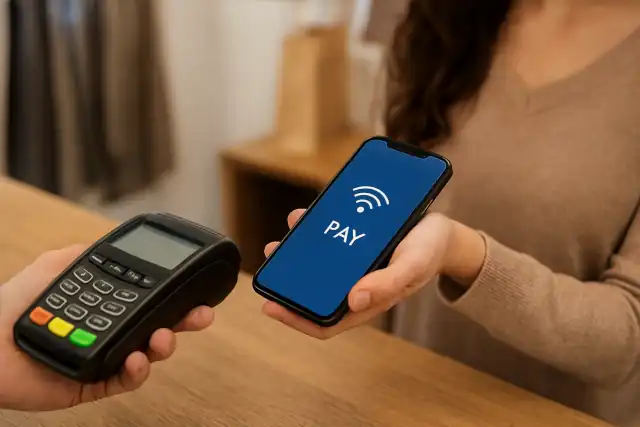
Why Can’t Criminals “Ghost Tap” Your iPhone or Android Wallet?
Why Can’t Criminals “Ghost Tap” Your iPhone or Android Wallet?
- 60% of MD5 Password Hashes Can Be Cracked in Under an Hour with a Single GPU
- Dirty Frag: Root Access on Every Major Linux Distribution — No Patch, No Warning
- Ubuntu 26.04 LTS (Resolute Raccoon): The Most Ambitious Ubuntu LTS in a Decade
- Proton Mail: Data Transferred to FBI Again!
- How Close Are Quantum Computers to Breaking RSA-2048?
- How to Prevent Ransomware Infection Risks?
- What is the best alternative to Microsoft Office?
Why Can’t Criminals “Ghost Tap” Your iPhone or Android Wallet?
In an era where convenience often comes at the cost of security, mobile payment technology has emerged as a notable exception.
While traditional credit cards remain vulnerable to various forms of fraud, smartphone-based “Tap to Pay” systems offer significantly enhanced protection for consumers.
Understanding why can help users make more informed decisions about their payment methods.
Why MFA Keeps You Safe Even When Passwords Are Compromised
The Ghost Tap Threat: Real but Limited
Recent headlines have highlighted a concerning fraud technique known as “ghost tapping” or “ghost payments.” This scam involves criminals using Near Field Communication (NFC) readers to illicitly charge victims’ payment methods without their knowledge or consent. The attack typically unfolds in three stages: criminals approach victims in crowded areas, use hidden NFC readers to initiate unauthorized contactless transactions, and bill small amounts that might escape notice.
While this threat sounds alarming, it’s important to understand that successfully executing such attacks is extremely difficult. Fraudsters must position themselves close enough to victims’ cards or devices to enable the transaction while avoiding detection—a challenging feat that limits these scams primarily to densely populated environments where criminals can blend in as legitimate merchants.
“123456” and “Password” Still Reign: Most Dangerous Login Habits Exposed
Why Smartphones Offer Superior Security
The key distinction lies in how smartphones and physical cards handle authentication and data protection. Modern smartphones employ multiple layers of security that make them substantially more secure than traditional credit cards:
Biometric Authentication
Unlike contactless credit cards that can process small transactions without additional verification, smartphones require biometric authentication for every transaction. Apple Wallet and Google Wallet mandate Face ID, Touch ID, or PIN verification before completing any payment. This means ghost tapping fraud against smartphones is virtually impossible—the transaction simply cannot proceed without the owner’s active participation.
Tokenization Technology
Smartphones don’t store actual card numbers. Instead, they use tokenization, creating unique, encrypted tokens for each transaction. Even if attackers could somehow intercept payment data, they would capture only a one-time-use token rather than your actual credit card information. Physical cards, while increasingly equipped with EMV security features, still transmit more direct payment information.
Device-Level Security
Modern smartphones incorporate hardware-based security features that protect payment data at the device level. This multi-layered approach combines secure elements embedded in the phone’s hardware with sophisticated software encryption, creating barriers that are exponentially more difficult to breach than the security measures on a plastic card.
How Did Tesla and Major Companies Fall Victim to Cryptojacking?
The Reality of Credit Card Vulnerability
Traditional contactless credit cards, while equipped with EMV security standards designed to prevent theft of card numbers and CVV codes, remain more exposed to unauthorized transactions. Cards that support tap-to-pay functionality often allow small purchases without additional verification—precisely the vulnerability that ghost tapping exploits.
When an unprotected card sits in a pocket or bag, it becomes a potential target in crowded spaces. The card itself has no way to verify that the person initiating the transaction is its rightful owner. This fundamental limitation makes physical cards inherently less secure than smartphone-based payment methods.
DNS Speed Showdown: 1.1.1.1 vs 8.8.8.8 – Which is Faster?
Practical Implications for Consumers
The enhanced security of smartphone payments doesn’t mean physical cards are obsolete or that ghost tapping represents a widespread crisis. Rather, it highlights how mobile wallet technology has evolved to address vulnerabilities that plague traditional payment methods.
For consumers concerned about payment security, the message is clear: smartphone-based tap-to-pay systems offer demonstrably stronger protection through biometric verification, tokenization, and integrated device security. While no payment method is entirely immune to fraud, the architectural differences between smartphones and physical cards create a security gap that decisively favors mobile wallets.
As payment technology continues to evolve, the trend points toward increasing adoption of smartphone-based systems—not just for their convenience, but for the robust security framework that makes unauthorized transactions nearly impossible to execute. In the ongoing battle between payment security and fraud, smartphones represent a significant step forward in protecting consumers’ financial information.