Porteus Linux: The Lightweight Portable Powerhouse That Fits in Your Pocket
Porteus Linux: The Lightweight Portable Powerhouse That Fits in Your Pocket
- 60% of MD5 Password Hashes Can Be Cracked in Under an Hour with a Single GPU
- Dirty Frag: Root Access on Every Major Linux Distribution — No Patch, No Warning
- Ubuntu 26.04 LTS (Resolute Raccoon): The Most Ambitious Ubuntu LTS in a Decade
- Proton Mail: Data Transferred to FBI Again!
- How Close Are Quantum Computers to Breaking RSA-2048?
- How to Prevent Ransomware Infection Risks?
- What is the best alternative to Microsoft Office?
Porteus Linux: The Lightweight Portable Powerhouse That Fits in Your Pocket
In the diverse ecosystem of Linux distributions, Porteus stands out as a remarkably unique offering.
Built on the solid foundation of Slackware Linux, this nimble operating system has carved out its niche through four defining characteristics: lightweight design, blazing speed, modular architecture, and exceptional portability.
Whether you’re looking to breathe new life into aging hardware or carry a complete desktop environment on a USB drive, Porteus delivers a surprisingly smooth computing experience.
The Most Windows-Friendly Linux Distributions for General Consumers: A Complete Guide
Origins and Evolution
Porteus traces its roots back to the Slackware community, where it began as a modified version of Slax. What started as a community project eventually evolved into an independent distribution with its own identity and vision. The development team has continuously refined the boot scripts and Live mode functionality, prioritizing both speed and stability.
The project’s positioning is crystal clear: Porteus is designed as a portable Linux system that can run seamlessly from USB drives, optical media, or hard disks. This makes it ideal for users who need quick deployment capabilities or want to carry their entire computing environment wherever they go.
Official website: https://www.porteus.org
Latest release: Porteus 5.1-alpha3 (released in 2025)
What is the best alternative to Microsoft Office?
Core Features That Set It Apart
Ultra-Lightweight Architecture
With an ISO image size of approximately 300MB ( about 500MB for 64-bit image), Porteus is remarkably compact. Once booted, the entire system can load into RAM, enabling incredibly fast performance even on modest hardware. This makes it an excellent choice for older computers that struggle with more demanding distributions.
Revolutionary Modular Design
Perhaps Porteus’s most distinctive feature is its modular software system. Applications are packaged in XZM format modules that can be activated or deactivated with a simple double-click. This approach allows for instant installation and removal of software packages—no lengthy installation processes, no system reboots required. It’s computing at the speed of thought.
Desktop Environment Diversity
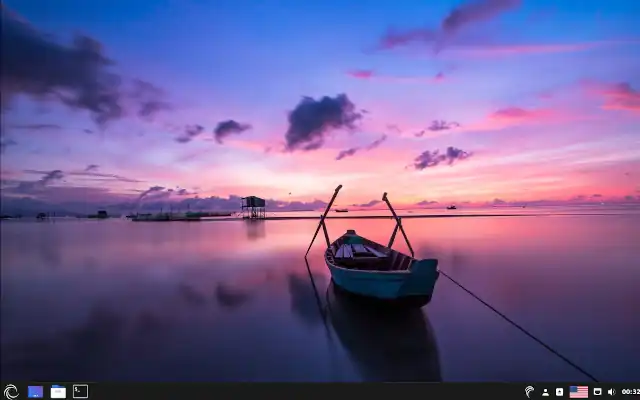
Porteus doesn’t lock users into a single interface. The distribution offers an impressive array of desktop environments, including KDE, GNOME, Cinnamon, MATE, Xfce, LXQt, LXDE, and Openbox. This flexibility ensures users can choose an environment that matches their workflow preferences and hardware capabilities.
True Portability
The distribution excels at USB deployment. Install Porteus on a thumb drive, slip it in your pocket, and you have a complete, personalized computing environment ready to run on virtually any compatible computer. Boot up, and you’re immediately in your familiar desktop setup.
Comprehensive Software Access
Through the Unified Slackware Package Manager (USM), Porteus users gain access to the extensive Slackware repository ecosystem. This integration provides a wealth of software options while maintaining the distribution’s lightweight philosophy.
When and Why You Need Antivirus on Linux (and How to Install ClamAV)
Technical Specifications at a Glance
- Base System: Slackware Linux
- Desktop Options: KDE, GNOME, Cinnamon, MATE, Xfce, LXQt, LXDE, Openbox
- Package Management: USM (integrating multiple Slackware repositories)
- Module System: XZM format with instant activation/deactivation
- Boot Methods: Live CD, USB, or traditional hard disk installation
- Image Size: Approximately 300MB
Six Free Antivirus Solutions for Linux OS
Who Should Consider Porteus?
Porteus appeals to several distinct user groups:
- Mobile professionals who need consistent computing environments across multiple machines
- System administrators requiring fast diagnostic and recovery tools
- Legacy hardware enthusiasts looking to extend the life of older computers
- Privacy-conscious users who want to leave no trace on public computers
- Linux experimenters interested in testing a distribution without commitment
Linux Disk Encryption: A Comprehensive Guide to BitLocker Alternatives
The Bottom Line
Porteus Linux represents a focused approach to operating system design. Rather than trying to be everything to everyone, it excels at specific use cases: portability, speed, and efficiency. Its modular architecture offers a refreshing alternative to traditional package management, while its Slackware foundation provides stability and access to mature software ecosystems.
For users tired of bloated distributions that consume gigabytes of disk space and require powerful hardware, Porteus offers a compelling alternative. It proves that a full-featured Linux desktop doesn’t need to be large or slow—sometimes, the best solutions are the leanest ones.
Whether you’re rescuing an old laptop from obsolescence or simply want a lightning-fast operating system you can carry in your pocket, Porteus deserves serious consideration. In a world of increasingly resource-hungry software, this nimble distribution is a reminder that efficiency and capability can coexist beautifully.