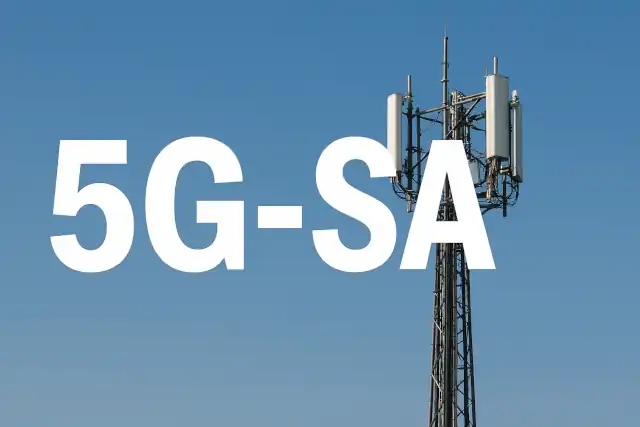
The Inevitable Transition: Why 4G LTE Must Give Way to 5G-SA Standalone Soon
The Inevitable Transition: Why 4G LTE Must Give Way to 5G-SA Standalone Soon
- 60% of MD5 Password Hashes Can Be Cracked in Under an Hour with a Single GPU
- Dirty Frag: Root Access on Every Major Linux Distribution — No Patch, No Warning
- Ubuntu 26.04 LTS (Resolute Raccoon): The Most Ambitious Ubuntu LTS in a Decade
- Proton Mail: Data Transferred to FBI Again!
- How Close Are Quantum Computers to Breaking RSA-2048?
- How to Prevent Ransomware Infection Risks?
- What is the best alternative to Microsoft Office?
The Inevitable Transition: Why 4G LTE Must Give Way to 5G-SA Standalone Soon
After more than a decade of reliable service, the 4G LTE networks that revolutionized mobile connectivity are approaching a critical inflection point.
Telecommunications operators worldwide are accelerating plans to transition from LTE infrastructure to 5G Standalone (5G SA) architecture, driven not merely by the promise of enhanced capabilities, but by the pressing reality of aging equipment and evolving technological demands.
Will 5G Signals Interfere with Satellite TV and Starlink?
The Aging Infrastructure Challenge
The first commercial LTE networks launched in 2009, meaning much of the core 4G infrastructure currently in operation has been running for 10 to 15 years. In the telecommunications industry, this represents a significant portion of equipment lifecycle. Network hardware, including base stations, core network elements, and transmission equipment, typically has an operational lifespan of 10 to 15 years before maintenance costs escalate and reliability concerns mount.
This aging presents several critical issues. Older equipment becomes increasingly expensive to maintain as replacement parts become scarce and specialized technical expertise diminishes. Hardware failures become more frequent, potentially impacting service quality and customer experience. Perhaps most significantly, legacy equipment may lack the security updates necessary to defend against modern cyber threats, creating vulnerabilities in an increasingly hostile digital landscape.
NTT Achieves World-First Breakthrough in AlN-Based High-Frequency Transistors for Post-5G Era
Beyond Incremental Upgrades: The Case for 5G SA
While early 5G deployments utilized Non-Standalone (NSA) architecture, which relied on existing 4G core networks, 5G SA represents a complete architectural transformation. This distinction is crucial to understanding why a full transition is necessary rather than continued incremental upgrades to LTE infrastructure.
5G SA introduces a cloud-native core network architecture that fundamentally reimagines how mobile networks operate. Unlike LTE’s monolithic core, 5G SA employs a service-based architecture with network function virtualization, enabling unprecedented flexibility and efficiency. This allows operators to deploy network capabilities as software services rather than dedicated hardware appliances, dramatically reducing costs and improving scalability.
The network slicing capability of 5G SA enables operators to create multiple virtual networks on a single physical infrastructure, each optimized for specific use cases. An autonomous vehicle requiring ultra-low latency can operate on a different network slice than a smart city sensor prioritizing battery life over speed. This level of differentiation is simply impossible with 4G architecture.
Ericsson and Orange Partner on Sustainable 5G Networks in Europe
Economic Imperatives
From a financial perspective, the transition makes compelling sense. Maintaining two parallel networks—one aging LTE infrastructure and one newer 5G system—creates operational inefficiencies and doubles certain costs. Spectrum resources, increasingly valuable and expensive, become fragmented between technologies. Technical staff must maintain expertise across multiple platforms, increasing training costs and complexity.
By consolidating onto 5G SA, operators can optimize spectrum utilization, reduce operational complexity, and redirect resources toward innovation rather than legacy system maintenance. The energy efficiency improvements of 5G SA equipment also translate into reduced operational expenses, an important consideration as environmental sustainability becomes both a regulatory requirement and a corporate priority.
SoftBank Achieves Breakthrough in 5G Millimeter Wave Standalone FWA Technology
Technological Evolution and Future-Proofing
The capabilities gap between LTE and 5G SA continues to widen as the newer technology matures. While LTE served admirably for smartphone-centric mobile broadband, emerging applications demand capabilities that 4G simply cannot provide.
Ultra-reliable low-latency communication (URLLC) in 5G SA enables mission-critical applications like remote surgery, industrial automation, and autonomous vehicles. Massive machine-type communications (mMTC) supports the exponentially growing Internet of Things ecosystem, with 5G SA capable of connecting up to one million devices per square kilometer compared to LTE’s far more limited capacity.
Edge computing integration, native to 5G SA architecture, brings computation and data storage closer to end users, reducing latency and enabling entirely new application categories. These aren’t incremental improvements but fundamental expansions of what mobile networks can accomplish.
T-Mobile to Begin Phasing Out 4G LTE Network: Reallocating Spectrum for 5G Expansion
The Timeline and Transition Strategy
The transition from LTE to 5G SA is not an overnight switch but a carefully orchestrated evolution. Most operators are pursuing a multi-year strategy that balances technical feasibility, economic considerations, and customer impact.
The typical approach involves maintaining LTE networks while gradually expanding 5G SA coverage and capabilities. As 5G SA footprint and reliability increase, operators begin migrating users and refarming LTE spectrum for 5G use. Eventually, as the subscriber base shifts predominantly to 5G-capable devices and the business case closes, LTE networks can be decommissioned.
Several countries have already announced aggressive timelines. Some major operators plan to phase out 3G networks by 2025 and begin LTE shutdowns by 2030, though these timelines vary significantly by region based on local market conditions and regulatory environments.
Beyond 5G: How Terahertz Waves Will Power the Next Generation of 6G Wireless Networks
Challenges and Considerations
The transition is not without challenges. Device compatibility remains a consideration, as legacy devices lacking 5G capability will eventually lose service. This creates equity concerns, particularly for economically disadvantaged populations who may not be able to afford device upgrades. Operators and policymakers must develop strategies to address these gaps through device subsidies, extended transition periods, or other assistance programs.
The capital investment required for 5G SA deployment is substantial, though offset by reduced operating costs and new revenue opportunities. Smaller regional carriers may face particular challenges in funding this transition, potentially accelerating industry consolidation.
Nokia’s Lost Vision Returns: Jolla Brings MeeGo Spirit Back to Hardware
Conclusion
The transition from 4G LTE to 5G Standalone is not merely a technological upgrade but an operational necessity. With LTE infrastructure aging beyond its optimal lifespan, continued reliance on decade-old equipment poses increasing risks to service quality, security, and operational efficiency. The architectural advantages of 5G SA, combined with its superior capabilities and economic benefits, make the transition both inevitable and urgent.
As we stand at this technological crossroads, the question is not whether LTE will be replaced, but how quickly and smoothly the transition can be managed. For telecommunications operators, policymakers, and ultimately consumers, embracing this evolution is essential to unlocking the next generation of connected experiences and ensuring the networks of tomorrow are built on a foundation designed for future innovation rather than constrained by the limitations of the past.