Will GPMI Replace USB Type-C and HDMI?
Will GPMI Replace USB Type-C and HDMI? China’s New Universal Interface Standard Enters Final Stage
- 60% of MD5 Password Hashes Can Be Cracked in Under an Hour with a Single GPU
- Dirty Frag: Root Access on Every Major Linux Distribution — No Patch, No Warning
- Ubuntu 26.04 LTS (Resolute Raccoon): The Most Ambitious Ubuntu LTS in a Decade
- Proton Mail: Data Transferred to FBI Again!
- How Close Are Quantum Computers to Breaking RSA-2048?
- How to Prevent Ransomware Infection Risks?
- What is the best alternative to Microsoft Office?
Will GPMI Replace USB Type-C and HDMI? China’s New Universal Interface Standard Enters Final Stage
Industry alliance prepares to launch comprehensive specifications for domestic high-speed digital interface technology
The Smart TV Ubiquitous Computing Alliance (SUCA) has announced that the General Purpose Multimedia Interface (GPMI) series of electronic industry standards are nearing official release, marking a significant milestone in China’s push to establish homegrown connectivity standards that could challenge the dominance of USB Type-C and HDMI in global markets.
Can Passwords Still Be Transmitted in Plain Text with HTTPS?
Technical Superiority on Paper
According to SUCA’s specifications, GPMI delivers impressive capabilities that surpass existing mainstream interfaces. The standard supports up to 192Gbps bandwidth—double HDMI’s 96Gbps and significantly exceeding USB Type-C’s 120Gbps maximum throughput. Power delivery reaches 480W, doubling Type-C’s 240W capacity, while video transmission capabilities extend to 8K resolution at 120 frames per second.
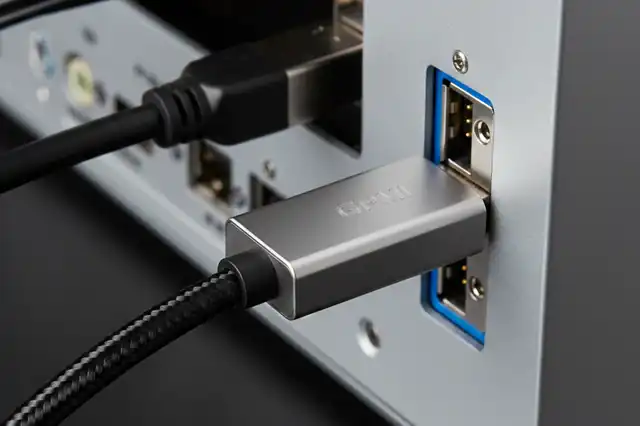
The interface’s key selling point is convergence: a single cable handles signal transmission, power delivery, audio, and video simultaneously. Crucially, GPMI maintains physical compatibility with USB Type-C ports, potentially easing adoption concerns for manufacturers and consumers alike.
“GPMI only requires one cable to handle signal, power, audio-video and multiple signal transmissions, and is compatible with Type-C interface,” SUCA stated in its announcement.
How Cloudflare’s Free WARP Service Protects Your Privacy?
Comprehensive Standard Development
The forthcoming industry standards cover critical technical layers including physical interface specifications, protocol architecture, power delivery mechanisms, security frameworks, and interoperability requirements. These provide unified guidelines for chip manufacturers, terminal device makers, and testing equipment producers across the supply chain.
Under guidance from Chinese regulatory authorities, the China Electronics Standardization Institute has coordinated with over 90 core industry players—including tech giants Huawei, Skyworth, and Hisense—to establish the GPMI Working Group. The alliance is pursuing a three-track strategy: “leading with industry standards, synchronizing industry/national standards, and advancing international standardization.”
The Inevitable Transition: Why 4G LTE Must Give Way to 5G-SA Standalone Soon
Application Scenarios and Market Positioning
SUCA positions GPMI as suitable for diverse use cases beyond traditional consumer electronics. Target applications include:
- Home entertainment: TVs, set-top boxes, monitors, and gaming consoles
- Emerging technologies: Smart home ecosystems, virtual reality systems, and cloud computing terminals
- Mobile devices: Smartphones requiring simultaneous charging and high-bandwidth data transfer
- Automotive: In-vehicle displays and connectivity systems
- Industrial applications: High-speed data equipment requiring transmission and power integration
The standard’s bidirectional transmission capabilities and support for dual 4K displays at high frame rates address scenarios like mobile gaming with external displays—a growing market segment.
Germany’s Schleswig-Holstein Achieves 80% Open Source Migration: A Blueprint for Digital Sovereignty
The Replacement Question: Challenges Ahead
Despite GPMI’s technical advantages, complete replacement of established standards faces substantial obstacles:
Ecosystem Entrenchment: USB Type-C has achieved near-universal adoption across laptops, smartphones, tablets, and accessories. HDMI dominates the $5 billion annual cable market for TVs, projectors, and displays. Both standards benefit from massive installed bases and manufacturing economies of scale.
International Standardization: While SUCA mentions “advancing international standardization,” GPMI currently lacks recognition from key international standards bodies. USB is governed by the USB Implementers Forum (including Apple, Intel, Microsoft, and HP), while HDMI is managed by HDMI Licensing Administrator. Gaining acceptance in Western markets requires navigating complex intellectual property landscapes and achieving interoperability certifications.
Industry Adoption Timelines: New interface standards typically require 5-10 years for significant market penetration. Thunderbolt 3’s integration with USB4 took nearly a decade. Manufacturers face switching costs for tooling, certification, and consumer education.
Geopolitical Considerations: Technology standards increasingly reflect geopolitical dynamics. China’s development of indigenous standards follows similar efforts in 5G, AI chips, and operating systems—aimed at reducing dependence on Western-controlled technologies amid ongoing trade tensions.
Will South Korea’s LFP Battery Industry Benefit from US-China Trade Tensions?
Market Outlook
Industry analysts suggest GPMI is more likely to achieve dominance in China’s domestic market before attempting global expansion. With Chinese manufacturers producing approximately 70% of the world’s TVs and substantial portions of smartphones and computers, home-market adoption could create sufficient volume for competitive pricing.
“The strategy appears focused on establishing domestic dominance first, then leveraging China’s manufacturing capacity and Belt and Road partnerships for international expansion,” noted technology analyst Sarah Chen, though she added that “competing with decades of USB and HDMI infrastructure in Western markets remains a formidable challenge.”
The standard’s 480W power delivery capability positions it well for emerging applications like high-performance gaming laptops, professional workstations, and electric vehicle charging—niches where current standards face limitations.
How to Prevent Ransomware Infection Risks
Conclusion
Rather than outright replacement, a more realistic scenario involves GPMI carving out market segments where its advantages matter most: Chinese domestic markets, high-power applications, and next-generation devices where backward compatibility matters less. USB Type-C and HDMI will likely maintain their positions in global markets for the foreseeable future, barring dramatic shifts in manufacturing or trade dynamics.
The ultimate test will come when GPMI-enabled products reach consumers. Technical specifications alone don’t determine market success—timing, pricing, developer support, and user experience will prove equally critical in determining whether GPMI becomes a genuine alternative or remains primarily a regional standard.
The SUCA Alliance has not announced specific release dates for the final GPMI standards or timeline for certified product availability.