Why China May Refuse Nvidia’s H200: A Strategic Shift in the AI Chip Race
Why China May Refuse Nvidia’s H200: A Strategic Shift in the AI Chip Race
- 60% of MD5 Password Hashes Can Be Cracked in Under an Hour with a Single GPU
- Dirty Frag: Root Access on Every Major Linux Distribution — No Patch, No Warning
- Ubuntu 26.04 LTS (Resolute Raccoon): The Most Ambitious Ubuntu LTS in a Decade
- Proton Mail: Data Transferred to FBI Again!
- How Close Are Quantum Computers to Breaking RSA-2048?
- How to Prevent Ransomware Infection Risks?
- What is the best alternative to Microsoft Office?
Why China May Refuse Nvidia’s H200: A Strategic Shift in the AI Chip Race
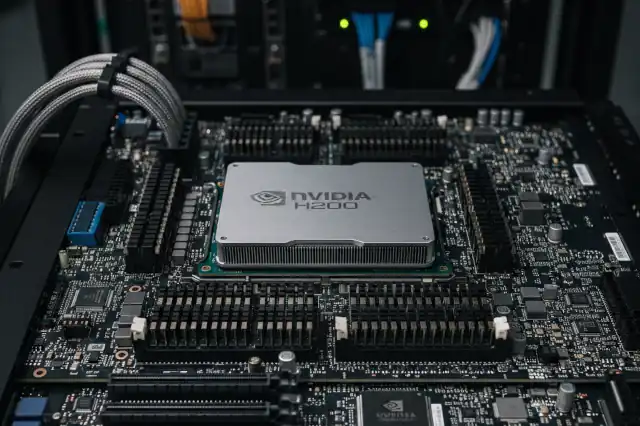
The U.S. government’s recent decision to approve exports of Nvidia’s H200 AI chips to China marks a significant shift in American tech policy.
Yet industry leaders, including Nvidia CEO Jensen Huang, remain uncertain whether Chinese buyers will actually purchase these chips—even though the H200 remains far more advanced than China’s domestic alternatives.
This hesitation reveals a complex strategic calculation that goes beyond simple technical specifications.
CUDA Without NVIDIA: Microsoft’s Translation Layer Brings AI Models to AMD GPUs
The Policy Shift and Its Rationale
According to recent reports, the Trump administration has decided to allow H200 sales to China while reserving Nvidia’s most advanced Blackwell-architecture chips for American customers. This middle-ground approach aims to maintain approximately an 18-month technological lead for the United States while keeping Chinese AI developers tethered to American ecosystems rather than forcing them toward complete reliance on domestic alternatives like Huawei.
The decision came after U.S. officials assessed that the national security risks were relatively low, primarily because Huawei has developed AI systems with comparable performance capabilities. White House officials specifically examined Huawei’s CloudMatrix 384 AI platform, which utilizes the newer Ascend series chips, and concluded its performance rivals Nvidia’s NVL72 systems built on the advanced Blackwell architecture.
Perhaps most striking is the projected manufacturing capacity: U.S. intelligence now estimates that Huawei will be capable of producing millions of Ascend 910C chips by 2026, a dramatic leap from the roughly 200,000 Ascend series chips estimated for production in the current year as of June estimates. This exponential growth in projected capacity became a crucial factor in the U.S. recalibrating its export strategy.
DeepSeek V3.2: The Latest Open-Source AI Model Challenging Proprietary Giants
The 15% Tax and Market Dynamics
The policy comes with a notable catch: Nvidia must pay a 15% commission on sales revenue to the U.S. government. While this arrangement could still be profitable for Nvidia, CEO Jensen Huang has expressed measured skepticism about market reception. “I’m not certain whether China will accept Nvidia’s H200 chips now that the U.S. has relaxed restrictions on AI chip sales,” Huang stated.
David Sacks, the White House’s AI affairs director, offered an explanation for this uncertainty: China has already figured out the American strategy behind offering the H200 and is rejecting the chip in favor of supporting domestic semiconductors like those from Huawei. “Clearly they don’t want our chips,” Sacks said. “I think the reason is they want to achieve independence in the semiconductor industry.”
World’s First Ethernet AI Rack Challenges NVIDIA
Strategic Independence Over Technical Superiority
The central paradox—why China might refuse significantly more advanced chips—resolves when viewed through the lens of strategic autonomy rather than pure performance metrics.
Several factors support this interpretation:
Building Domestic Ecosystems: By committing to domestic chips, even if temporarily inferior, China can accelerate the maturation of its entire AI ecosystem, from software frameworks to training methodologies specifically optimized for Chinese hardware. Accepting H200 chips would mean continuing dependence on Nvidia’s CUDA platform and associated tools.
Supply Chain Security: Recent years have demonstrated that access to American technology can be revoked at any time based on shifting political winds. The on-again, off-again nature of chip export permissions creates planning uncertainty that may outweigh the technical advantages of superior chips. Chinese companies might prefer guaranteed access to somewhat less powerful domestic chips over uncertain access to more advanced foreign ones.
National Pride and Policy Alignment: China’s government has made technological self-sufficiency a cornerstone of industrial policy. Accepting H200 chips, particularly after the restrictions and public debate, could be seen as undermining these national priorities and validating the effectiveness of American pressure tactics.
Avoiding Market Dependence: If Chinese AI companies become reliant on H200 chips and optimize their systems around them, they would face significant switching costs and disruption if access were later restricted again. This creates a strategic vulnerability that purely domestic supply chains would avoid.
Why 80% of US AI Startups Are Using Chinese Open-Source Models?
The Long-Term Calculation
The American strategy appears designed to keep China “just close enough”—dependent on U.S. technology ecosystems while maintaining American leadership. However, this approach may have miscalculated Chinese priorities. If China values independence over immediate performance advantages, the H200 offer could be seen as a trap rather than an opportunity.
The fact that Huawei’s CloudMatrix 384 can already compete with advanced Nvidia systems, combined with projections of massive production capacity increases, suggests China may have reached an inflection point where accepting inferior domestic technology today is worth the price of genuine independence tomorrow.
Nvidia’s statement that it continues working with the U.S. government to issue H200 licenses to vetted customers suggests some sales may still occur. However, the widespread institutional adoption that Nvidia might have hoped for appears uncertain. Chinese companies may make individual calculations based on specific project needs, but the broader strategic direction seems to favor domestic solutions.
NVIDIA Declares War on Huawei for 6G Dominance
Conclusion
The question of whether China will buy the H200 transcends technical specifications and performance benchmarks. It represents a fundamental choice between short-term optimization and long-term strategic positioning. While the H200 remains superior to current Chinese alternatives, the gap is narrowing, and the value of supply chain independence may outweigh the costs of using somewhat less capable domestic chips.
The coming months will reveal whether China’s apparent reluctance is negotiating posture, genuine strategic commitment, or some combination of both. What seems clear is that the U.S. offer of H200 chips—intended as a careful middle ground—may have arrived at a moment when China has already committed to a different path entirely.