Why HDDs Won’t Be Replaced by SSDs: The Economics of Mass Storage
Why HDDs Won’t Be Replaced by SSDs: The Economics of Mass Storage
- 60% of MD5 Password Hashes Can Be Cracked in Under an Hour with a Single GPU
- Dirty Frag: Root Access on Every Major Linux Distribution — No Patch, No Warning
- Ubuntu 26.04 LTS (Resolute Raccoon): The Most Ambitious Ubuntu LTS in a Decade
- Proton Mail: Data Transferred to FBI Again!
- How Close Are Quantum Computers to Breaking RSA-2048?
- How to Prevent Ransomware Infection Risks?
- What is the best alternative to Microsoft Office?
Why HDDs Won’t Be Replaced by SSDs: The Economics of Mass Storage
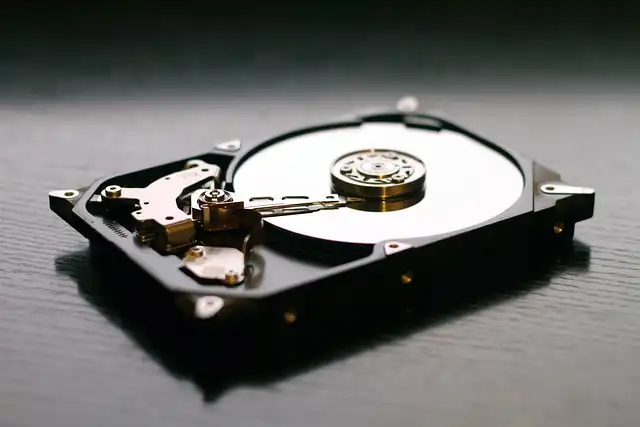
Despite rapid advances in solid-state drive (SSD) technology and falling prices per gigabyte, hard disk drives (HDDs) remain indispensable for modern data storage—and will continue to be for years to come.
While headlines frequently predict the demise of “spinning disk” technology, industry experts and market realities tell a different story.
Why You Should Choose CMR Over SMR Hard Drives Without Multiple Backups: A Technical Analysis
The Cost Barrier Remains Insurmountable
Some experts put it bluntly: replacing HDDs with SSDs is impossible except for limited applications requiring high performance—it would simply cost too much. The fundamental reason HDDs persist comes down to one critical metric: cost per terabyte.
Data generation continues to grow exponentially, and organizations need affordable, high-capacity storage solutions. While SSDs offer superior read/write speeds, HDDs maintain a significant price advantage that shows no signs of disappearing. For large-scale storage systems, implementing an all-SSD infrastructure would result in prohibitively expensive costs.
The 40TB Barrier: Why Hard Drives Hit a Wall and What Comes Next
The Scale of the Storage Gap
Recent market data underscores just how dominant HDDs remain in the storage landscape. In 2024, the industry manufactured, sold, and deployed approximately 1 zettabyte (1,000 exabytes) of HDD capacity, compared to just 260 exabytes of SSD capacity—nearly four times more HDD capacity than SSD.
Within enterprise and cloud service provider data centers, roughly 70-80% of all data resides on HDDs. Even if SSDs somehow achieved cost parity with HDDs—which Kaese considers unlikely—there simply wouldn’t be enough SSD manufacturing capacity to accommodate the massive volume of data currently stored on HDDs. The transition would be logistically impossible for an extended period.
Toshiba Pioneers 12-Platter Hard Drive: 40TB Model Set for 2027 Launch
Different Technologies for Different Needs
The storage industry has evolved toward a tiered approach that leverages the strengths of each technology. SSDs using the NVMe (Non-Volatile Memory Express) protocol excel in applications requiring rapid data access close to the CPU, where their speed advantages directly translate to revenue or productivity gains. These use cases typically involve local storage or small-scale systems.
HDDs, conversely, dominate large-scale storage systems ranging from tens to hundreds of terabytes, or even multiple petabytes. For these massive repositories, the performance characteristics of SSDs become less relevant, while their cost disadvantages become overwhelming.
https://pbxscience.com/why-your-ssd-might-be-slower-than-expected/
When Speed Doesn’t Matter (As Much)
The common perception that SSDs are “always better” because they’re faster overlooks how large-scale storage systems actually work. Yes, SSDs outperform HDDs in IOPS (input/output operations per second) and excel at random access to small data chunks—the kind of operations involving credit card numbers or individual invoice records.
However, massive storage systems typically house different types of data: AI training datasets, system backups, archival content, and analytics repositories. Applications accessing this data usually read sequentially from beginning to end, rather than jumping randomly between small records. For sequential operations, HDDs deliver perfectly adequate performance.
According to research, a 1-2 petabyte storage system built with 60 HDDs can fully utilize a 100 Gbps network connection without creating a storage bottleneck. While technically possible to build the same system with SSDs, it would cost 5-7 times more—and in most cases, the network would become the bottleneck anyway, rendering the extra investment pointless.
Low-Cost SSDs Vanish as Korean Memory Giants Refuse Production Increases Despite Shortages
The Tape Storage Parallel
Kaese draws a compelling analogy to magnetic tape storage, which has been repeatedly declared obsolete yet continues to thrive in specific niches. Like tape, HDDs have found their sustainable role in the storage ecosystem: providing the most economical solution for online data storage, particularly at massive scale.
The reality is that different storage technologies coexist because they serve different purposes. SSDs will continue expanding in areas where their speed advantages justify premium costs. HDDs will maintain dominance where capacity and cost-efficiency matter most.
World’s First Self-Destructing SSD: T-CREATE EXPERT P35S Enables One-Button Data Destruction
Looking Forward
As data volumes continue their relentless growth, the need for affordable mass storage only intensifies. Organizations cannot afford to store everything on premium SSDs, nor can the industry manufacture enough SSD capacity to accommodate humanity’s data generation habits.
HDDs continue to evolve, with manufacturers developing higher-capacity drives and improved technologies to extend their viability. The storage industry isn’t choosing between HDDs and SSDs—it’s learning to deploy both strategically, matching each technology to appropriate workloads.
For the foreseeable future, HDDs remain guaranteed a central role in our data infrastructure. The “spinning disk” isn’t going anywhere—not because of technological limitations, but because the economics of mass storage demand it.