Juice Jacking: The Hidden Danger of Public USB Charging Ports
Juice Jacking: The Hidden Danger of Public USB Charging Ports
- 60% of MD5 Password Hashes Can Be Cracked in Under an Hour with a Single GPU
- Dirty Frag: Root Access on Every Major Linux Distribution — No Patch, No Warning
- Ubuntu 26.04 LTS (Resolute Raccoon): The Most Ambitious Ubuntu LTS in a Decade
- Proton Mail: Data Transferred to FBI Again!
- How Close Are Quantum Computers to Breaking RSA-2048?
- How to Prevent Ransomware Infection Risks?
- What is the best alternative to Microsoft Office?
Juice Jacking: The Hidden Danger of Public USB Charging Ports
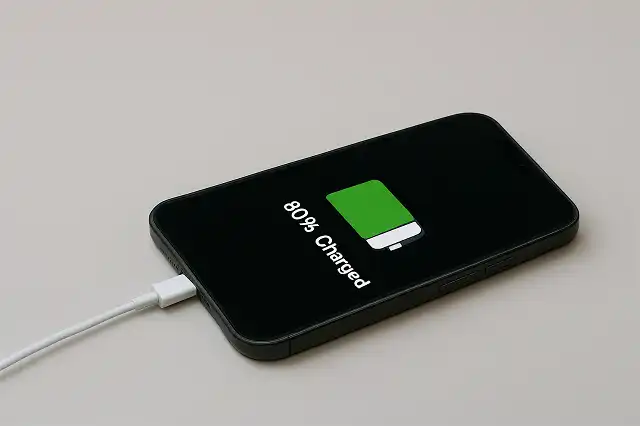
In our increasingly mobile world, a dead phone battery can feel like a minor emergency.
When we spot a public USB charging station at an airport, hotel, or coffee shop, it seems like a convenient solution.
But cybersecurity experts are warning travelers and smartphone users about a threat lurking in these seemingly helpful ports: juice jacking.
Will Quantum Computers Break All Our Passwords in 20 Years?
What Is Juice Jacking?
Juice jacking is a cyberattack method where criminals use public USB charging stations to install malware on devices or steal sensitive data from phones, tablets, and other electronics.
The attack exploits a fundamental characteristic of USB ports: they transfer both power and data simultaneously through the same connection.
When you plug your device into a compromised USB port, malicious actors can potentially access your phone’s contents, including passwords, photos, contacts, financial information, and other personal data. In some cases, attackers can even install surveillance software that continues to monitor your device long after you’ve disconnected from the infected port.
Why Smartphone Chat Apps Are Not Safe Enough?
How Does It Work?
The attack leverages the dual-purpose nature of USB technology. While you think you’re simply charging your battery, a compromised port can establish a data connection with your device. If your phone is unlocked or set to automatically trust new connections, the malicious software can begin transferring data or installing harmful programs within seconds.
Cybercriminals can modify public charging stations by installing hardware or software that captures data from connected devices. These compromised stations look identical to legitimate ones, making them virtually impossible to identify by sight alone.
Beware of Poisoned Pirated Movies: DCRat Backdoor Hidden Using Go Compiler
Growing Concerns and Official Warnings
The threat has become serious enough that cybersecurity agencies and law enforcement have issued public warnings. Security experts consistently advise against using public USB charging ports, recommending instead that travelers carry their own charging equipment and use standard electrical outlets whenever possible.
According to security guidelines, unless you’re using a trusted USB data blocker—a small device that sits between the charging cable and your phone, allowing only power transfer while blocking data connections—you should avoid charging your phone through public USB ports. These data blockers effectively create a “charge-only” connection, preventing any information exchange.
Why Can’t Criminals “Ghost Tap” Your iPhone or Android Wallet?
Best Practices for Safe Charging
Security experts recommend several precautions to protect your devices:
First, carry your own charging equipment, including a wall adapter and cable. Standard electrical outlets are safe because they only provide power without any data transfer capability. This remains the most reliable charging method when away from home.
Second, if you must use a public USB port, ensure your phone is completely turned off, not just locked or in sleep mode. This is particularly important when the device is unattended during charging. A powered-off phone cannot establish data connections, effectively neutralizing the juice jacking threat.
Third, consider investing in a portable power bank. These rechargeable battery packs allow you to charge your devices anywhere without relying on public infrastructure. Modern power banks are compact, affordable, and can fully charge most smartphones multiple times.
Finally, if using public USB ports is unavoidable, use a USB data blocker device. These inexpensive adapters prevent data transfer while allowing your device to charge normally.
World’s First Self-Destructing SSD: T-CREATE EXPERT P35S Enables One-Button Data Destruction
The Broader Implications
The juice jacking threat highlights a broader challenge in our interconnected world: convenience often comes with security trade-offs. As public charging infrastructure becomes more prevalent, awareness of these risks becomes increasingly important. What appears to be a helpful public amenity could potentially be an avenue for cybercrime.
While the actual prevalence of juice jacking attacks remains debated among security researchers, the potential consequences are serious enough that preventive measures are worthwhile. In an era where our phones contain everything from banking apps to private communications, protecting these devices from unauthorized access should be a priority.
Cloudflare’s Worst Outage Since 2019: CEO Details What Caused the Massive Service Outage
Staying Vigilant
The juice jacking threat serves as a reminder that cybersecurity isn’t just about protecting our computers and home networks. Our mobile devices, which accompany us everywhere and contain vast amounts of personal information, require the same cautious approach. By understanding the risks and taking simple precautions, users can enjoy the convenience of modern technology without falling victim to its vulnerabilities.
As public charging infrastructure continues to expand, staying informed about these threats and maintaining good security habits will help ensure that a moment of convenience doesn’t become a gateway for cybercriminals to access your digital life.