Toyota’s EV Success in China Proves Incompetence Isn’t an Excuse
Toyota’s EV Success in China Proves Incompetence Isn’t an Excuse
- 60% of MD5 Password Hashes Can Be Cracked in Under an Hour with a Single GPU
- Dirty Frag: Root Access on Every Major Linux Distribution — No Patch, No Warning
- Ubuntu 26.04 LTS (Resolute Raccoon): The Most Ambitious Ubuntu LTS in a Decade
- Proton Mail: Data Transferred to FBI Again!
- How Close Are Quantum Computers to Breaking RSA-2048?
- How to Prevent Ransomware Infection Risks?
- What is the best alternative to Microsoft Office?
Toyota’s EV Success in China Proves Incompetence Isn’t an Excuse
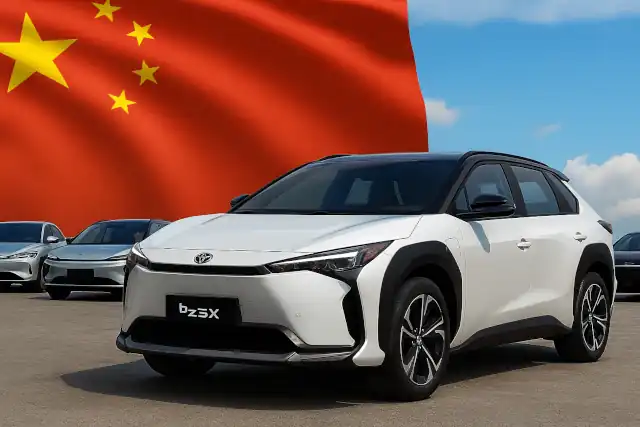
Toyota Motor Corporation’s battery electric vehicle (BEV) sales in China are finally gaining traction, offering a powerful rebuke to automakers who claim the EV transition is too difficult or premature.
While domestic Chinese manufacturers have flooded the market and left little room for foreign competitors beyond Tesla, Toyota’s bZ3X has achieved monthly sales exceeding 10,000 units—a remarkable achievement that demonstrates what’s possible when a legacy automaker commits to localization and competitive pricing.
The bZ3X’s success stems from a straightforward formula: offering a Toyota-branded vehicle starting around US$13,500 while incorporating the autonomous driving features Chinese consumers demand.
This achievement is particularly noteworthy given Toyota’s late start in the EV race and raises uncomfortable questions for other established automakers struggling with electrification.
Will Japanese EVs Flood the US Market soon?
The Long Shadow of the Nissan Leaf
Toyota’s EV journey has been marked by hesitation. Nissan seized the initiative in 2010 with the Leaf, which became synonymous with electric vehicles in Japan until Tesla’s emergence. Although Toyota launched the RAV4 EV with nickel-metal hydride batteries in 1996, the company never committed to serious production, selling merely a handful of units annually.
As recently as fiscal 2019, Toyota’s global BEV sales stood at zero. The numbers have climbed gradually since 2020, surpassing 140,000 units in fiscal 2024—a significant increase, yet still modest compared to the company’s overall production scale.
Toyota’s primary EV offering, the bZ4X crossover SUV co-developed with Subaru, launched domestically in May 2022 through a subscription model before general sales began in November 2023. With prices ranging from $37,000-$44,000, the vehicle targeted the premium segment but struggled to gain meaningful market share against Tesla’s Model Y.
Do Electric Vehicles Harm Human Health Through Electromagnetic Radiation?
The Multipathway Strategy: Wisdom or Hedging?
Toyota has long defended its cautious EV approach through what it calls the “multipathway strategy”—diversifying across BEVs, plug-in hybrids (PHEVs), traditional hybrids, and hydrogen vehicles to reduce risk while pursuing carbon neutrality. This strategy has delivered impressive hybrid sales of approximately 4.31 million units globally in fiscal 2024, dwarfing BEV numbers.
The strategy’s merits become clearer when comparing Toyota to its Japanese rivals. Nissan neglected hybrid development, leaving it without competitive products when EVs failed to meet expectations and gasoline vehicle sales collapsed in China. Honda, despite strong North American hybrid sales, has struggled to develop compelling EVs. Toyota avoided these pitfalls—its hybrid dominance in North America has bolstered financial performance while preventing the catastrophic losses Nissan and Honda experienced in the Chinese gasoline vehicle market.
Yet this success also enabled complacency. While Toyota’s multipathway approach provided financial cushioning, it delayed the hard work of developing truly competitive EVs for the world’s largest automotive market.
Will South Korea’s LFP Battery Industry Benefit from US-China Trade Tensions?
Cracking the Chinese Code
China’s new energy vehicle (NEV) market—encompassing BEVs and PHEVs—has experienced explosive growth since 2020. NEVs’ share of total vehicle sales surged from 15% in 2021 to 48% in 2024, likely crossing 50% in 2025. This rapid electrification reflects massive investment following the real estate bubble’s collapse, with over 100 EV manufacturers now competing fiercely.
BYD leads this charge, joined by smartphone makers like Xiaomi and state-backed ventures, creating intense price competition that has made EVs accessible to consumers who previously couldn’t afford foreign gasoline vehicles. Premium Chinese EVs increasingly embrace the Software Defined Vehicle (SDV) concept—vehicles that update via over-the-air communications and feature advanced cockpit and driver assistance systems, with Tesla as the paradigmatic example.
Toyota’s initial Chinese EV efforts faltered. The C-HR EV launched through a local joint venture in 2020 at around $25,000 proved too expensive. The bZ4X followed in 2022 at approximately $25,500, again failing to gain traction due to pricing.
The bZ3X changed the equation. Priced between $15,000 and $22,000—competitive with BYD offerings—the vehicle finally found its market. With a driving range of 430 to 610 kilometers (267 to 379 miles) and an advanced driver assistance system for urban environments co-developed with Chinese autonomous driving startup Momenta (achieving Level 2 autonomy), the bZ3X demonstrates Toyota’s willingness to leverage local technical expertise.
This localization strategy continues with the upcoming bZ7 sedan, scheduled for spring 2026, which will incorporate Huawei’s cockpit system. Toyota has recognized that competing in China requires Chinese technology partners and Chinese-appropriate pricing.
Tale of Two Trucks: Stellantis Retreats While BYD Advances in Electric Pickup Markets
The Global Picture
Toyota’s divergent regional strategies reflect varied market conditions. In North America, EV enthusiasm has cooled while hybrid demand surges, leading Toyota to scale back EV plans, including postponing North American EV factory construction. The company maintains its bZ4X offering but hasn’t expanded the lineup as it has in China.
European markets present a different challenge. Following Tesla, local manufacturers like Volvo, Audi, and Volkswagen dominate. Despite EU tariffs exceeding 40% on Chinese EVs, Chinese brands have gained market share in 2025. BYD’s compact EVs priced between $20,000 and $27,000 threaten European manufacturers’ traditional strongholds.
What is a Plug-in Hybrid Vehicle (PHV)?
The Uncomfortable Truth
Toyota’s Chinese success demolishes the excuse that legacy automakers lack the capability to compete in EVs. The company that claimed the multipathway strategy was necessary because EV technology wasn’t ready has now proven it can develop competitive electric vehicles when market conditions demand it.
The bZ3X succeeds because Toyota finally did what the market required: aggressive pricing, local technology partnerships, and features Chinese consumers actually want. This wasn’t rocket science—it was basic business strategy executed with belated urgency.
This raises pointed questions for struggling competitors. If Toyota—often criticized as the company most resistant to EVs—can achieve monthly sales exceeding 10,000 units in the world’s most competitive EV market, what explains other manufacturers’ failures? The answer increasingly appears to be not technological impossibility but organizational inertia, strategic miscalculation, and insufficient commitment.
Why Don’t Tesla Vehicles Made in US and Europe Use Safer LFP Batteries?
Looking Forward
EV demand growth has slowed in developed markets including Japan, North America, and Europe. Toyota plans continued new model introductions, but sales growth may remain modest given challenging market conditions. The company appears positioned to emphasize hybrids in developed markets while aggressively pursuing EV market share in China.
This dual-track approach makes business sense, yet it also reveals how circumstances rather than conviction have driven Toyota’s EV commitment. Had Chinese market conditions not demanded electrification, would Toyota have developed the bZ3X? The question suggests that for all the multipathway strategy’s wisdom, the company’s EV development has been reactive rather than visionary.
Toyota’s Chinese success proves that when automakers face genuine market pressure, they can deliver competitive electric vehicles.
The lesson for the industry is uncomfortable but clear: incompetence isn’t an excuse.
The technology exists, the manufacturing capability exists, and the know-how exists. What often lacks is simply the will to disrupt profitable legacy business models before the market forces that disruption. Toyota managed to pivot in China before it was too late. Other automakers may not be so fortunate.