Does Japan No Longer Trust GPS Anymore?
Does Japan No Longer Trust GPS Anymore?
- 60% of MD5 Password Hashes Can Be Cracked in Under an Hour with a Single GPU
- Dirty Frag: Root Access on Every Major Linux Distribution — No Patch, No Warning
- Ubuntu 26.04 LTS (Resolute Raccoon): The Most Ambitious Ubuntu LTS in a Decade
- Proton Mail: Data Transferred to FBI Again!
- How Close Are Quantum Computers to Breaking RSA-2048?
- How to Prevent Ransomware Infection Risks?
- What is the best alternative to Microsoft Office?
Does Japan No Longer Trust GPS Anymore?
As Japan’s H3 rocket prepares to launch two more satellites into orbit, a question emerges: Is the world’s third-largest economy losing faith in America’s GPS?
The answer is more nuanced than a simple yes or no—it’s a story of technological sovereignty, geographic necessity, and strategic foresight.
Will 5G Signals Interfere with Satellite TV and Starlink?
The Seven-Satellite Ambition
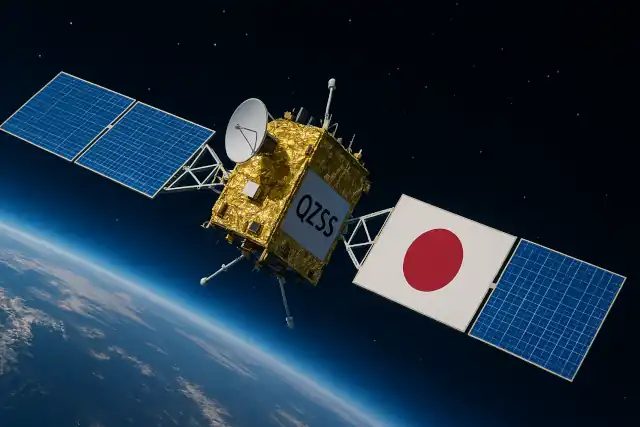
Japan’s Quasi-Zenith Satellite System (QZSS), known as “Michibiki” (meaning “guidance”), is expanding toward a seven-satellite constellation with launches scheduled for late 2025. Following the successful February 2025 launch of Michibiki 6, two additional satellites are planned: QZS-5 and QZS-7. While a launch attempt for Michibiki 5 was scrubbed in mid-December, these launches represent a critical milestone in Japan’s journey toward positioning independence.
The expanded constellation will ensure at least four QZSS satellites are always visible over Japan, enabling the system to function independently of GPS—a capability that transforms QZSS from a supplementary system into a standalone navigation infrastructure.
Why Satellite Companies Haven’t Encrypted Most Communications?
Why GPS Alone Isn’t Enough for Japan
To understand Japan’s investment in QZSS, one must first understand the country’s unique geographic challenges. Many people use “GPS” as a catch-all term for satellite navigation, but technically, GPS refers specifically to the United States’ Global Positioning System, operated by the U.S. Space Force. It’s just one of several Global Navigation Satellite Systems (GNSS), alongside Russia’s GLONASS, Europe’s Galileo, and China’s BeiDou.
In Japan’s densely built urban areas and mountainous terrain, GPS signals often struggle to reach receivers because they’re blocked by skyscrapers or mountains, sometimes causing significant positioning errors from reflected signals. This is the “urban canyon” problem—when tall buildings create corridor-like spaces where satellite visibility is severely limited.
QZSS addresses this through orbital design. Its satellites use highly inclined geosynchronous orbits, causing them to spend most of their time at high elevation angles over Japan, meaning they appear almost directly overhead. This positioning dramatically improves signal reception in urban canyons and mountainous areas where GPS satellites, positioned lower on the horizon, cannot be seen.
The practical difference is significant. Starting around 2029, positioning errors on consumer devices are expected to narrow from the current 5-10 meters down to approximately 1.6 meters when using the full seven-satellite system.
Ham Radio Community Challenges Satellite Company’s “Emergency Use” Claims
Beyond Convenience: A Matter of Sovereignty
While technical improvements are important, Japan’s commitment to QZSS runs deeper than enhanced navigation accuracy. Air Colonel Shinichiro Tsui, advisor to Japan’s National Space Policy Secretariat, describes the QZSS constellation as ‘vital’ for Japan’s sovereignty.
This concern isn’t paranoia—it’s pragmatism. Japan has long voiced concerns about continuing to rely on the U.S. GPS system, especially as geopolitical tensions evolve in the Asia-Pacific region. The theoretical possibility that GPS could be selectively disabled, whether through technical disruption or policy decision, creates an unacceptable vulnerability for a modern technological society.
Japan needs a backup in case GPS becomes unavailable or inaccessible, particularly as China fields its own satellite navigation system. This is especially relevant given the strategic importance of the region and ongoing territorial disputes.
The sovereignty dimension extends to disaster response. Japan’s J-Alert system, which warns of potential ballistic missile impacts, began operating in April 2024, while the L-Alert system disseminates evacuation instructions during emergencies. Having these critical safety systems depend on a foreign military’s satellite network would be strategically untenable.
G.729 vs Satellite VoIP Codecs
A System Designed for Interoperability, Not Isolation
Importantly, Japan hasn’t abandoned GPS—it’s complementing it. QZSS satellites sync their clocks with GPS satellites and broadcast at the same frequency bands, making the systems fully compatible. QZSS can be used in an integrated way with GPS, ensuring a sufficient number of satellites for stable, high-precision positioning.
This interoperability reflects a broader reality of modern navigation: more signals mean better accuracy. The more satellites a receiver can detect, the greater the accuracy—a critical performance measure distinguishing chipset and receiver brands in a highly competitive field. Most modern smartphones already receive signals from multiple GNSS systems simultaneously.
China Just Beat Starlink at Its Own Game: $1.40/Month Direct-to-Satellite Service Launches
The Bigger Picture: A Global Trend
Japan isn’t alone in developing regional or independent navigation capabilities. Russia operates GLONASS, the EU has Galileo, China has BeiDou, and India is developing NavIC. Even the United Kingdom has invested in satellite navigation through its OneWeb constellation.
Concerns about over-reliance on and vulnerabilities of GPS have emerged not just from Japan but from top U.S. military officials and agencies like DARPA, recognizing that dependence on any single system creates strategic vulnerabilities.
Qualcomm and Iridium Terminate Satellite Communication Project for Smartphones
The Path Forward
So does Japan no longer trust GPS? The answer is both yes and no. Japan trusts GPS as a technical system—it remains an integral part of the country’s positioning infrastructure. But Japan no longer trusts that GPS alone is sufficient for its security, sovereignty, and technological independence.
The expansion to seven satellites (and potentially eleven in the future) represents Japan’s calculated response to the realities of the 21st century: that critical infrastructure must be resilient, redundant, and ultimately under national control. The official Cabinet notes that QZSS ‘guarantees national security’ by providing navigation and synchronization capabilities independent of global systems administered by other powers.
As the remaining Michibiki satellites reach orbit in the coming months, Japan won’t be abandoning GPS—it will simply no longer be entirely dependent on it. In an era where satellite navigation underpins everything from smartphone maps to autonomous vehicles to disaster response systems, that independence isn’t just prudent—it’s essential.