Can ASUS first RISC-V development board “Tinker V” be a alternative of Raspberry Pi?
Can ASUS first RISC-V development board “Tinker V” be a alternative of Raspberry Pi?
- 60% of MD5 Password Hashes Can Be Cracked in Under an Hour with a Single GPU
- Dirty Frag: Root Access on Every Major Linux Distribution — No Patch, No Warning
- Ubuntu 26.04 LTS (Resolute Raccoon): The Most Ambitious Ubuntu LTS in a Decade
- Proton Mail: Data Transferred to FBI Again!
- How Close Are Quantum Computers to Breaking RSA-2048?
- How to Prevent Ransomware Infection Risks?
- What is the best alternative to Microsoft Office?
Can ASUS first RISC-V development board “Tinker V” be a alternative of Raspberry Pi?
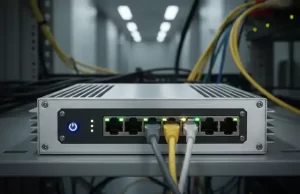
ASUS IoT Division released a number of new development board products at the 2023 International Embedded Exhibition, including a RISC-V board called “Tinker V”, which is ASUS’s first RISC-V architecture development board.
The boards released by the ASUS IoT department before this are all ARM architecture.


This board is equipped with the new RZ/Five processor of Renesas Electronics (Renesas), based on the Andes AX45MP 64-bit RISC-V core, the single-core performance is only 1.0 GHz, which is not strong. The memory is 1GB DDR4, which is in line with the mainstream of the market.
The board comes with a microSD card slot, 16GB eMMC module and SPI flash memory are also optional.
In terms of interfaces, Tinker V provides 20 PIN GPIO interfaces, JTAG interfaces for debugging, two Gigabit Ethernet ports, two micro USB interfaces (one OTG and one ordinary USB), 2 CAN buses and 2 RS-232 interface.

In terms of operating system support, ASUS said that this board supports Debian and Yocto Linux operating systems, and it is not known whether it will be extended to other systems in the future.
The official said that samples of Tinker V will be released in the second quarter, so the pricing has not yet been released.
For reference, the Allwinner D1 Nezha RISC-V development board with similar configuration costs about 600 RMB, but Nezha supports RVV and has huge advantages in the field of audio and video.
The editor speculates that the price of Tinker V should be around US$75.
After all, the configuration of this board is not very high, and there is no display support module.

Is the RISC-V CPU on ASUS first RISC-V development board “Tinker V” much better than the CPU on Raspberry PI 4 SoC?
The performance of the RISC-V CPU on the ASUS Tinker V and the CPU on the Raspberry Pi 4 SoC can vary depending on the specific use case and workload.
The ASUS Tinker V features a RISC-V CPU based on the SiFive U74 microarchitecture, which is a more powerful and efficient architecture compared to the ARM Cortex-A72 CPU used in the Raspberry Pi 4.
The SiFive U74 is a 64-bit, quad-core CPU with support for up to 2.5 GHz clock speed and can execute up to two instructions per clock cycle.
On the other hand, the Raspberry Pi 4 features a Broadcom BCM2711 SoC, which includes a quad-core ARM Cortex-A72 CPU running at 1.5 GHz.
Overall, the ASUS Tinker V has the potential to offer better performance than the Raspberry Pi 4, especially for tasks that can take advantage of the higher clock speed and dual-issue execution of the SiFive U74 CPU.
However, it’s worth noting that the Raspberry Pi 4 has a more established ecosystem and wider range of software support, which can be an important factor for certain applications.
Additionally, the ASUS Tinker V is a newer product with less established community support and a higher price point than the Raspberry Pi 4.
What is RISC-V architecture CPU?
A RISC-V CPU has a simplified instruction set that consists of a small number of basic instructions that can be executed very quickly. This allows RISC-V CPUs to achieve higher performance and energy efficiency compared to other more complex processor architectures.
The RISC-V ISA is modular, which means that it is designed to support a wide range of applications, from small embedded systems to large supercomputers.
It is also highly customizable, which allows manufacturers to optimize it for their specific needs and to add their own extensions to the instruction set.
RISC-V CPUs can be designed and manufactured by anyone, as the architecture is open-source and freely available. This has led to a growing ecosystem of RISC-V-based processors and related technologies.
What are the advantages of RISC-V architecture CPU over ARM architecture CPU on Raspberry Pi?
-
Open Source: The RISC-V architecture is an open-source instruction set architecture, which means that anyone can access and modify the source code. This allows for greater collaboration, innovation, and customization compared to the proprietary ARM architecture.
-
Flexibility: The RISC-V architecture is highly modular and customizable, allowing manufacturers to tailor the architecture to their specific needs. This flexibility is not possible with the ARM architecture, which is limited by its proprietary nature.
-
Cost: The open-source nature of the RISC-V architecture reduces the cost of licensing fees associated with ARM architecture. This makes it more affordable for manufacturers to design and produce RISC-V-based processors.
-
Innovation: The RISC-V architecture is relatively new and is rapidly evolving, which allows for greater innovation compared to the more mature ARM architecture. The open-source nature of RISC-V also promotes a wider range of ideas and experimentation.
-
Ecosystem: The RISC-V architecture is rapidly gaining popularity, which has led to the development of a growing ecosystem of tools, software, and hardware. This allows for easier development and integration of RISC-V-based products.
It’s worth noting that ARM architecture still has its own advantages, such as a more mature and established ecosystem, widespread adoption, and a greater range of available processors.
However, the RISC-V architecture offers a compelling alternative for those looking for greater flexibility, customization, and innovation.
Image from https://www.oschina.net/news/233546/asus-first-risc-v-scb-tinker-v