The “Holy Grail” of Production: Tesla Achieves Mass Production of Dry Cathode 4680 Cells
The “Holy Grail” of Production: Tesla Achieves Mass Production of Dry Cathode 4680 Cells
- Linux Kernel Removes strncpy After Six Years and 362 Patches
- Linux Kernel Drops 40-Year-Old AppleTalk Protocol — AI-Generated Patch Flood Was the Last Straw
- Apple’s Native Linux Container Tool Has Arrived — But Can It Really Replace Docker?
- 60% of MD5 Password Hashes Can Be Cracked in Under an Hour with a Single GPU
- Dirty Frag: Root Access on Every Major Linux Distribution — No Patch, No Warning
The “Holy Grail” of Production: Tesla Achieves Mass Production of Dry Cathode 4680 Cells
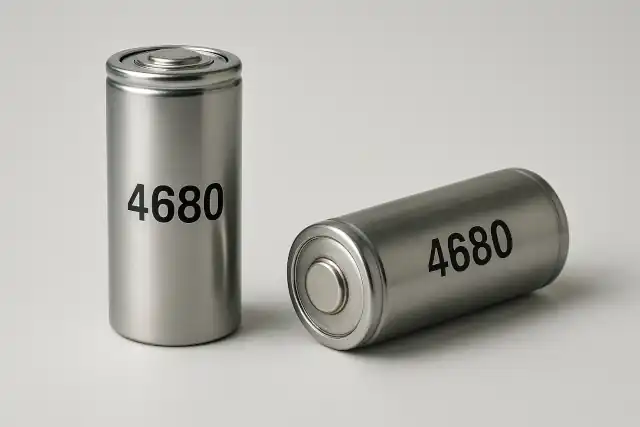
AUSTIN, TX — February 2026 — Elon Musk has officially declared a “major breakthrough” in battery technology, confirming that Tesla has finally cracked the code for scaling the dry electrode manufacturing process for both the anode and cathode of its 4680 battery cells.
This milestone, announced via social media and detailed in the company’s recent Q4 2025/FY 2026 update, marks the fulfillment of a core promise made during Tesla’s 2020 Battery Day.
Solving the Dry Cathode Puzzle
For decades, the lithium-ion battery industry has relied on a “wet” manufacturing process. This involves mixing active materials with toxic solvents to create a slurry, which is then coated onto metal foils and dried in massive, energy-hungry ovens that can span hundreds of feet.
While Tesla had previously successfully applied the dry process to the anode (the negative side), the cathode (the positive side) remained the industry’s “Holy Grail” due to the technical difficulty of binding cathode materials without liquids. Tesla’s new “all-dry” process eliminates the need for solvents and ovens entirely, essentially “pressing” the battery materials into a film using high-pressure rollers.
Why This Matters: Efficiency and Cost
The shift from a chemical-intensive process to a physics-driven one yields several transformative benefits:
-
Massive Cost Reductions: By eliminating ovens and solvent recovery systems, Tesla expects to reduce capital expenditure and factory footprint by up to 50%.
-
Lower Energy Footprint: The production energy required is slashed by roughly 40%, making the “green” vehicle even greener at its source.
-
Improved Energy Density: Dry electrodes allow for thicker material layers without the risk of cracking during drying, potentially boosting vehicle range by up to 10% to 20%.
Deployment and Future Roadmap
Tesla has already begun shipping a select number of Model Y units from Giga Texas equipped with these “complete version” 4680 packs. Industry analysts view this as a strategic hedge against global supply chain volatility and trade tariffs, as it allows Tesla to manufacture high-performance cells entirely within the United States.
Looking forward, Tesla is reportedly developing four distinct variants of these dry-process cells:
-
NC05: Optimized for the upcoming Robotaxi and Cybercab.
-
NC20: A high-energy version for SUVs and the Cybertruck.
-
NC30 & NC50: Advanced cells incorporating silicon-carbon anodes for ultra-high-performance models like the Roadster.
The Verdict
While not a “solid-state” battery in the chemical sense, Tesla’s breakthrough in dry electrode manufacturing represents a fundamental shift in how batteries are made.
By proving that this “lab trick” can work at a scale of millions of cells per week, Tesla has widened its lead in vertical integration and set a new cost-benchmark for the entire EV industry.