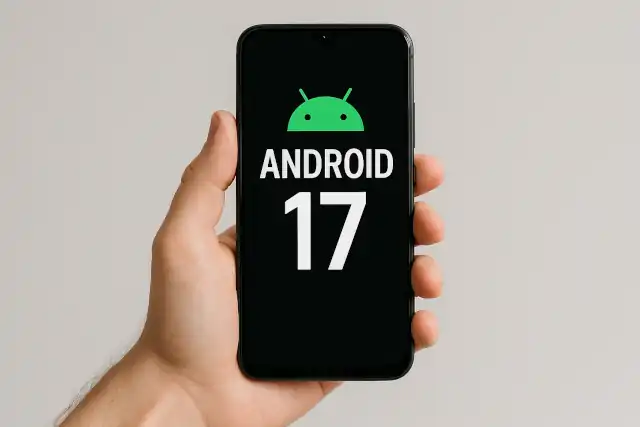
Android 17 Hides a “Priority Charging” Mode That Could Change How You Power Up
- Linux Kernel Removes strncpy After Six Years and 362 Patches
- Linux Kernel Drops 40-Year-Old AppleTalk Protocol — AI-Generated Patch Flood Was the Last Straw
- Apple’s Native Linux Container Tool Has Arrived — But Can It Really Replace Docker?
- 60% of MD5 Password Hashes Can Be Cracked in Under an Hour with a Single GPU
- Dirty Frag: Root Access on Every Major Linux Distribution — No Patch, No Warning
Android 17 Hides a “Priority Charging” Mode That Could Change How You Power Up
A code teardown of Beta 3 reveals Google’s most practical charging upgrade in years — but it’s not live yet.
Charging
Pause everything. Focus every watt into your battery. Still available for calls and texts. Up to 3 hours of boosted charging — on demand.
A freshly released Android 17 Beta 3 has given developers and teardown specialists a glimpse at something Google has yet to officially announce: a system-level feature called Priority Charging, designed to squeeze the most power into your phone during those precious minutes before you have to leave.
What Was Found — and Where
On March 26, 2026, Android Authority published an APK teardown of Android 17 Beta 3, uncovering hidden code strings that describe a new charging mode called Priority Charging. The feature does not appear in any user-facing settings in Beta 3 — it is entirely buried in back-end code and has not been confirmed by Google. But the strings are descriptive enough to paint a clear picture of what Google is building toward.
Features discovered through APK teardowns reflect work-in-progress code. They may change significantly or not ship in a public release at all. Priority Charging currently has no user-facing presence anywhere in Android 17 Beta 3.
How Priority Charging Works
The code strings found in Beta 3 are unusually clear. Two lines in particular lay out the feature’s purpose and requirements directly:
<string name="battery_charging_intro_dialog_header">
  Priority Charging temporarily pauses background
  activity like app updates for a faster charge.
</string>

<string name="battery_charging_intro_dialog_description">
  For best results, use a 30W+ adapter. Your phone will
  automatically manage any temperature changes and keep
  your battery within normal range.
</string>
The logic is straightforward. When you activate Priority Charging, Android temporarily halts non-essential background processes — primarily automatic app updates and similar data-heavy tasks — so that more of the power flowing in from the charger goes directly into the battery rather than being consumed by background activity. Phone calls and text messages continue to work normally throughout.
The code also points to a duration: one string describes the mode as able to “prioritize charging for up to 3 hours to ensure your phone has enough power for your most important tasks,” suggesting it is not meant to run indefinitely but as a focused, time-limited session.
The Thermal Problem — and Google’s Answer
One of the less obvious reasons that fast charging sometimes underdelivers is heat. When a phone’s temperature rises during charging, most devices automatically throttle the charging speed to protect the battery. This is by design — sustained high temperatures degrade lithium-ion cells over time.
Google’s code strings indicate that Priority Charging is designed with this in mind. The feature will actively monitor and manage device temperature during the session, keeping the battery within safe operating limits. The practical effect is that Priority Charging aims to be both faster and self-regulating — giving you speed without sacrificing long-term battery health.
“Google’s approach focuses on smarter power allocation rather than higher charging speeds.”
Android Authority · March 26, 2026Where Priority Charging Fits in Android’s Existing Battery System
As Gadget Hacks observed, Priority Charging would slot neatly into a set of three charging scenarios that Android has been quietly building toward. Android 15 introduced a dedicated Charging Optimization menu for Pixel devices with two modes: Adaptive Charging (which delays reaching 100% until just before a user’s alarm fires) and an 80% hard cap (which stops charging at that level to slow battery aging). Neither of those modes helps when you need to charge as fast as possible in a short window. Priority Charging is designed precisely for that third scenario — the pre-flight top-up, the 15 minutes before leaving for the gym, the quick charge between meetings.
Open Questions
Because the feature exists only as code strings, many implementation details remain unknown. Several questions stand out:
Timeline: When Could This Arrive?
Stable Android 17 is expected to roll out to Pixel 6, 6 Pro, 6a, Pixel 7 series, Pixel 8 series, Pixel 9 series, Pixel 10 series, Pixel Tablet, and Google’s foldable lineup. Samsung, Xiaomi, and other OEMs are expected to release Android 17-based updates in Q3 2026.
Why This Matters More Than Wattage Wars
The conversation around smartphone charging has focused heavily on peak wattage numbers — 65W, 100W, 200W — as the primary measure of a charger’s usefulness. Priority Charging represents a different philosophy: rather than increasing the power delivered by the hardware, it focuses on ensuring that the power you already have is used as efficiently as possible by clearing the system’s competing demands out of the way.
This approach is broadly applicable regardless of charging speed. A phone with a 30W charger running Priority Charging might outperform the same phone on a 30W charger running standard background tasks — not because the hardware changed, but because the software stopped wasting it.
That said, the actual magnitude of the improvement is still unknown. Until the feature ships and independent testing is possible, the real-world benefit remains theoretical.
Priority Charging is not yet available to users. If you want to prepare: ensure you have a 30W or higher charger for your Pixel device, keep an eye on subsequent Android 17 Beta and Canary updates, and watch for a user-facing toggle to appear in Battery settings or Quick Settings. Do not expect the feature in Beta 3’s settings — it simply is not there yet.
Real feature, real caveat.
Priority Charging is a credible and well-reasoned addition to Android’s battery management system. The code strings are clear and the use case is genuinely underserved. But this is still unfinished work found in a beta, and Android Authority is explicit that teardown discoveries do not guarantee shipping features. Follow subsequent betas closely — the next update may either bring Priority Charging into settings or quietly remove it from the codebase.