Microsoft Forces Windows 11 24H2 PCs to Upgrade to 25H2 — No Opt-Out
Microsoft Forces 24H2 PCs onto Windows 11 25H2 — No Opt-Out Available
- 60% of MD5 Password Hashes Can Be Cracked in Under an Hour with a Single GPU
- Dirty Frag: Root Access on Every Major Linux Distribution — No Patch, No Warning
- Ubuntu 26.04 LTS (Resolute Raccoon): The Most Ambitious Ubuntu LTS in a Decade
- Proton Mail: Data Transferred to FBI Again!
- How Close Are Quantum Computers to Breaking RSA-2048?
- How to Prevent Ransomware Infection Risks?
- What is the best alternative to Microsoft Office?
Windows Intelligence Report
Operating Systems
Microsoft Forces 24H2 PCs onto Windows 11 25H2 — No Opt-Out Available
The company has expanded its machine-learning rollout to all unmanaged Home and Pro devices, citing an October 2026 end-of-support deadline. Users can delay — but not refuse — the upgrade.
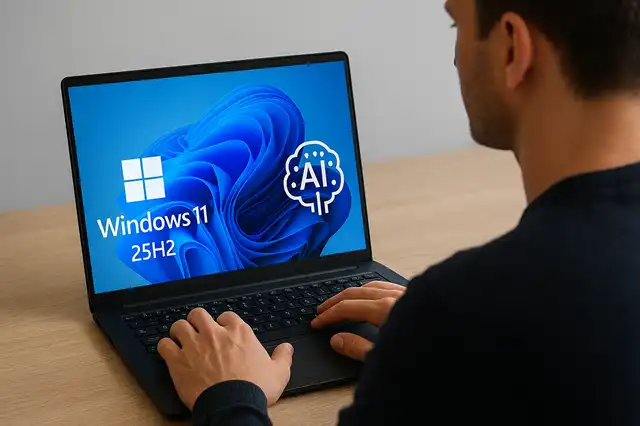
Microsoft has begun automatically upgrading personal computers running Windows 11 version 24H2 to version 25H2 — the Windows 11 2025 Update — with no mechanism to permanently refuse the installation. The rollout, confirmed this week via Microsoft’s Windows release health dashboard, targets Home and Pro edition devices that are not managed by a corporate IT department.
The company says its “machine learning-based intelligent rollout” is now active across all eligible unmanaged devices. Each PC is assessed individually: systems identified as low-risk proceed to download an enablement package and receive the upgrade automatically, while those with flagged driver or compatibility issues are placed in a safeguard hold until the underlying problem is resolved.
These devices will automatically receive the update to Windows 11, version 25H2 when they’re ready. No action is required.
— Microsoft Windows Release Health Dashboard, April 2026A Featherweight Update Under the Hood
Unlike prior annual Windows releases — which required multi-gigabyte downloads and lengthy installations — the 25H2 upgrade is delivered as an enablement package smaller than 200 KB. The bulk of its code was already quietly pre-staged on 24H2 machines through regular monthly cumulative updates; the enablement package simply activates those dormant features with a single system restart. This architecture makes the transition significantly faster and less disruptive than earlier Windows upgrades.
- Enablement package weighs less than 200 KB — far smaller than a traditional feature update
- Only one system restart is required to complete the upgrade
- Rollout targets unmanaged Windows 11 Home and Pro devices on version 24H2
- IT-managed devices (Intune, Endpoint Manager, Autopatch) are fully exempt
- Windows 10 users are offered 25H2 as an optional upgrade — not a forced one
- Windows 11 24H2 reaches end of support on October 13, 2026
Why Is Microsoft Doing This?
The driving force is Microsoft’s support lifecycle policy. Windows 11 version 24H2 is scheduled to reach end of mainstream support on October 13, 2026 — approximately six months from now. Once that date passes, devices still on 24H2 will stop receiving monthly security patches, time zone updates, and fixes for known issues. Microsoft’s stated goal is to ensure every unmanaged consumer PC remains on a supported, fully patched version of the operating system before that window closes.
Microsoft has not disclosed the specific signals or data points its machine learning system uses to determine whether a device is ready. The company confirmed only that telemetry, device diagnostics, driver compatibility data, and real-world analytics all factor into the decision. Critics have noted this lack of transparency leaves users with little insight into why their PC was — or was not — selected for the current wave.
Who Is Affected?
| Device Type | Status | Notes |
|---|---|---|
| Windows 11 24H2 — Home & Pro (unmanaged) | Forced upgrade | Automatic; cannot be permanently refused |
| Windows 11 23H2 / 22H2 — Home & Pro (unmanaged) | Forced upgrade | Already out of support; being upgraded to 25H2 |
| Windows 11 — Enterprise & Education editions | Exempt | Managed by IT; administrators control timing |
| Windows 11 — Intune / Endpoint Manager / Autopatch | Exempt | Not subject to automatic push |
| Windows 10 users | Optional only | Offered 25H2 upgrade, but never forced |
Can You Delay the Update?
Users have limited but real options to buy time. Windows Update’s built-in pause function lets Home edition users postpone updates for up to 35 days, while Pro users can pause for longer periods. This is a delay, not a cancellation — once the pause period expires, the upgrade will proceed. Technically inclined users on Pro or Enterprise editions can also use Group Policy or registry edits to exert more control, though this falls outside typical consumer workflows.
- Open the Start menu and click Settings
- Navigate to Windows Update
- Click the dropdown arrow next to Pause updates
- Select a pause duration — up to 35 days on Home edition, longer on Pro
Users who want to take matters into their own hands can also check whether the update is available ahead of schedule by going to Settings → Windows Update → Check for updates. If it does not appear, the device may not yet have cleared Microsoft’s compatibility threshold, or may be under a safeguard hold.
Stability Concerns Linger
The forced rollout arrives at an awkward moment. Since March 2026’s Patch Tuesday, Microsoft has issued several out-of-band emergency updates for versions 24H2 and 25H2, including a fix for a sign-in failure affecting Microsoft accounts across Teams and OneDrive, and a separate patch addressing a Bluetooth device visibility issue. An earlier cumulative update had to have its rollout paused entirely after triggering a 0x80073712 installation error on some systems. Microsoft has since issued a remediation update for affected devices.
These incidents underscore a tension familiar to long-time Windows watchers: the versions still on active support tend to attract bugs through their monthly cumulative updates, while older, abandoned versions — no longer receiving changes — sometimes feel paradoxically more stable in the short term. Users have little recourse under the new forced-upgrade policy other than to ensure their drivers are current and to keep at least 20 GB of free storage available before the transition begins.
What’s Next
Microsoft is expected to continue expanding the 25H2 rollout through mid-2026, with the goal of having most eligible consumer devices updated well before the October 13, 2026 support deadline. Development of Windows 11 version 26H2 is already underway in internal builds, and if the 25H2 enablement-package approach continues to prove efficient, it may become the standard delivery mechanism for future annual Windows releases as well.