Apple Opens Self-Service Repair for Its Entire 2026 Lineup — and the MacBook Neo is Rewriting the Rules
Apple Opens Self-Service Repair for Its Entire 2026 Lineup — and the MacBook Neo is Rewriting the Rules
- Apple’s Native Linux Container Tool Has Arrived — But Can It Really Replace Docker?
- 60% of MD5 Password Hashes Can Be Cracked in Under an Hour with a Single GPU
- Dirty Frag: Root Access on Every Major Linux Distribution — No Patch, No Warning
- Proton Mail: Data Transferred to FBI Again!
- How Close Are Quantum Computers to Breaking RSA-2048?
- What is the best alternative to Microsoft Office?
Apple Opens Self-Service Repair for Its Entire 2026 Lineup — and the MacBook Neo is Rewriting the Rules
On April 8–9, 2026, Apple expanded its Self Service Repair Store to cover all products launched in March. The standout is the MacBook Neo: the most repairable Apple laptop in 14 years, according to iFixit.
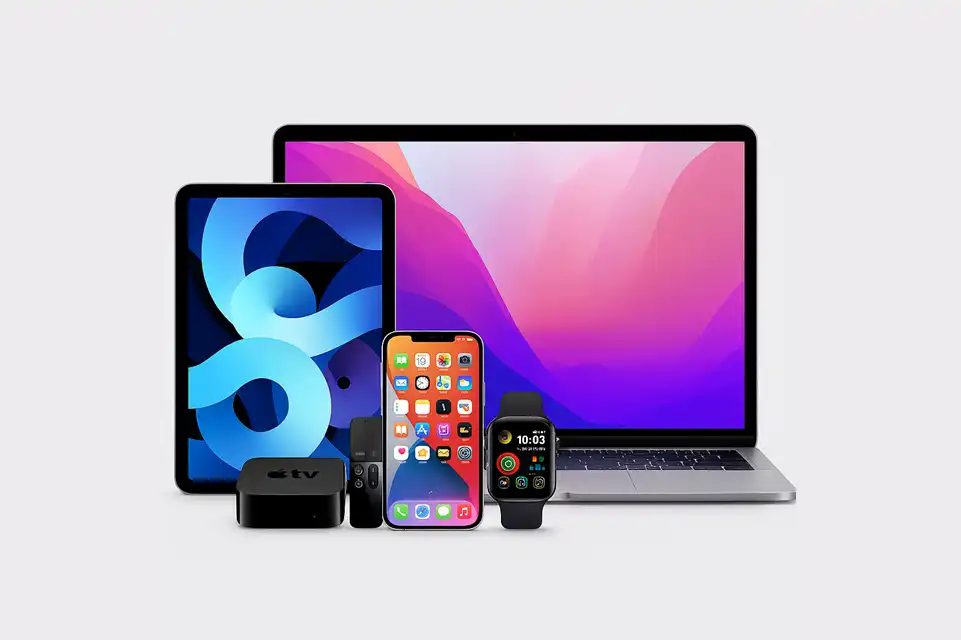
Illustration: MacBook Neo internal layout — battery and keyboard now secured with screws rather than adhesive. iFixit repairability score: 6/10.
Apple has expanded its Self Service Repair Store to cover every device the company unveiled in March 2026 — and buried within the update is a more significant story: the MacBook Neo has become the most repairable Apple laptop in roughly 14 years, confirmed by repair specialists iFixit in a full teardown.
On April 8–9, 2026, Apple quietly updated its Self Service Repair Store to make official parts, tools, and rental kits available for its latest products. For the first time, consumers who bought hardware the month it launched can immediately order genuine components directly from Apple — closing a gap that previously left new device owners waiting months for repair access.
What’s Now Available
The following products released in March 2026 are now fully supported in Apple’s Self Service Repair Store, with parts available for purchase or rental alongside detailed, step-by-step repair manuals:
Serviceable components vary by product. For the iPhone 17e, users can now replace items such as the back glass and speakers. For the Studio Display XDR — Apple’s new professional monitor — even major parts like the logic board, housing, and fans are offered. The Self Service Repair Store is available to customers in the United States, Canada, and many European countries.
The MacBook Neo: A Design Shift 14 Years in the Making
By far the most consequential element of this update is what it reveals about the MacBook Neo’s hardware design. iFixit’s teardown, published in mid-March 2026, found the laptop to be Apple’s most repairable MacBook since the pre-Retina era. iFixit awarded it a score of 6 out of 10 — higher than the M5 MacBook Pro (4/10) and M4 MacBook Air (5/10), and a dramatic departure from the 1 out of 10 earned by the 2012 Retina MacBook Pro that inaugurated the glued-component era.
The defining difference is how the MacBook Neo’s battery is mounted. Where older MacBook models use adhesive strips — notoriously fragile, increasingly brittle with age, and prone to snapping during removal — the Neo’s battery is secured with 18 screws. According to iFixit, this single change transforms what is typically one of the most costly and risky laptop repairs into a straightforward procedure. The keyboard, similarly, is now a removable component attached with 41 screws and can be replaced independently. On current MacBook Air and MacBook Pro models, a keyboard failure requires replacing the entire top case assembly, a repair that costs between $400 and $600. On the Neo, a standalone keyboard starts at $140 through Apple’s official repair store.
Screws add minutes; glue adds hours. The Neo’s battery tray is the defining improvement — the biggest repair win in a MacBook in over a decade.
— iFixit teardown report, March 2026The internal architecture throughout the Neo reflects this philosophy. Speakers, USB-C ports, and the trackpad are independently accessible — none stacked beneath another component. The display is straightforward to remove, thanks to simplified antenna routing. Even the trackpad has been redesigned: the Neo reverts to a simpler mechanical mechanism rather than the Force Touch haptic trackpad standard since 2015, reducing both cost and repair complexity.
Software Barriers Also Fall
The hardware improvements are accompanied by an important software change. iFixit’s testing confirmed that Apple’s Repair Assistant tool — introduced with macOS Tahoe in September 2025 — accepts replacement parts on the MacBook Neo without triggering pairing warnings or restricted-functionality messages. Components including displays, batteries, and Touch ID modules were successfully swapped between two separate Neo units without any system complaints.
This effectively resolves a long-standing criticism: for years, Apple’s parts pairing system locked components to specific devices, meaning a battery or screen replaced outside Apple’s official network would prompt warning messages or disable features such as battery health reporting. The combination of screw-secured hardware and cooperative calibration software represents the most complete repair access Apple has offered on a laptop in many years.
The MacBook Neo’s repairability gains are real but not unlimited. RAM and storage remain soldered directly to the A18 Pro chip — they cannot be upgraded or replaced after purchase. The device ships with 8 GB of RAM as its only configuration. Additionally, despite the Neo’s improvements, Apple still ranked last among major laptop manufacturers in U.S. PIRG Education Fund’s “Failing the Fix 2026” repairability report, receiving a C– grade. Lenovo, in second-to-last place, received a C.
A Programme Four Years in the Making
Apple launched its Self Service Repair programme in April 2022, initially covering iPhones in the United States before expanding to Canada and several EU countries. The program drew early criticism for cumbersome procedures and component pairing restrictions that undermined its stated purpose. Over subsequent years, Apple progressively simplified its repair policies, expanded the program to include iPad and Mac models, and — following right-to-repair legislation in Oregon in 2024 — introduced the Repair Assistant calibration tool that removed pairing barriers for authorised components on iPhones, and later on Macs.
Apple launches Self Service Repair in the US, initially covering iPhone 12 and 13 models. Program criticised for complexity and the need to rent heavy tool kits.
Apple expands coverage to iPad and Mac models, simplifies processes, and gradually reduces procedural friction. Component pairing restrictions remain a point of contention.
Oregon passes right-to-repair legislation banning component pairing restrictions. Apple responds by introducing the Repair Assistant calibration tool for iPhones.
Apple brings Repair Assistant to MacBooks running macOS Tahoe, allowing display, battery, and biometric module replacements without software warnings.
Apple launches the MacBook Neo, iPhone 17e, iPad Air (M4), MacBook Air (M5), MacBook Pro (M5), Studio Display, and Studio Display XDR. Repair manuals published same day.
Apple updates Self Service Repair Store with official parts and tool kits for all seven March 2026 products — the fastest launch-to-repair-availability turnaround the program has seen.
Regulatory Context and What Comes Next
The MacBook Neo’s screw-mounted battery is widely seen as Apple’s early response to the EU Batteries Regulation, which will require user-replaceable batteries in portable electronic products sold in Europe by mid-2027. iFixit observed that the Neo “seems to be where Apple is testing its answer” to that regulation. Whether the design philosophy will extend to the MacBook Air and MacBook Pro — devices where Apple commands higher margins and tighter control — remains to be seen.
For now, the expansion of the Self Service Repair Store to cover the full March 2026 lineup marks the most cohesive rollout since the programme’s 2022 launch. Consumers who want to repair their own devices have, for the first time, immediate access to genuine parts for brand-new Apple products — alongside manuals, tool rentals, and a calibration process that no longer punishes them for doing so.