MacBook Ultra & M6 Chip: Separating Confirmed Facts from Speculation
- Apple’s Native Linux Container Tool Has Arrived — But Can It Really Replace Docker?
- 60% of MD5 Password Hashes Can Be Cracked in Under an Hour with a Single GPU
- Dirty Frag: Root Access on Every Major Linux Distribution — No Patch, No Warning
- Proton Mail: Data Transferred to FBI Again!
- How Close Are Quantum Computers to Breaking RSA-2048?
- What is the best alternative to Microsoft Office?
Fact-Checked Report · Apple Silicon
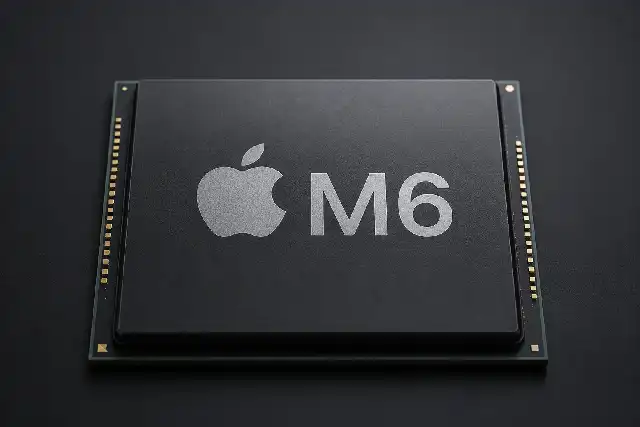
MacBook Ultra & M6 Chip: Separating Confirmed Facts from Speculation
Claim-by-Claim Verdict
| Original Claim | Verdict | What the Evidence Says |
|---|---|---|
| M6 chip built on TSMC 2nm process | Confirmed | Widely corroborated. Apple is using TSMC’s first-generation N2 (2nm) node — the same generation used for the A20/A20 Pro. Multiple supply chain reports confirm this. |
| TSMC 2nm is a “second-generation” node (GAA) | Partly Accurate | The 2nm N2 node does use nanosheet (GAA) transistors — a genuine architectural shift from FinFET. However, Apple chose the standard N2, not the enhanced N2P variant, reportedly to control costs and secure volume. The article’s characterization of it as “second-generation 2nm” is misleading. |
| Power consumption drops by 40% | Overstated | TSMC’s 2nm node promises roughly 30–36% lower power consumption compared to 3nm at equal performance. The “40%” figure in the headline is at the high end of speculation, not confirmed supply chain data. A realistic estimate is ~30% efficiency improvement from the node shrink alone. |
| Tape-out data has been “released” | Unverified | No credible source has reported the public release of M6 tape-out test data. The figures circulating are analyst projections and node-level estimates, not measured silicon results. |
| MacBook Ultra with OLED display replacing mini-LED | Confirmed | Multiple credible sources — including Omdia Research and display supply chain reports — confirm 14.3″ and 16.3″ tandem OLED panels from Samsung Display. Samsung is reportedly set to begin shipping panels as early as July 2026. |
| MacBook Ultra sits above the current MacBook Pro lineup | Confirmed | Reports from Mark Gurman and Ming-Chi Kuo describe the MacBook Ultra as a new tier above the MacBook Pro, not a replacement — carrying the “Ultra” branding already used on Apple Watch Ultra and Mac Studio/Mac Pro chips. |
| MacBook Ultra launches “before end of 2026” | Uncertain | Timing is contested. Notebookcheck reported a Q3 2026 target, while Mark Gurman (Bloomberg) has since said early 2027 is now more likely due to a global memory chip shortage constraining Apple’s RAM supply. Late 2026 remains possible but not certain. |
| AI computing improves 2–3× over M5; runs 70B parameter models locally | Unverified | No verified source provides this specific figure. The M5 already handles significant on-device AI workloads. Gains from the 2nm node will improve Neural Engine throughput, but the “2–3×” claim and “70B model” figure appear speculative and are not backed by any supply chain or analyst report we could locate. |
| M6 Max cuts 4K export time from 1 hour to 30 minutes | Unverified | No benchmark or supply chain data supports this specific claim. The M6 is expected to improve render performance, but precise export time comparisons require actual hardware testing, which has not occurred. |
| 24+ hour battery life for office work; 30+ hours for video playback | Unverified | These precise figures have not been reported by any credible source. OLED efficiency and the 2nm node will likely extend battery life beyond current MacBook Pro figures, but no supply chain report or analyst has given these specific numbers. |
| All M5 series updates complete by Q2 2026 | Partly Accurate | The M5 MacBook Pro launched in early 2026. Other M5 updates (Mac Studio, Mac Pro) are expected, but “all M5 updates completed by Q2 2026” is not confirmed — some may extend into H2 2026. |
What Is Actually Known About the M6 & MacBook Ultra
Setting aside speculation, here is what credible reporting genuinely supports as of June 2026:
“Early 2027 is now looking more likely than late 2026 due to the global memory chip shortage. Apple’s supply of RAM is constrained, which might push back the launch.” — Mark Gurman, Bloomberg / MacRumors
The tandem OLED display — the same stacked-panel technology Apple uses in the iPad Pro — is one of the most credible confirmed details. By layering two OLED panels, Apple achieves significantly higher peak brightness without sacrificing efficiency. Pixels that display black draw no power at all, which should meaningfully extend battery life over current mini-LED models, though exact hour figures remain unknown before launch.
The M6 chips are expected to come in M6 Pro and M6 Max variants, with the MacBook Ultra positioned as Apple’s flagship notebook — sitting above, not replacing, the MacBook Pro line. Up to six new features have been reported: OLED display, touchscreen capability, Dynamic Island, M6 chips, a thinner chassis, and possibly built-in cellular connectivity.
Purchasing Advice: What Actually Makes Sense
The purchasing guidance in the original article is broadly reasonable, even if some of the performance figures it cited are speculative:
For heavy creators — those doing sustained 8K rendering, complex 3D work, or pushing local AI models hard — the M6 MacBook Ultra is worth waiting for. The efficiency gains from 2nm are real, OLED will be a genuine display upgrade, and performance improvements over the M5 should be meaningful, even if the specific “40%” and “2–3×” figures are unverified.
For everyday users — office work, light editing, browsing, writing — the M5 MacBook Pro is an excellent machine right now. The performance gap will not be perceptible in daily tasks, and the M6 Ultra will almost certainly carry a significant price premium. There is no practical reason to wait.
The core premise of the original article is directionally correct: Apple is developing an M6-based MacBook Ultra with OLED, the 2nm chip will bring real efficiency gains, and this is a more significant update than a routine spec bump. However, specific figures — “40% power drop,” “30+ hour battery,” “2–3× AI gains,” and verified “tape-out data” — are not supported by any credible source as of June 2026 and should be treated as speculation, not fact.
Watch for official announcements from Apple, likely at a special event in late 2026 or early 2027.