Will the PS6 Cost $749 — or Break $1,000?
Will the PS6 Cost $749 — or Break $1,000?
- 60% of MD5 Password Hashes Can Be Cracked in Under an Hour with a Single GPU
- Dirty Frag: Root Access on Every Major Linux Distribution — No Patch, No Warning
- Ubuntu 26.04 LTS (Resolute Raccoon): The Most Ambitious Ubuntu LTS in a Decade
- Proton Mail: Data Transferred to FBI Again!
- How Close Are Quantum Computers to Breaking RSA-2048?
- How to Prevent Ransomware Infection Risks?
- What is the best alternative to Microsoft Office?
Will the PS6 Cost $749 — or Break $1,000?
Leaked manufacturing data, soaring DRAM prices, and real-world tariffs are reshaping what Sony’s next console will cost at launch. Here’s what the evidence actually says.
Sony has not officially announced the PS6’s price. All figures in this article are based on leaked component costs and analyst estimates.
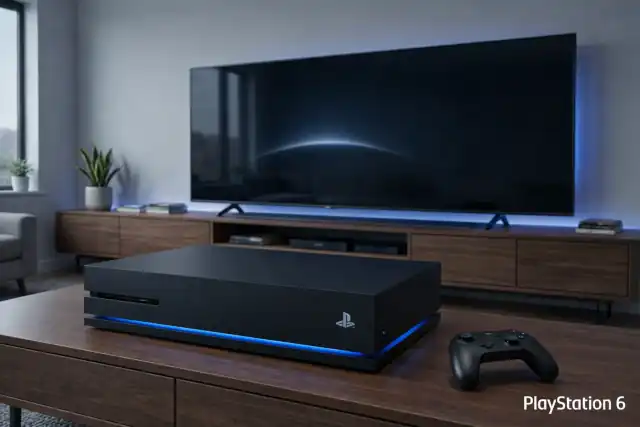
The PlayStation 6 doesn’t have an official price tag yet — but the conversation around what it might cost has never been more urgent. With Sony raising PS5 prices by $100–$150 across all models effective April 2, 2026, citing “continued pressures in the global economic landscape,” the question of what comes next has taken on a new edge. A PS5 Pro that launched at $699 in late 2024 now costs $899.99. For many gamers, this raises an uncomfortable question: if the current generation costs this much, what will the next one demand?
The short answer, based on the most credible leaks available, is somewhere between $499 and $949 — a range that reveals just how much uncertainty surrounds Sony’s next console. The longer answer requires understanding three interlocking forces: the cost to manufacture the hardware, the ongoing global memory shortage, and the unpredictable effects of US tariffs.
The Bill of Materials: What It Costs Sony to Build One
The most concrete data point comes from hardware leaker Moore’s Law Is Dead (MLID), who published a detailed breakdown of the PS6’s estimated Bill of Materials (BOM) in early 2026. According to that analysis, manufacturing a single PS6 unit is projected to cost Sony approximately $743. Notably, the RAM alone — estimated at 30GB — accounts for around $300 of that total, making memory the single largest cost driver.
This aligns closely with a separate estimate from AMD insider KeplerL2, who posted on NeoGAF that the PS6’s BOM is approximately $760. KeplerL2 suggested that a $699 retail price is still achievable with a modest subsidy — noting that Sony has historically sold consoles at a loss at launch, recouping margins through software sales and PlayStation Plus subscriptions.
PS6 Estimated Component Costs at a Glance
The Memory Crisis: A Problem That Won’t Resolve Quickly
The RAM crisis is not a rumor — it is a documented and accelerating market reality. AI data centers are consuming a vast share of global DRAM and NAND production. According to research firm Omdia, PC DRAM prices rose nearly 100% and SSD prices roughly 40% over 2025. The situation worsened further into 2026: DRAM prices are projected to rise an additional 60%, and NAND a further 70%, in the first quarter of 2026 alone.
Micron’s VP Christopher Moore confirmed at CES 2026 that the shortage could persist until at least 2028, tied directly to insatiable AI infrastructure demand. Samsung and SK Hynix — which together control roughly 70% of global DRAM output — have signaled they will not aggressively expand capacity, prioritizing profitability over volume. Market analysts project the memory price rally will extend past 2028.
“The costs for DRAM and NAND have surged 80–90 percent since the start of 2026.”
— Joost van Dreunen, industry analyst, citing early 2026 market conditions
This matters enormously for the PS6. If memory prices remain elevated through 2027, MLID’s $300 RAM estimate could rise substantially, pushing the BOM — and thus the retail price — higher. MLID has speculated that if memory becomes cheaper before launch, Sony may prefer to increase RAM capacity from 30GB to 40GB rather than reduce the price — improving the product rather than passing savings to consumers.
Tariffs: The Wild Card Nobody Can Predict
US tariffs are the other major variable. Sony’s own April 2026 PS5 price increase was driven in part by tariffs on goods manufactured in China (30%), Japan (15%), Vietnam (20%), and Malaysia (19%) — all countries involved in PlayStation production. MLID’s analysis shows that if a 30% tariff applies to the PS6 at launch, the retail price could inflate from $749 to approximately $949 or higher.
However, the current environment offers little reassurance. Sony’s PS5 Disc edition has now risen from its 2020 launch price of $499 to $649.99 today — a $150 cumulative increase over five years, the majority of it occurring in the last 12 months. This represents one of the most pronounced mid-generation price escalations in console history.
What the Credible Leakers Actually Say
It’s important to distinguish between the speculation circulating online and what the most-cited insiders have actually said. Several viral articles have presented a $1,000 PS6 as a near-certainty, conflating worst-case scenarios with likely outcomes. The reality from the most credible sources is more nuanced.
MLID, whose track record on hardware leaks is generally regarded as strong, has been clear: he dismisses the $1,000+ headline as unwarranted. His base case remains approximately $749, with the tariff-driven scenario of $949 presented as a risk — not an expectation. KeplerL2 similarly sees $699 as achievable with Sony subsidization.
It is also worth noting that MLID previously — before the 2025–2026 memory crisis intensified — suggested the PS6 could launch at as low as $499, arguing Sony was designing the console for cost efficiency from the ground up. That figure now looks optimistic given DRAM realities, but it illustrates how dramatically external conditions have shifted expectations.
What We Know About the PS6 Hardware
Beyond pricing, the leaked specifications paint a picture of a significant generational leap. Based on documentation reportedly reviewed by MLID and corroborated in part by AMD’s own public partnership announcements:
The PS6 is codenamed “Orion” and is built around a custom AMD APU featuring Zen 6 CPU architecture and RDNA 5 graphics, manufactured on TSMC’s 2nm process — a substantial efficiency gain over the PS5’s 7nm chip. Performance targets suggest approximately three times the rasterization performance of the base PS5, with ray tracing improvements potentially six to twelve times greater, enabled in part by AMD and Sony’s joint Project Amethyst initiative.
The console is also expected to ship with a companion handheld codenamed “Canis” — Sony’s first true portable gaming device since the PS Vita — capable of running PS4 and PS5 games natively. Both devices are targeted for the same launch window.
AMD’s verification work on the hardware is reportedly underway, and the manufacturing agreement with AMD for the Orion APU by mid-2027 remains on track as of early 2026, though Bloomberg has reported that conversations about potential delays to 2028 or even 2029 have begun at Sony, driven by the economic climate.
The Broader Picture: Gaming’s Affordability Crisis
The PS6 pricing debate doesn’t exist in a vacuum. The entire gaming hardware market is under pressure. Xbox raised Series X and Series S prices in 2025. The Xbox “Project Helix” next-gen console has been reported at potential price points exceeding $1,000 for its high-end PC-like configuration. Valve has revised its Steam Machine plans citing the DRAM shortage. Even Nintendo analysts widely expect a Switch 2 price increase before the end of 2026.
According to Circana data, the average price paid for new gaming hardware in the US rose from $247 in 2019 to $452 by 2025. More tellingly, 53% of video game hardware buyers in Q4 2025 had household incomes over $100,000 — up from just 40% in early 2022. Gaming, once broadly accessible, is increasingly becoming a luxury for higher-income households.
The Bottom Line
The most accurate summary of the PS6 pricing situation as of April 2026 is this: the console will almost certainly cost more than the PS5 did at launch, and the exact price depends on variables — memory markets, tariff policy, and Sony’s competitive strategy — that remain genuinely unresolved.
The credible consensus among the most reliable insiders places the PS6 somewhere between $699 and $749 in the base scenario, with a realistic adverse ceiling around $949 if tariffs and RAM prices remain hostile. The $1,000 figure is a speculative extreme cited by analysts as a possibility — not a prediction — and the primary leakers behind the BOM data actively push back against that framing.
What is certain is that Sony’s pricing window has narrowed considerably since 2024. A PS5 Pro at $899.99 has reset consumer expectations upward. Whether the PS6 clears that bar at launch — or prices above it — may ultimately say as much about the state of the global economy in 2027 as it does about the console itself.
All pricing figures cited in this article are based on leaks and third-party analyst estimates. Sony has made no official announcements regarding PS6 pricing or specifications. Hardware details may change before launch.