28 Years to Cross the Line: Why Did IPv6 Take So Long to Reach 50%?
28 Years to Cross the Line: Why Did IPv6 Take So Long to Reach 50%?
- 60% of MD5 Password Hashes Can Be Cracked in Under an Hour with a Single GPU
- Dirty Frag: Root Access on Every Major Linux Distribution — No Patch, No Warning
- Ubuntu 26.04 LTS (Resolute Raccoon): The Most Ambitious Ubuntu LTS in a Decade
- Proton Mail: Data Transferred to FBI Again!
- How Close Are Quantum Computers to Breaking RSA-2048?
- How to Prevent Ransomware Infection Risks?
- What is the best alternative to Microsoft Office?
28 Years to Cross the Line:
Why Did IPv6 Take So Long
to Reach 50%?
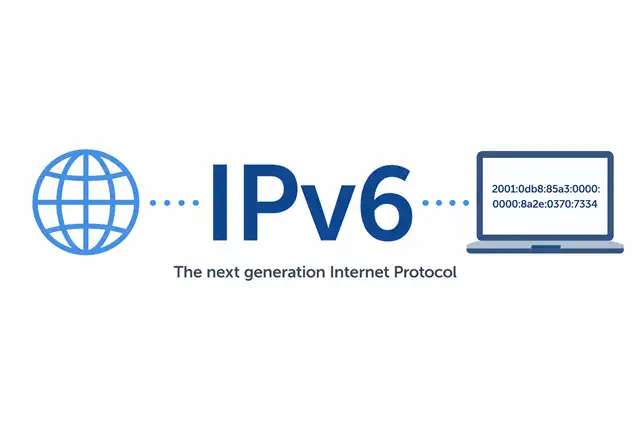
On March 28, 2026, Google recorded a quiet but historic moment: for the first time, more than half of the traffic reaching its servers arrived over IPv6. A protocol designed in 1998 had finally crossed the majority threshold — but the more interesting question is why it took nearly three decades to get there.
A Milestone That Almost Wasn’t
The number appeared on Google’s IPv6 statistics dashboard without fanfare: 50.10%. Recorded on March 28, 2026, it marked the first time in history that the majority of traffic reaching Google’s global services traveled over IPv6 — the internet protocol that has been waiting in the wings since its formal specification was published in December 1998.
It is worth being precise about what that number does and does not mean. Google’s figure tracks users who access its own services (Search, YouTube, Gmail) over IPv6. Other measurement bodies tell a slightly different story: Cloudflare Radar, which measures HTTP requests across its network, put IPv6 at around 40%. APNIC Labs, which estimates protocol capability across observed networks, pegged global IPv6-capable networks at roughly 43%. As of mid-April 2026, Google’s own dashboard had drifted back to around 45–48%, varying day to day and higher on weekends when enterprise traffic subsides.
IPv6 was designed to answer one of the internet’s most foreseeable crises: the inevitable exhaustion of the IPv4 address space. IPv4, standardized in 1981, uses 32-bit addresses — enough for approximately 4.3 billion unique identifiers, of which only around 3.7 billion are practically usable. In the early 1980s, that number seemed impossibly large. By the 2010s, it was critically small.
Why IPv4 Ran Out — and Why Nobody Panicked
North America’s regional registry effectively exhausted its free pool of IPv4 addresses around 2011. Europe’s RIPE NCC declared its last available block gone in 2019. Asia, Latin America, and Africa followed in the years surrounding those dates. Yet the internet did not break. Prices for IPv4 addresses rose — from roughly $10–15 per address in 2020 to $18–45 by 2024 — but the infrastructure kept running. The reason was a clever band-aid called NAT.
Network Address Translation, or NAT, allows many devices behind a router to share a single public IPv4 address. Your home network might contain a dozen devices, but your ISP only assigns you one IP. NAT translates between them. It worked so well that for most users and most organizations, the IPv4 shortage was invisible. This is one of the core reasons IPv6 adoption stalled: the pain it was designed to prevent never fully materialized in a way people could see.
Five Reasons the Transition Took 28 Years
1. NAT killed the urgency. As described above, NAT gave IPv4 a long and comfortable afterlife. Millions of home networks and corporate intranets never needed a public IPv4 address for every device. The incentive to migrate dissolved into a comfortable fiction: “we can always do this later.”
2. IPv6 required a complete parallel infrastructure. Unlike a software update, deploying IPv6 means running two logical networks simultaneously — a configuration known as “dual-stack.” Routers, firewalls, load balancers, DNS servers, monitoring tools, and security systems all need updating. For a large organization, that can mean a $2.4 million migration effort with a 3–5 year return-on-investment timeline. When IPv4 is still working, that’s a hard budget to justify.
3. Early tunneling solutions were nightmarish. Before dual-stack became standard, engineers used transition mechanisms like 6in4 tunneling and protocols like Teredo and 6to4. These worked, but were complex, prone to compatibility failures, and gave network administrators legitimate reasons to avoid IPv6 entirely.
4. The chicken-and-egg content problem. Website operators had little reason to enable IPv6 if most of their users couldn’t access it. And users saw no benefit in demanding IPv6 connectivity if their favorite websites weren’t on it. This deadlock persisted for years and is still visible today: as of 2026, GitHub — owned by Microsoft, a company that has internally pursued IPv6-only networking for years — still does not offer IPv6 access to its public services.
5. Enterprise organizational inertia. If a system isn’t generating error reports, no budget owner will approve the cost to change it. Network operations teams focused on outages and incidents are not naturally positioned to pursue multi-year architectural transitions. The people who understood the necessity most clearly — senior network architects — often lacked the organizational influence to force the issue.
What Finally Broke the Logjam
Several forces converged to push IPv6 past the tipping point. Mobile networks played an outsized role. When 3GPP published its Release 8 LTE specifications in 2009, IPv6 support was mandated. Verizon released device specifications the same year requiring IPv6 operation. The result: by 2026, major U.S. mobile carriers average 87% IPv6 deployment across their networks, with T-Mobile approaching an IPv6-only mobile infrastructure. Since the average smartphone user generates vastly more traffic than a desktop user, this mobile shift carries enormous weight in the global statistics.
Cloud economics also changed the equation. Starting in February 2024, Amazon Web Services began charging $0.005 per hour for each public IPv4 address — a small number that becomes very large at scale. For a company running hundreds of services, that translates into substantial monthly bills, creating a genuine financial incentive to pursue IPv6 where previously there was none. AWS subsequently expanded IPv6-native networking options in 2025, and when hyperscalers lead, others tend to follow.
Is IPv6 actually faster?
Contrary to early concerns about header overhead, real-world performance data has consistently favored IPv6. Facebook observed 10–15% faster overall connection speeds on IPv6 versus IPv4 over a decade of measurement. Akamai found approximately 5% improvement in mobile page load times. The explanation is straightforward: IPv6 eliminates layers of NAT, proxy, and translation infrastructure, shortening the effective path between two communicating endpoints. Less overhead means faster delivery.
Government policy played a role in several high-adoption countries. France reached 86% IPv6 penetration in February 2026, driven by a combination of mobile operator mandates and ISP commitments. India reached 72% on the back of national broadband infrastructure policies that treated IPv6 as a baseline requirement. These countries demonstrate that policy intervention can dramatically compress what would otherwise be a decade-long market transition.
The Road to 50% Was Not Straight
Google began tracking IPv6 access among its users in 2008. From essentially zero, the metric climbed slowly through the 2010s — crossing 5% around 2014, reaching 20% around 2018, and passing 30% in 2020. The pandemic-era surge in internet usage, combined with expanded mobile traffic, accelerated the curve. By June 2025, the figure had crept tantalizingly close to the threshold at 49.56% — then retreated. It would take until March 28, 2026, for the line to finally cross.
That retreat-and-advance pattern illustrates an important nuance: 50% is not a stable plateau. Google’s dashboard fluctuates daily, running higher on weekends (when residential and mobile traffic dominates) and lower on weekdays (when enterprise IPv4 networks weigh more heavily). The 50% milestone is real and meaningful, but it reflects a snapshot rather than a settled state.
What 50% Doesn’t Fix
Despite the milestone, large swaths of the internet remain stubbornly IPv4. Enterprise internal networks, legacy industrial equipment, IoT devices, and content delivery infrastructure in many regions have barely begun their transitions. Only 8.6% of IoT devices function correctly in IPv6-only network environments despite manufacturer claims of IPv6 support — a gap that has significant implications for smart home, industrial automation, and connected vehicle deployments.
The geographic disparity is equally striking. While France, Germany, and India operate at 70%+ adoption, countries like Egypt (4%), Spain (10%), and Italy (17%) remain far behind the global pace. Most of Africa and Central Asia have single-digit IPv6 adoption rates. For these regions, the 50% global milestone is largely abstract.
The Next 50%
The path from 0% to 50% took 28 years. The path from 50% to universal adoption will almost certainly be faster — but it is unlikely to be quick. Forecasters at Infoblox estimated in late 2024 that IPv6 usage could reach 65% globally by 2028, with leading countries approaching 85%. Mobile-first markets will continue to pull the average upward.
Dual-stack operation — running both IPv4 and IPv6 simultaneously — will remain the norm for at least a decade. Full IPv4 deprecation is a generational project, not a quarterly milestone. The IETF, which maintains internet standards, formally expects IPv6 and IPv4 to coexist indefinitely as various transition mechanisms keep legacy systems functional.
What has changed is the atmosphere. For two decades, IPv6 was the right answer that nobody wanted to give in a budget meeting. The 50% threshold — however briefly and imprecisely it was touched — signals that the transition has ceased to be an engineering ideal and become an operational reality. The protocol designed in 1998 to secure the internet’s future is finally living in the internet’s present.