TP-Link Pleads Its American Case as FCC Router Ban Tightens
TP-Link Pleads Its American Case as FCC Router Ban Tightens
- Apple’s Native Linux Container Tool Has Arrived — But Can It Really Replace Docker?
- 60% of MD5 Password Hashes Can Be Cracked in Under an Hour with a Single GPU
- Dirty Frag: Root Access on Every Major Linux Distribution — No Patch, No Warning
- Proton Mail: Data Transferred to FBI Again!
- How Close Are Quantum Computers to Breaking RSA-2048?
- What is the best alternative to Microsoft Office?
TP-Link Pleads Its American Case as FCC Router Ban Tightens
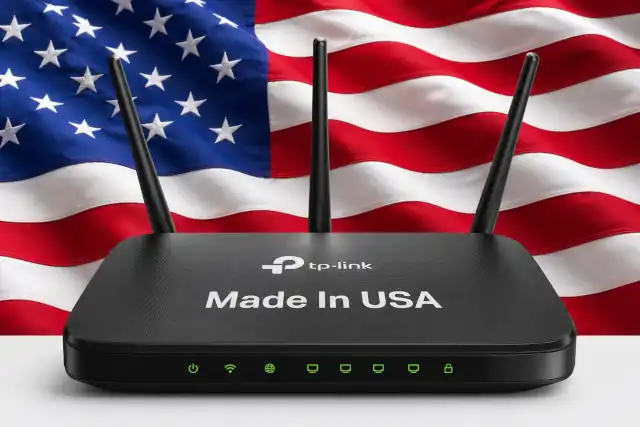
Facing a sweeping US ban on foreign-made consumer routers, the Chinese-founded networking giant has lobbied the FCC directly, insisting it is now a fully American company — but approval remains far from guaranteed, and rivals have already crossed the finish line.
TP-Link Systems, the California-headquartered successor to one of the world’s best-known router brands, is in active talks with the US Federal Communications Commission (FCC) to secure a conditional import exemption — its latest and most critical maneuver in a years-long effort to preserve access to the American market. The company’s lawyers and consultants met FCC officials in mid-April 2026 to argue that TP-Link should be treated as a domestic company, not a foreign security risk.
The push comes after the FCC last month added all consumer router manufacturers to its “Covered List” of banned equipment suppliers, effectively barring every foreign-made router from receiving new sales authorization in the United States. The ban, which covers new models only and does not retroactively affect existing devices, was triggered by mounting national-security concerns about supply chain vulnerabilities and the potential for foreign governments to exploit firmware in widely distributed home networking hardware.
“This action appears to affect virtually all new consumer-grade routers seeking authorization to be sold in the United States. Placing all manufacturers and their supply chains under the same scrutiny is a positive step in making the router industry more secure.”
— TP-Link Systems, Statement to Tom’s HardwareThe FCC’s Blanket Ban — and the Exemption Lifeline
The FCC’s new rules prohibit all consumer routers manufactured outside the US from obtaining new equipment authorizations, regardless of the brand’s national origin. Companies may apply for a Conditional Approval through the Department of Defense and the Department of Homeland Security. To qualify, applicants must submit a detailed, time-bound plan to establish or expand manufacturing in the United States, along with committed capital expenditure milestones over a one-to-five year horizon.
Existing models that received FCC authorization before March 23, 2026 can continue to be imported, sold, and used. A waiver allows all previously approved devices to receive firmware and security updates through March 1, 2027, ensuring no immediate disruption to consumers who already own foreign-made routers.
On April 22, 2026, the FCC further expanded the scope of the ban to include portable Wi-Fi hotspots and mobile MiFi devices used for home internet access, while mobile phones with hotspot capability currently remain exempt.
So far, three manufacturers have secured conditional approvals. Netgear received authorization for approximately 20 products; Adtran, an Alabama-based fiber-networking company, received approval for its Service Delivery Gateway routers; and Amazon’s Eero obtained an 18-month conditional approval. TP-Link, notably, is not among them.
Two Companies, One Brand Name
A central source of confusion — and controversy — is that two distinct companies share the TP-Link name. The entity scrutinized by US regulators is TP-Link Systems Inc., headquartered in Irvine, California. A separate company, Shenzhen TP-LINK Technologies Co., Ltd., handles sales and operations within mainland China.
TP-Link — Key Dates
- 1996Founded in Shenzhen by brothers Zhao Jianjun and Zhao Jiaxing.
- 2008TP-Link USA established for North American marketing and support.
- 2022Corporate separation process initiated; global and Chinese operations begin to diverge.
- May 2024Restructuring completed. TP-Link Systems Inc. formed, headquartered in Irvine, CA. Chinese operations remain under Zhao Jiaxing.
- Dec 2025US Federal Trade Commission opens investigation into alleged deception about China ties.
- Jan 2026Texas governor bans TP-Link from all state government devices and networks.
- Feb 2026Proposed federal product ban paused ahead of a Trump–Xi summit. Texas AG Ken Paxton files lawsuit alleging backdoor access for Chinese hackers.
- Mar 2026FCC adds all consumer router makers to its Covered List; blanket foreign-router ban takes effect for new models.
- Apr 2026TP-Link meets FCC commissioners’ staff to seek conditional approval. FCC extends ban to cover hotspot devices.
After the 2024 restructuring, TP-Link Systems is fully managed by Zhao Jianjun (known in the US as Jeffrey Chao), who resides in Irvine with his wife and together holds all shares in the US entity. The company claims all product design and data-security functions are performed in the United States, under US management, and that no foreign government — including China’s — can access or influence its products. Routers sold to the US market have been manufactured in a company-owned factory in Vietnam since 2018.
However, those assurances have not stilled US government suspicion. According to Bloomberg, founder Jeffrey Chao is seeking US permanent residency through the Trump administration’s “Gold Card” program, which requires a $1 million payment — a detail that regulators are likely to weigh carefully during the approval review.
Security Record Under Scrutiny
Beyond the ownership question, TP-Link faces a difficult security track record. According to CVE data cited in recent reporting, TP-Link has accumulated 1,166 Common Vulnerabilities and Exposures (CVEs) over the past decade — one of the highest counts in the consumer router sector, with issues ranging from remote code execution flaws to authentication bypasses. Critics argue this indicates systemic weaknesses in the company’s software development practices, not merely incidental bugs.
In April 2026, the US National Security Agency (NSA) and the FBI jointly warned Americans that Russian GRU hackers are actively exploiting vulnerable TP-Link and MikroTik routers to steal Outlook credentials. The warning, coming precisely as TP-Link petitions for an exemption, is a significant complication for the company’s case.
TP-Link, for its part, counters that its security metrics are “on par with or ahead of other major industry players,” and has described previous regulatory pressure as partly driven by a “smear campaign” by rival Netgear — a claim backed by a November 2025 lawsuit TP-Link filed in Delaware federal court, alleging Netgear planted false claims with journalists and influencers.
Market Stakes
The commercial consequences for TP-Link are severe. In its FCC filings, the company cites a 20% share of the US consumer retail router market — a figure consistent with industry data showing TP-Link holding the second-largest share (9.9%) of the direct-to-consumer segment as of early 2026, just behind Amazon’s Eero (10%) and narrowly ahead of Netgear (9.6%). At its 2024 peak, TP-Link held a 37% unit share of the direct-to-consumer market. Without a conditional approval, the company would be unable to introduce any new router models in the United States and would face a slow erosion as existing approved stock is depleted.
| Manufacturer | Market Share (D2C, Q1 2026) | FCC Status |
|---|---|---|
| Amazon Eero | ~10.0% | Conditionally Approved |
| TP-Link Systems | ~9.9% | Pending Review |
| Netgear | ~9.6% | Conditionally Approved |
| Asus | Not disclosed | Awaiting Decision |
| Budget brands (Cudy, Reyee, OKN) | Fragmented | Effectively Locked Out |
Outlook: Uphill Battle
Industry analysts are skeptical that TP-Link will obtain approval quickly, if at all. Rethink Research noted that the company’s assembly lines remain based in China and Vietnam — a significant barrier to meeting the FCC’s requirement for a credible US manufacturing roadmap. The firm added that given the US government’s sustained scrutiny of TP-Link across two presidential administrations, “it feels unlikely that TP-Link US could produce any evidence that would convince the bureaucrats to the contrary.”
Negotiations between TP-Link and the FCC remain ongoing. The outcome will hinge on multiple unresolved questions: whether the corporate separation is genuinely watertight, whether the founder’s pending immigration status affects the review, and whether TP-Link can present a credible plan to shift manufacturing to American soil. For now, TP-Link sits in regulatory limbo — its fate in the world’s largest consumer technology market uncertain, while its competitors collect approvals and move on.