NVIDIA’s N1X RTX Spark:Revolutionary AI Chipor a Premium Niche Product?
- 60% of MD5 Password Hashes Can Be Cracked in Under an Hour with a Single GPU
- Dirty Frag: Root Access on Every Major Linux Distribution — No Patch, No Warning
- Ubuntu 26.04 LTS (Resolute Raccoon): The Most Ambitious Ubuntu LTS in a Decade
- Proton Mail: Data Transferred to FBI Again!
- How Close Are Quantum Computers to Breaking RSA-2048?
- How to Prevent Ransomware Infection Risks?
- What is the best alternative to Microsoft Office?
Breaking · AI Computing
NVIDIA’s N1X RTX Spark:
Revolutionary AI Chip
or a Premium Niche Product?
NVIDIA CEO Jensen Huang took the Computex 2026 stage today to unveil the RTX Spark superchip — also known as the N1X — calling it “the most significant reinvention of the PC in four decades.” But with premium laptops expected to start at $2,000–$3,000 or more, a critical question looms: is this chip truly built for everyday consumers, or is it a halo product targeting a select few?
What Exactly Is the N1X?
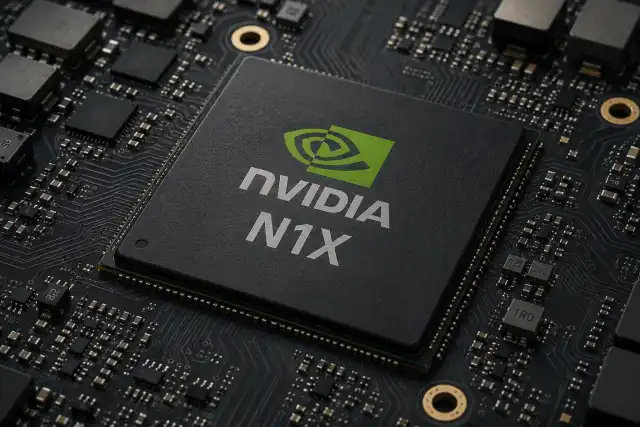
The NVIDIA N1X — officially branded as the RTX Spark Superchip — is NVIDIA’s first consumer-grade ARM-based system-on-chip (SoC) in over a decade. Co-developed with Microsoft and MediaTek, it pairs a 20-core ARM v9.2 CPU with a full Blackwell-architecture GPU on a single 3nm TSMC package, connected via NVIDIA’s NVLink C2C interconnect at 300 GB/s.
RTX Spark (N1X) — Key Specifications
Huang drew comparisons to the transformation of the mobile phone into the smartphone, describing the N1X as a paradigm shift. “For forty years, you launched apps,” Huang said. “Now your computer works for you.” The chip is designed to run local AI agents natively, processing LLMs with up to 100 billion parameters without a cloud connection — something no Intel or AMD integrated solution can currently match.
How It Stacks Up Against Intel and AMD
In raw CPU terms, pre-release Geekbench 6 benchmarks from an HP prototype place the N1X at approximately 3,096 single-core and 18,837 multi-core — roughly equivalent to Intel’s Core Ultra 9 275HX or AMD’s Ryzen AI MAX+ 395 class, trailing top-tier x86 by about 10–15% in multi-threaded workloads. It comfortably beats Qualcomm’s Snapdragon X Elite by around 15% in single-core performance.
| Chip | Single-Core | Multi-Core | iGPU Class |
|---|---|---|---|
| NVIDIA N1X (RTX Spark) New | ~3,096 | ~18,837 | RTX 5070-tier |
| Intel Core Ultra 9 285HX | Higher | ~22,104 | Arc B-series |
| AMD Ryzen AI MAX+ 395 | Higher | ~21,035 | Radeon 890M |
| Qualcomm Snapdragon X Elite | ~2,693 | Lower | Adreno X1-85 |
| Apple M4 Max | Highest | Highest | Apple GPU (40c) |
Where the N1X decisively pulls ahead is its GPU. No Intel or AMD laptop chip comes close to offering RTX 5070-class integrated graphics, and crucially, the N1X brings the full CUDA software ecosystem — TensorRT, PyTorch CUDA backend, TensorRT-LLM — to a thin laptop form factor for the first time. For AI developers, this means deploying data center pipelines locally without rewriting a single line of code.
The Price Reality: Who Can Actually Buy This?
Here is where enthusiasm collides with practicality. While the N1X is technically a consumer product — sold through Dell, HP, ASUS, Lenovo, Microsoft Surface, and MSI in retail channels — the expected price points tell a different story.
The Microsoft Surface Laptop Ultra, the flagship device co-developed with NVIDIA, is expected to cost $2,999 or more. The only existing reference point, the DGX Spark developer workstation built on the same silicon, currently sells for nearly $5,000 — though that figure is inflated by enterprise networking hardware that consumer laptops will omit.
Analyst Ming-Chi Kuo has cautioned that the N1X is likely to create a niche market, focused on users who need advanced AI compute directly on their devices. “For power users running LLMs on-device, an N1X device is a solid alternative to the Mac when it comes to capable on-device AI compute and large memory,” Kuo noted, while warning that hardware alone is unlikely to drive a broader PC upgrade cycle.
A Prosumer Product, Not a Mass-Market CPU
The distinction matters. The N1X targets a specific type of buyer: AI developers who need local LLM inference, content creators who want RTX-class GPU performance in a thin-and-light chassis, and gamers willing to pay a premium for cutting-edge hardware. This is the same audience that buys a $3,499 MacBook Pro M4 Max or a high-end gaming laptop.
The standard N1 chip — a lower-tier variant with 10–12 CPU cores and 2,048–2,560 CUDA cores — is the more realistic mass-market play, expected to appear in more affordable laptops at mainstream price points. Think of the N1X as NVIDIA’s RTX 5090 moment: a flagship that establishes credibility and sets the ceiling, before the technology trickles down.
OS Support: Windows First, Linux Already There
The consumer N1X launches exclusively on Windows 11 on ARM, with Microsoft as a co-developer building new OS-level security primitives for on-device AI agents. Huang promised full compatibility with every Windows app ever made — a bold claim that positions RTX Spark as a direct answer to Qualcomm’s well-documented compatibility shortcomings.
For developers, Ubuntu Linux is already fully supported via the identical GB10/DGX Spark silicon, running NVIDIA DGX OS 7 with kernel 6.17, CUDA 13, and the full AI software stack. Other ARM-compatible Linux distributions should work in principle, though without official NVIDIA support. BSD operating systems — FreeBSD, OpenBSD — have no announced support and are unlikely to be viable.
The Bigger Picture: A New Competitive Era
Intel has publicly acknowledged having “a healthy dose of paranoia” over NVIDIA’s entrance into the PC market. AMD’s stock dipped on the Computex announcement. The signal is clear: the x86 duopoly that has dominated personal computing for four decades faces its most serious structural challenge yet — not from Apple’s M-series, but from the company that already owns AI computing.
NVIDIA is following the Apple playbook precisely: launch a premium halo product, build the ecosystem, then drive costs down over successive generations. The N2 series is already rumored for 2027. If NVIDIA executes, a $999 ARM laptop with RTX-class AI performance could be a realistic prospect by 2028–2029.
Editorial Verdict
The NVIDIA N1X / RTX Spark is unambiguously impressive hardware — the most powerful integrated GPU ever shipped in a laptop, paired with the world’s dominant AI software stack in a thin, efficient package.
But “designed for consumers” and “affordable to consumers” are two different things. At launch, the N1X is a prosumer and enthusiast product. The broader consumer market will need to wait for the standard N1, future price reductions, and — critically — a mature Windows on ARM app ecosystem to truly deliver on the promise of this reinvented PC.
For now: extraordinary technology, extraordinary price. The new era of the PC is real. It just hasn’t arrived for everyone yet.