Sony PlayStation First-Party Game Sales Plunge Nearly 30 Million Units in Four Years Amid Service-Based Strategy Struggles
- 60% of MD5 Password Hashes Can Be Cracked in Under an Hour with a Single GPU
- Dirty Frag: Root Access on Every Major Linux Distribution — No Patch, No Warning
- Ubuntu 26.04 LTS (Resolute Raccoon): The Most Ambitious Ubuntu LTS in a Decade
- Proton Mail: Data Transferred to FBI Again!
- How Close Are Quantum Computers to Breaking RSA-2048?
- How to Prevent Ransomware Infection Risks?
- What is the best alternative to Microsoft Office?
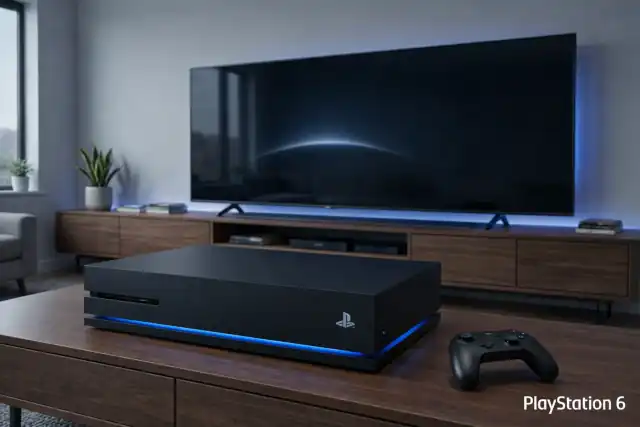
Sony PlayStation First-Party Game Sales Plunge Nearly 30 Million Units in Four Years Amid Service-Based Strategy Struggles
Financial data compiled from Sony’s own annual reports reveals a near-50% collapse in first-party software sales since the PS5 launch year, with the Bungie acquisition absorbing $765 million in impairment losses — as a pivotal State of Play showcase airs tonight.
A detailed in-depth analysis of financial data compiled by journalist Stephen Totilo of Game File — drawing directly from Sony Interactive Entertainment’s own annual financial disclosures — shows that PlayStation’s first-party game sales are experiencing a sustained and significant decline. From fiscal year 2020 to fiscal year 2024, first-party software sales fell by approximately 29.5 million units, a drop of nearly 50%.
The Sales Data: A Five-Year Slide
The full trajectory of Sony’s first-party game sales, as reported in the company’s annual financial results, tells a stark story:
| Fiscal Year | Units Sold | Relative Volume |
|---|---|---|
| FY2018 | 54.1 million | |
| FY2019 | 49.2 million | |
| FY2020 ▲ Peak | 58.4 million | |
| FY2021 | 43.9 million | |
| FY2022 | 43.5 million | |
| FY2023 | 39.7 million | |
| FY2024 ▼ Trough | 28.9 million | |
| FY2025 ↑ Recovery | 32.1 million |
The FY2020 peak was driven by a confluence of exceptional factors: the simultaneous launch of the PlayStation 5, a dense release schedule that included The Last of Us Part II, Ghost of Tsushima, Marvel’s Spider-Man: Miles Morales, and Demon’s Souls, plus the COVID-19 pandemic driving a surge in at-home gaming globally. The Last of Us Part II alone sold 10 million copies in its first two years.
From that apex, Sony’s first-party output fell for five consecutive fiscal years — an uninterrupted slide that lasted the entire duration of the PS5 generation to date. The nadir arrived in FY2024, a year headlined by Astro Bot (which won Game of the Year at The Game Awards 2024) and the quickly discontinued Concord. Combined, those titles were insufficient to sustain the sales volumes of prior years.
What Is Driving the Decline?
Analysts and observers point to several overlapping causes rather than a single systemic failure. The most frequently cited factor is the significant slowdown in game output from Sony’s biggest internal studios during the PS5 generation. Naughty Dog — the studio behind The Last of Us Part II — has still not released a new title this console generation. Haven Studios, founded by Sony in 2022, has yet to launch its flagship title Fairgames. Media Molecule has not released a significant game since 2020.
At the same time, Sony’s heavy investment in live-service and service-based game development has redirected studio resources without generating commensurate returns. The pursuit of a Fortnite-scale hit effectively pulled many of Sony’s internal teams away from the single-player, narrative-driven games that had historically driven its strongest sales figures.
The Bungie Problem: $765 Million in Impairment Losses
The most striking financial symbol of this strategy’s struggles is the Bungie acquisition. Sony purchased the studio behind Destiny 2 and Halo in 2022 for approximately $3.6 billion, betting on Bungie’s live-service expertise to reshape PlayStation’s gaming division.
The results have been painful. In Sony’s fiscal year 2025 financial report — disclosed in May 2026 — the company recorded a total of approximately $765 million in impairment losses against Bungie’s intangible and other assets. The writedown came in two tranches: a $201 million charge in Q2 (tied to Destiny 2‘s sustained underperformance) and an additional $565 million in Q4, the quarter that also encompassed the launch of Bungie’s new extraction shooter Marathon.
Marathon launched earlier in 2026 but has struggled to achieve the commercial traction Sony had projected. Meanwhile, Destiny 2 — the IP that anchored the entire rationale for the acquisition — is winding down active development entirely: Bungie has announced that June 9, 2026 will mark the game’s final live-service content update, after which the studio will pivot resources toward incubating future projects. Destiny 2 will remain playable after that date, but will receive no new content.
Sony’s CFO acknowledged that Bungie’s independence had been progressively reduced, and by May 2026, the majority of Bungie’s remaining developers have been moved onto Marathon support. Sony’s own data shows that — excluding the Bungie impairment charges — the gaming division would have reported record-high operating income for FY2025, up 45% year-on-year.
A Modest Recovery in FY2025
The unbroken decline finally halted in fiscal year 2025 (April 2025 – March 2026), with first-party sales recovering modestly to 32.1 million units — the first year-on-year increase in half a decade. Two major releases anchored this rebound: Ghost of Yōtei, the sequel to Ghost of Tsushima, which Sony confirmed exceeded expectations by outperforming its predecessor over the same post-launch window; and Death Stranding 2: On the Beach, released June 26, 2025 and published by Sony Interactive Entertainment.
Ghost of Yōtei’s success is particularly notable, reinforcing that Sony’s established single-player franchises retain significant consumer demand. Whether this uptick represents a genuine turning point or a temporary reprieve remains to be seen — notably, the FY2025 total of 32.1 million units is still 45% below the FY2020 peak.
All Eyes on Tonight’s State of Play
Against this backdrop, tonight’s PlayStation State of Play — June 2, 2026 — carries unusually high stakes. Sony has invested exceptional resources in this event: the broadcast runs for more than 60 minutes, and for the first time in PlayStation history, the company is hosting live theatrical screenings in partnership with Alamo Drafthouse Cinemas at select locations across major U.S. cities including New York, Los Angeles, Chicago, Dallas/Fort Worth, San Francisco, and Raleigh.
The confirmed headliner is Marvel’s Wolverine from Insomniac Games, a PS5 exclusive launching September 15, 2026. Beyond Wolverine, the showcase is expected to reveal the game lineups from studios that have been conspicuously absent from Sony’s release schedule — potentially including titles from Naughty Dog, Haven Studios, and others — in an attempt to demonstrate that the pipeline of first-party output is finally ready to accelerate.
The State of Play begins at 2:00 PM PT / 5:00 PM ET and streams live on PlayStation’s official YouTube and Twitch channels.
For PlayStation, the evening’s announcements are more than a showcase — they are a direct response to five years of financial data that demands a compelling answer.